Whether it be the shortened-season or something coming to a head as it was, but the idea of blowing up some teams has been very rampant from this season. Of course, there are some teams that are long overdue for it, as their teams have been in a sinkhole for a while, but these talks have since been escalated with their lack of things happening during this short season.
One of the teams who have had a lot of talk behind them recently is the Buffalo Sabres. With Lindy Ruff being canned earlier in the season, you have to think that they are looking for a new kind of look about them. While the free-spending of Terry Pegula hasn't yielded many results-- it does yield talk about whether or not Thomas Vanek and Ryan Miller want to stick around for misfitting puzzle pieces and hope that they work. Those frustrations have one foot out the door with the both of them, the big blow-up happening as soon as this trade deadline, as their return would probably be as high as it ever will be then.
Though, while Vanek and Miller are on their way out, the big question is whether GM Darcy Regier will join them. The fact remains that regardless of what parts you move out, if you truly want a full rebuild; you have to get rid of the decision maker Regier in this. Ruff and Regier were there from the same times and you'd think they'd both go down with the ship-- but it seems that Regier somehow found a way to dodge a bullet. My guess is that he won't dodge it in the summer time, which could create quite the rebuilding ripple for the Sabres.
The Calgary Flames are another team that has people wondering if they need to start looking at a solid rebuilding model rather than picking up parts here and there and hoping the playoffs are in the crystal ball. Fact of the matter is that Jarome Iginla and Miikka Kiprusoff are both likely gone from the Flames plans sooner rather than later, either by trades or impending free agency (Kipper still has one more year after this)-- but they are a team in need of a full-rebuild, though it's almost not possible with their minor league affiliate not being as strong as others and draft picks not panning out as well as they thought.
With the Flames, you'd think something different would have happened with Jay Feaster taking over, but he seemed to get kneecaps by the contract he inherited. And while you can say the contracts with the No-Movement/Trade Clauses hamper him, there are some player who would probably lift it to get onto a contending team rather than floundering where they are. While many are calling for Feaster's departure, the lack of progress from the prospects can't be completely put on him, but inheriting the prospects or contract or not-- it's his job to move things around and get the right people in there to maybe give a shot to the arm of others.
Other teams, namely the Washington Capitals, could probably be looking at a sort of a rebuild-- but they're either too stubborn to do so or think this trend will work itself out. That's not always the case though, as it often takes a big shake-up to actually bring a team back to life and give them an actual turn-around.
Drastic times call for drastic measures and there are played time that many teams are way too late in picking up on their teams downward spiral. There's a fine line of thinking a team will actually "snap out of it" and noticing a complete collapse, but it's picking up on that certain thing that separates the good GM and a great GM....and also helps them keep their job as well.
Showing posts with label Buffalo Sabres. Show all posts
Thursday, March 14, 2013
Debating the Inevitable Rebuild
Labels:
Buffalo Sabres,
Calgary Flames,
GM Changes,
Rebuilding
Monday, December 24, 2012
Absurd Goalie Monday: Jacques Cloutier
This week's AGM is a goalie who was able to be a workhorse in the junior leagues, but was never able to stay healthy enough in the pros to show off his talents. Of course, it could be a harder transition for him, but he did what he could and then moved to a teaching role after learning so much. This week, the profile of Jacques Cloutier.
Cloutier started his trek in the QMJHL with the Trois-Rivieres Draveurs starting in the 1976-77 season, playing in 25 games and posting an 11-6-2 record. Starting in the 1977-78 season, Cloutier became a workhorse for Trois-Rivieres, playing in 71 games of the team's 72-- compiling a 46-17-7 record, then going 12-1 in the playoffs, helping them win the QMJHL Championship. Cloutier would go 1-3 in the Memorial Cup that season. Cloutier played all 72 games for Trois-Rivieres in the 1978-79 season and had a 58-8-6 record, then 12-1 in the playoffs again, then 2-2 in the Memorial Cup. After the Buffalo Sabres drafted Cloutier in 1979, he had his workload cut down, playing only 55 games in the 1979-80 season, finishing with a 27-20-7 record-- then 3-4 in the playoffs.
Turning pro for the 1980-81 season, Cloutier would head to the AHL with the Rochester Americans; getting into 61 games and coming up with a 27-27-6 record. In the 1981-82 season, Cloutier went 14-7-2 in 23 games in Rochester, while being called into duty for the Sabres and putting up a 5-1-0 record in seven games. Cloutier stayed with Buffalo for the bulk of the 1982-83 season as a back-up (10-7-6), but the Sabres traded for an experienced back-up; putting Cloutier back in Rochester-- where he would go 7-3-1 in 13 games, then posting a 12-4 playoff record lifting Rochester to the Calder Cup.
The 1983-84 season, Cloutier was back in Rochester playing in 51 games with a final count of 26-22-1 and then going 9-9 in the playoffs. In the 1984-85 season, Cloutier would play 14 games in Rochester (10-2-1) and one game in Buffalo (0-0-1) before he tore some of his knee ligaments, putting him out for the rest of the season. The injury would keep Cloutier out until midway through the 1985-86 season, but he would get into 14 games with Rochester (10-2-2) and then 15 for Buffalo (5-9-1); then playing five games for Canada in the World Championship, helping the country get bronze.
Thanks to injury and inconsistent play for Tom Barrasso, Cloutier was able to stay up with Buffalo for the 1986-87 season, going 11-19-5 in 40 games, but the 1987-88 season saw Cloutier get into a logjam in Buffalo, playing only 20 games and posting a 4-8-2 record in that time. In the 1988-89 season, Cloutier was still in the logjam, but injuries and a horrific moment to Clint Malarchuk would put Cloutier in the spotlight. Cloutier would have a 15-14-0 record in 36 appearances and would go 1-3 in the playoffs. Also, Cloutier spent 11 games in Rochester, but with a lackluster 2-7-0 record.
Before the 1989-90 season, Cloutier was traded to the Chicago Blackhawks, where Cloutier would be a starter in that season for 43 games and compile an 18-15-2, then going 0-2 in four playoff games. Cloutier was hung up in another logjam in Chicago during the 1990-91 season-- being pushed out by Ed Belfour and then Dominik Hasek-- only getting on 10 games with a 2-3-1 record.
During January 1991, Cloutier was traded to the Quebec Nordiques and would finish the season there, appearing in 15 games with a 3-8-2 record. As a back-up in 1991-92, Cloutier appeared in 26 games and posted a 6-14-3 record. Cloutier was the third goalie during the 1992-93 season for Quebec, only appearing in three games and going 0-2-1. The 1993-94 season, brought more games for Cloutier-- but finishing with a 3-2-1 record in 14 appearances. After that season, Cloutier would retire from playing.
Cloutier stuck to hockey, but hired by the Nordiques as an AHL assistant coach with the Cornwall Aces from 1994 until 1996, then being promoted to assistant/goalie coach of the Colorado Avalanche-- winning Stanley Cup rings in 1996 and 2001. He was let go by the Avalanche in 2009, but would go over to Switzerland to help coach with Bob Hartley and help the Zurich Lions win a league championship and moved with Hartley from Switzerland to Calgary to be the assistant coach of the Flames whenever the lockout ends.
Junior stand-out that got hampered by injury and during a time where goalies were plentiful, Cloutier was part of the casualties that, but did make a good enough name for himself and had his mind for hockey-- transitioning it to a solid coaching career.
Cloutier started his trek in the QMJHL with the Trois-Rivieres Draveurs starting in the 1976-77 season, playing in 25 games and posting an 11-6-2 record. Starting in the 1977-78 season, Cloutier became a workhorse for Trois-Rivieres, playing in 71 games of the team's 72-- compiling a 46-17-7 record, then going 12-1 in the playoffs, helping them win the QMJHL Championship. Cloutier would go 1-3 in the Memorial Cup that season. Cloutier played all 72 games for Trois-Rivieres in the 1978-79 season and had a 58-8-6 record, then 12-1 in the playoffs again, then 2-2 in the Memorial Cup. After the Buffalo Sabres drafted Cloutier in 1979, he had his workload cut down, playing only 55 games in the 1979-80 season, finishing with a 27-20-7 record-- then 3-4 in the playoffs.
Turning pro for the 1980-81 season, Cloutier would head to the AHL with the Rochester Americans; getting into 61 games and coming up with a 27-27-6 record. In the 1981-82 season, Cloutier went 14-7-2 in 23 games in Rochester, while being called into duty for the Sabres and putting up a 5-1-0 record in seven games. Cloutier stayed with Buffalo for the bulk of the 1982-83 season as a back-up (10-7-6), but the Sabres traded for an experienced back-up; putting Cloutier back in Rochester-- where he would go 7-3-1 in 13 games, then posting a 12-4 playoff record lifting Rochester to the Calder Cup.
The 1983-84 season, Cloutier was back in Rochester playing in 51 games with a final count of 26-22-1 and then going 9-9 in the playoffs. In the 1984-85 season, Cloutier would play 14 games in Rochester (10-2-1) and one game in Buffalo (0-0-1) before he tore some of his knee ligaments, putting him out for the rest of the season. The injury would keep Cloutier out until midway through the 1985-86 season, but he would get into 14 games with Rochester (10-2-2) and then 15 for Buffalo (5-9-1); then playing five games for Canada in the World Championship, helping the country get bronze.
Thanks to injury and inconsistent play for Tom Barrasso, Cloutier was able to stay up with Buffalo for the 1986-87 season, going 11-19-5 in 40 games, but the 1987-88 season saw Cloutier get into a logjam in Buffalo, playing only 20 games and posting a 4-8-2 record in that time. In the 1988-89 season, Cloutier was still in the logjam, but injuries and a horrific moment to Clint Malarchuk would put Cloutier in the spotlight. Cloutier would have a 15-14-0 record in 36 appearances and would go 1-3 in the playoffs. Also, Cloutier spent 11 games in Rochester, but with a lackluster 2-7-0 record.
Before the 1989-90 season, Cloutier was traded to the Chicago Blackhawks, where Cloutier would be a starter in that season for 43 games and compile an 18-15-2, then going 0-2 in four playoff games. Cloutier was hung up in another logjam in Chicago during the 1990-91 season-- being pushed out by Ed Belfour and then Dominik Hasek-- only getting on 10 games with a 2-3-1 record.
During January 1991, Cloutier was traded to the Quebec Nordiques and would finish the season there, appearing in 15 games with a 3-8-2 record. As a back-up in 1991-92, Cloutier appeared in 26 games and posted a 6-14-3 record. Cloutier was the third goalie during the 1992-93 season for Quebec, only appearing in three games and going 0-2-1. The 1993-94 season, brought more games for Cloutier-- but finishing with a 3-2-1 record in 14 appearances. After that season, Cloutier would retire from playing.
Cloutier stuck to hockey, but hired by the Nordiques as an AHL assistant coach with the Cornwall Aces from 1994 until 1996, then being promoted to assistant/goalie coach of the Colorado Avalanche-- winning Stanley Cup rings in 1996 and 2001. He was let go by the Avalanche in 2009, but would go over to Switzerland to help coach with Bob Hartley and help the Zurich Lions win a league championship and moved with Hartley from Switzerland to Calgary to be the assistant coach of the Flames whenever the lockout ends.
Junior stand-out that got hampered by injury and during a time where goalies were plentiful, Cloutier was part of the casualties that, but did make a good enough name for himself and had his mind for hockey-- transitioning it to a solid coaching career.
Saturday, October 13, 2012
Stamkos, Reimer, Bryzgalov Highlight Early Saturday Games
Drew Stafford celebrates his game winner
1st Star: Drew Stafford, BUF: Game-winning goal, 1 assist
2nd Star: Chris Kunitz, PGH: 2 goals
3rd Star: Steve Ott, BUF: 1 goal
Drew Stafford goal three minute into over time helped the Sabres win their opening night tilt. While M-A Fleury had a 38 save night, it was not enough for the Penguins.
1st Star: James Reimer, TOR: 30 saves
2nd Star: Matt Frattin, TOR: 2 goals
3rd Star: Mikhail Grabovski, TOR: 1 goal, 1 assist
James Reimer put the summer goalie coach quarrel behind him and put up a 30 save performance while Matt Frattin took over the game early for the Leafs, helping take down their long-time rival.
1st Star: Marcus Johansson, WSH: 2 goals
2nd Star: Kyle Turris, OTT: 1 goal, 1 assist
3rd Star: Sergei Gonchar, OTT: 2 assists
Daniel Alfredsson's goal late in the third helped the Senators get past the Capitals and Braden Holtby. Though Marcus Johansson had a great game for the Caps, Craig Anderson was too much for the rest of the Caps, stopping the other 30 shots he faced.
1st Star: Tyler Seguin, BOS: 1 goal
2nd Star: Ilya Kovalchuk, NJ: 2 goals
3rd Star: Patrice Bergeron, BOS: 1 goal
A highlight goal from Rich Perverley and Patrice Bergeron helped the Bruins beat the Devils. Tuukka Rask stopped 25 shots in the winning effort, while Ilya Kovalchuk's offense was the bright spot for the Devils in the game.
1st Star: Ilya Bryzgalov, PHI: 32 saves
2nd Star: Wayne Simmonds, PHI: 1 goal
3rd Star: Danny Briere, PHI: 1 goal
Even without much goal support, Ilya Bryzgalov came up big to help the Flyers win their first two games of the season, getting a good showing from his defense, as well. Newcomer Brad Boyes had the lone tally for the Islanders.
1st Star: Steven Stamkos, TB: 2 goals
2nd Star: Stephen Weiss, FLA: 1 goal
3rd Star: Vincent Lecavalier, TB: 1 goal
With a new goalie in net, the Lightning broke open the scoresheet with Steven Stamkos getting his scoring touch back with two goals, including an open net. Anders Lindback faced 32 shots and saved 30 of them for his first win with his new team.
Labels:
2013 NHL94,
Boston Bruins,
Buffalo Sabres,
Montreal Canadiens,
Ottawa Senators,
Philadelphia Flyers,
Pittsburgh Penguins,
Tampa Bay Lightning,
Toronto Maple Leafs,
Washington Capitals
Monday, May 14, 2012
Absurd Goalie Monday: Vincent Tremblay
While many teams credit one player who actually contributed in a good way to saving a franchise, this week's AGM is a guy who's short-comings helped the franchise for the better. However, it changed the way things were to happen in the NHL, but for a short time-- he changed the NHL. This week, the profile of Vincent Tremblay.
Tremblay started his journey with the Quebec Remparts of the QMJHL starting in the 1977-78 season, where he would go 19-21-4 in 50 games. In the 1978-79 season, Tremblay would go 24-27-10 in 66 games, allowing him to garner Second All-Start Team honors in the QMJHL.
The Toronto Maple Leafs would select Tremblay in the fourth round of the 1979 NHL Draft, immediately putting him into their system in the 1979-80 season, where he would split time between the AHL's New Brunswick Hawks for 13 appearances (4-3-0) and for the Maple Leafs for 10 appearances (2-1-0). In the 1980-81 season, Tremblay would setting in with New Brunswick, playing in 46 games and finishing with a 24-12-8 record, while appearing in three games for the Leafs, all losses. In the 1981-82 season, Tremblay would have his chance to be the starter for the Maple Leafs, playing in 40 games, but would compile a 10-18-8 record. The 1982-83 season, Tremblay saw himself in the AHL for most of the season for the St. Catherines Saints, playing there for 34 games (sadly, no record is around) and then play one game for the Leafs, not factoring in the decision.
In the summer of 1983, Tremblay would be traded to the Pittsburgh Penguins with Rocky Saganiuk for Nick Ricci and Pat Graham. This trade would be something interesting, as history would have it-- even if it meant that we have a Draft Lottery because of it. So, you see-- the 1983-84 season had Tremblay buried in the AHL with the Baltimore Skipjacks, playing in only 28 games there with a 10-8-7 record, but an interesting call-up changed the franchise of the Penguins forever.
Tremblay was called up by the Penguins and would start in four games. He would lose all four and then be demoted back to the AHL. This is important because the draft system is the team with the least amount of points would get the top pick and all the losses would be better for a better pick. Because of those losses, the Penguins had the worst record, allowing them to pick Mario Lemieux with the first overall pick in the 1984 Draft. The whole story is over at the aptly named blog "The Legend of Vinny T."
In the 1984-85 season, Tremblay would be playing in the AHL with the Rochester Americans under a minor league contract for 33 games, putting together a 13-10-8 record, which allowed him to get a contract by the Amercians' parent team-- the Buffalo Sabres-- despite Tremblay never playing for them. He would also play in the New Brunswick Senior League with the Riverview Trappers. After that season, Tremblay would retire.
While not much was made of his short career, Tremblay may have done more good for the Penguins organization than anyone could imagine, even if he was a pawn to the system and would be the cause for the lottery system to be implemented into the NHL Draft lexicon.
Tremblay started his journey with the Quebec Remparts of the QMJHL starting in the 1977-78 season, where he would go 19-21-4 in 50 games. In the 1978-79 season, Tremblay would go 24-27-10 in 66 games, allowing him to garner Second All-Start Team honors in the QMJHL.
The Toronto Maple Leafs would select Tremblay in the fourth round of the 1979 NHL Draft, immediately putting him into their system in the 1979-80 season, where he would split time between the AHL's New Brunswick Hawks for 13 appearances (4-3-0) and for the Maple Leafs for 10 appearances (2-1-0). In the 1980-81 season, Tremblay would setting in with New Brunswick, playing in 46 games and finishing with a 24-12-8 record, while appearing in three games for the Leafs, all losses. In the 1981-82 season, Tremblay would have his chance to be the starter for the Maple Leafs, playing in 40 games, but would compile a 10-18-8 record. The 1982-83 season, Tremblay saw himself in the AHL for most of the season for the St. Catherines Saints, playing there for 34 games (sadly, no record is around) and then play one game for the Leafs, not factoring in the decision.
In the summer of 1983, Tremblay would be traded to the Pittsburgh Penguins with Rocky Saganiuk for Nick Ricci and Pat Graham. This trade would be something interesting, as history would have it-- even if it meant that we have a Draft Lottery because of it. So, you see-- the 1983-84 season had Tremblay buried in the AHL with the Baltimore Skipjacks, playing in only 28 games there with a 10-8-7 record, but an interesting call-up changed the franchise of the Penguins forever.
Tremblay was called up by the Penguins and would start in four games. He would lose all four and then be demoted back to the AHL. This is important because the draft system is the team with the least amount of points would get the top pick and all the losses would be better for a better pick. Because of those losses, the Penguins had the worst record, allowing them to pick Mario Lemieux with the first overall pick in the 1984 Draft. The whole story is over at the aptly named blog "The Legend of Vinny T."
In the 1984-85 season, Tremblay would be playing in the AHL with the Rochester Americans under a minor league contract for 33 games, putting together a 13-10-8 record, which allowed him to get a contract by the Amercians' parent team-- the Buffalo Sabres-- despite Tremblay never playing for them. He would also play in the New Brunswick Senior League with the Riverview Trappers. After that season, Tremblay would retire.
While not much was made of his short career, Tremblay may have done more good for the Penguins organization than anyone could imagine, even if he was a pawn to the system and would be the cause for the lottery system to be implemented into the NHL Draft lexicon.
Monday, April 30, 2012
Absurd Goalie Monday: Al Smith
While the last name is a common one, the person and career of the AGMs wasn't. From playing with two teams in a single playoffs to getting picked up in two Intra-League Drafts to moving to the WHA to becoming a taxi driver and writer post-playing career; the term "renaissance man" is very valid. This week, the profile of Al Smith.
Smith started his journey with the Toronto Midget Marlboros in the 1961-62 season, also playing time with the Marlboros' Junior A squad. Between the 1962-63 and 1964-65 seasons, Smith played for the Junior B Lakeshore Maroons. Part of the 1964-65 season, Smith went back to the Marlboros' Junior A squad, as well as spending most of the 1965-66 season with the Marlies.
At the end of the 1965-66 season, Smith was called up to the Toronto Maple Leafs, where he would play two games (1-0-0). The 1966-67 season would be a while one, playing one game for Toronto (a loss), but spending most of his time with the Victoria Maple Leafs of the Western League. With Victoria, Smith played 56 games and finished with a 24-26-5 record. The playoffs in the WHL were wild for Smith, as he would play for two teams-- neither were the Victoria team he played for in the regular season. Smith played in six contests for the Vancouver Canucks (1-4-0) and one contest for the California Seals (a loss) in that 1967 playoff season.
The 1967-68 season, Smith moved to the Central League's Tulsa Oilers, finishing with a 23-12-5 record in 40 games, then 2-2 in four playoff games. Smith would only play eight games for Tulsa in the 1968-69 season (no record of note), while playing seven games to Toronto (2-2-1), but would spend most of the season in the AHL for the Rochester Americans, compiling a 13-12-7 record in 34 games.
During the 1969 Intra-League Draft, the Pittsburgh Penguins claimed Smith from the Leafs. Smith played in 46 games during the 1969-70 season for the Penguins, finishing with a 15-20-8 record. Smith also played three games for the Baltimore Clippers of the AHL that season. In the 1969-70 season, Smith stayed in Pittsburgh for the full campaign, going 9-22-9 in his 46 games.
Smith was claimed in the 1971 Intra-League Draft by the Detroit Red Wings, spending the 1971-72 season with Detroit and finishing with a 18-20-4 record.
The WHA came onto the scene in the 1972 and Smith was selected by the New England Whalers. Not happy with his position in Detroit, Smith joined the Whalers for the 1972-73 season, going 31-19-1, while finishing with a 12-3 playoff record to help the Whalers win the first ever Avco World Trophy, despite the trophy not being completed yet. Smith returned to the Whalers in the 1973-74 season, putting together a 30-21-2 record in 55 games and only a 3-4 playoff record. The 1974-75 season has Smith play in 59 contests and record a 33-21-4 record and 2-4 playoff mark.
The Red Wings traded Smith's rights to the Buffalo Sabres at the trade deadline in 1975, but Smith wouldn't play for the Sabres until the 1975-76 season; going 9-3-2 in only 14 games. The 1976-77 season saw Smith play only seven games and an 0-3-0 record.
Becoming a free agent, Smith moved back to the WHA and the New England Whalers starting in the 1977-78 season, playing in 55 games and putting up a 30-20-3 record, but an 0-2 playoff record. Smith would win the Ben Hastkin Trophy for WHA Best Goaltender and named to the WHA First All-Star Team. The 1978-79 season would be a little rougher for Smith, playing in only 40 games with a 17-17-5 record and then a 1-2 playoff record.
As the WHA and NHL merged, Smith followed the Whalers to Hartford and would play 30 games in the 1979-80 season, going 11-10-8. Smith also played two games with the AHL's Springfield Indians and would put up a 1-1-0 record.
Smith would be traded to the Colorado Rockies for cash before the 1980-81 season, where Smith would go 9-18-4 record in 37 games with the Rockies. After that season, Smith would retired from the NHL.
Post playing days, Smith went to BC to sell cars and pick fruit as well as trying to sell the Reuters news service to various clients. When he moved back to Toronto, Smith wrote "Confessions to Anne Sexton", which was turned into a small performance piece. Smith also was a taxi driver while he was writing to make ends meet. While working on another piece called "The Tragedy of Lake Tuscarora", Smith fell ill with pancreatic cancer, which he would succumb to in August of 2002.
While he bounced around a lot of places, Smith finally found his niche in the WHA. While he did only play there for five years-- he revitalized a career that may have ended a lot sooner if it wasn't for a new league to help him out.
Monday, February 27, 2012
Absurd Goalie Monday: Paul Harrison
While we've had previous AGM's that went into a completely different line of work when it comes to their post playing career-- this week's profile is one that sort of follows that path. Though is career may not be as memorable on the ice, what he's done off the ice has done wonders for the youth of Canada. This week, the profile of Paul Harrison.
The 1975-76 seasons saw Harrison play in six games for the North Stars, going 0-4-1 with them; as well as going 1-1-1 in three games with the AHL's Providence Reds. Harrison stayed in the AHL for the bulk of the 1976-77 season, but playing for the New Haven Nighthawks-- finishing with a 32-17-6 record, then going 2-4 in six playoff games. Harrison would also see time with the North Stars that season, going 0-2-0 in his two games there. The 1977-78 season had Harrison staying with the North Stars full-time, playing in 26 games and compiling a record of 6-16-2.
During the summer of 1977, the North Stars traded Harrison to the Toronto Maple Leafs for a draft pick. Harrison played the 1977-78 season with the Maple Leafs, appearing in 25 games and finishing with a 8-12-3 record, then going 0-1 in two playoff appearances. Staying as a back-up in the 1978-79 season, Harrison went 9-17-2 in 30 appearances, while being sent back to the AHL with the New Brunswick Hawks for nine games, going 4-3-1 in that span. The 1980-81 season had Harrison with the Leafs' Central League affiliate, Dallas Black Hawks, finishing with a 24-7-2 record, allowing Harrison to get the Terry Sawchuk Trophy for CHL goalie with the fewest goals-against. Harrison also appeared in one playoff game for the Leafs, a no decision.
The Leafs would trade Harrison to the Pittsburgh Penguins for future considerations before the 1981-82 season. Harrison played in 13 games for the Penguins, going 3-7-0 before getting plucked off waivers by the Buffalo Sabres, where he would play six games compiling a 2-1-1 record. Harrison stayed in the Sabres organization for the 1982-83 season, playing with the AHL's Rochester Americans for 29 games, going 11-11-3 before finally hanging up his pads.
After his career, Harrison took a different path by joining the Ontario Provincial Police in his hometown of Timmins. With the OPP, Harrison was influencial in founding and growing the D.A.R.E program in Canada, which is a program shows elementary school children about the dangers of drug use. Along with the NHL Alumni, Harrison has been instrumental in the Hockey Dream Draw, which is a lottery for people to get a once-in-a-lifetime chance to be part of a NHL team and get the VIP experience to watch many NHL games.
Harrison went from stopping pucks to stopping crime to stopping the spread of drug abuse in minors. Which is most rewarding to him is something you'd have to ask him about, but in every step of the way-- he seems proud of each of his accomplishments.
Monday, November 28, 2011
Absurd Goalie Monday: Phil Myre
The ultimate goal in life for a player is to get their name on the Stanley Cup. While this week's AGM did get a ring and was in the team picture, he didn't get on the Cup. Then two seasons later, he was off on a journeyman's career. This week, the profile of Phil Myre. Myre started his career in the 1964 playoffs with the QMJHL's Victoriaville Bruins, going 1-1 in two of those games, then 0-1 in one Memorial Cup appearance. In his first full season in Victoriaville in the 1964-65 season, Myre played 21 games and finished up 14-7-0, then going 7-2 in nine playoff appearances, while going 0-3 in the Memorial Cup play-down games. Victoriaville moved to Shawinigan for the 1965-66 season, where Myre would go 38-6-0 in 44 games, then 8-4 in 12 playoff games and 11-4 in 15 Memorial Cup play-down games.
Myre was drafted by the Montreal Canadiens in the 1966 Draft, which was also a year that Myre went to the OHA's Niagara Falls Flyers starting in the 1966-67 season, leading them to a Memorial Cup championship following the 1967-68 season.
Turning pro in 1968-69, Myre played in the Central League for the Houston Apollos, going 24-19-10 in 53 games, then going 0-2 in the playoffs.
The 1969-70 season allowed Myre to play in 15 games for the AHL's Montreal Voyageurs before getting the call-up to the Canadiens, where he would play in 10 games with a 4-3-2 record. Myre stayed in Montreal for the 1970-71 season, playing in 30 games with a 13-11-4 record, but would be relegated to back-up when Ken Dryden made his mark in the league. While the Canadiens won the Stanley Cup that year and even though he qualified to be engraved on the Cup, the team left him off, even though he did receive a ring for his efforts. Myre only played nine games for the Canadiens in the 1971-72 season, going 4-5-0 in his efforts.
The Canadiens left Myre unprotected in the 1972 Expansion Draft, allowing the Atlanta Flames to pick him up. In that 1972-73 season, Myre tallied a 16-25-3 record in 46 games, while he went 11-16-6 in 36 games in the 1973-74 season-- in which he played in the team's first playoff series, going 0-3 in three games. Myre played 40 games in the 1974-75 season, finishing in with a 14-16-10 record; while in the 1975-76 and 1976-77 season, Myre went .500 in both seasons, with a 16-16-4 and 17-17-7 record respectively. Myre would only play nine games for the Flames in the 1977-78 season, going 2-7-0 before being put on the move.
Myre was traded to the St. Louis Blues in December of 1977 and would play 44 games for the Blues, going 11-25-8 in those last games. Myre return with the Blues in the 1978-79 season, going a dismal 9-22-8 in his 39 appearances.
Myre was traded to Philadelphia in June of 1979 and join a tandem with Pete Peeters for the 1979-80 season, with Myre going 18-7-15 that season, a season where he and Peeters had a 35-game unbeaten streak-- a NHL record. It wasn't a great for Myre in the 1980-81 season, as he would go 6-5-4 in 16 games before being on the move again.
The Flyers traded Myre to the Colorado Rockies for cash, in which Myre would play 10 games to end out the year and compile a 3-6-1 record. After the '80-'81 season, Myre played for Team Canada in the World Championships, but would go 2-5-0 in seven games. Myre returned to the Rockies for the 1981-82 season, playing in 24 games, finishing with a 2-17-2 record. Myre would also spend time that year with the Central League's Fort Worth Texans, playing in 10 games with a 4-5-1 record.
Myre signed with the Buffalo Sabres before the 1982-83 season, spending a majority of the season with the AHL's Rochester Americans, going 28-8-5 in 43 games, while playing in five games with Buffalo, going 3-2-0. Myre returned to Rochester for the 1983-84 season, going 19-9-1 in 33 games before hanging up his pads for good.
Post-playing career, Myre went into coaching, being an assistant with the Los Angeles Kings and Detroit Red Wings and then as a goalie coach for the Red Wings and also later as goalie coach with the Florida Panthers. Myre also got into some blogging (before it got hacked) and public speaking. Currently, Myre is working with the Montreal Canadiens in a scouting capacity.
While he had his hand in two big team trophies, he was only recognized for one, then started to bounce around from menial team to menial team-- which could have hurt his mentality in the long-run. He kept to it though and made himself a good life after his playing career was finished.
Sunday, August 07, 2011
Is the Buffaslug is the New Fisherman??
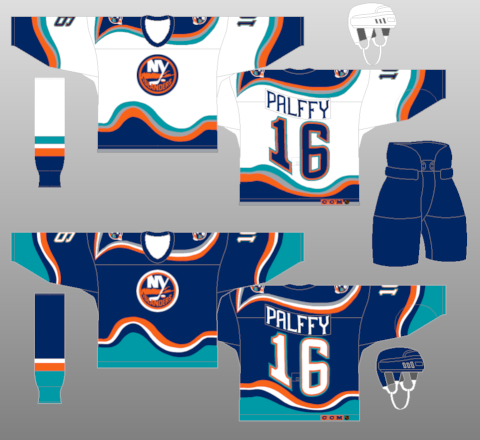
Now, I've gone on before about the '90s era of jersey becoming the new found retro (with the same Ziggy Palffy photo...) and I think I may have found the new trend of one logo/identity that will be hail as awful at the time, but when looking back on it was so bad that it was actually cool, neat, and hip to have in the present day.The Buffaslug.
Now, this isn't because I bought an authentic jersey and fancy Buffaslug hat on the very cheap and hoping to get on the ground floor; but when I look at it in-depth-- this could be something that in a few years could be the nostalgic dream for some fans and collectors alike. Much like how the Gorton's Fisherman Islanders jersey is fondly look back and has many people pining to get their hands on a jersey.
Sure, the two have their difference, but if you'll allow me the time and the begging capabilities, I'll see if I can show the similarities and change your mind on how you look at the Buffaslug.
1. Both were quite the change for each identity, but different for each team. The Islanders went from their normal blue and orange to a drastic addition of teal and silver and switching from royal blue to navy blue-- quite the change from a team who had the tradition of the royal and orange. The Sabres were going back a yellow and blue scheme (again, navy instead of royal), but it was from a drastic overhaul prior where the team went from their traditional set to a whole new color scheme of black, silver, and red. The Sabres at least tried to right things.
2. The logos were....interesting. The Islanders at least tried to capture the spirit of their name; getting an actual mascot/logo on there rather than the "NY" combination in a circle with a hockey stick coming from the "Y" and a silhouette of Long Island behind it all. The Buffaslug trying to almost modernize the original Sabres logo, but it also combined the "angry goathead" they had in the black and red days. Both, very drastic changes, but tried to capture the spirit of the thing.
3. Both teams reside in New York.
4. The fact remains that it was a stop gap to get to a new modernized version of the identity they had before. After the Fisherman failed, the Islanders kept the wavy jersey pattern with the old logo for a season before going back to a more traditional look, but with a navy blue and orange motif. The Sabres did the same, moving back from the Buffaslug to a modernized version of their original scheme, again switching out the royal blue for navy to go along with their yellow look.
5. Each will have their lovers and their haters. Personally, the kid in me enjoyed the Fisherman jersey when it came out because it was something you didn't see in other logos and it was bright and colorful-- as a 12 year old, that's what you go for. Still to this day I regret not getting a Fisherman jersey. The Buffaslug will have people remembering it for being closely related to the Flinstones' Royal Order of Water Buffalo hat, but it's something that won't go away from the memory of people too soon and some will look back on it fondly and maybe actually want it come back-- if only for a goof.
6. With both, the alternate logo seemed to go with it as well. The Islanders had a great alternate logo with the wavy jersey of the lighthouse with the crazed colors to it. That went away when the jersey went away and it shouldn't have. The Buffaslug also ushered out the "B" with the sabre through the openings-- which was there for the black and red era and was a fairly bad-ass looking alternate as well.
Both are long dead and buried, but much like the underground movement of the Fisherman jersey coming back; so, too, could the Buffaslug. It's a far reach, but it's one of those logos that seemed like a good idea, but the execution is very off.
Labels:
Buffalo Sabres,
New Jerseys,
New York Islanders,
Retro Jerseys
Monday, May 23, 2011
Absurd Goalie Monday: Tom Askey
With a small trend of hockey players going in the music direction, this week's AGM follows that kind of ideal. While he didn't have the best college career, has small sip of tea in the NHL, his minor league durability made him endearing to many people. Now, without hockey-- he's on the music scene. This week, the profile of Tom Askey.Askey played with the Wheatfield Blades of the Empire Junior League before he would move onto the college ranks. Askey would start for The Ohio State Buckeyes in his freshman season in 1992-93, but wouldn't fair well-- putting up a 2-19-0 record in 25 games. That didn't deter the Anaheim Mighty Ducks, who picked Askey in the 1993 NHL Draft in the eighth round. The 1993-94 season wasn't any better at OSU, as Askey would go 3-19-4 in 27 games; while in the 1994-95 season, Askey posted a 4-19-2 record in 26 games. Askey would improve his record for his senior season in 1995-96 and by more than one win-- 8-11-4 in 26 games, getting him CCHA Second Team All-Star honors.
Askey moved along to the pro ranks in the 1996-97 season, playing with the Baltimore Bandits of the AHL and getting in 40 games and finishing with a 17-18-2 record. Also, Askey was called by USA Hockey to play in the World Championships, winning his only game he played in.
The Bandits would move to Cincinnati and become the Cincinnati Mighty Ducks, where Askey would spend most of the 1997-98 season, going 10-16-4 in 32 games; but then being called up to Anaheim late in the season-- appearing in seven games with an 0-1-2 record. For the 1998-99 season, Askey was back in Cincinnati, where he would play 53 games and put up a 21-22-3 record, then an 0-3 record in the playoffs. Askey also went to Anaheim for one playoff games in the 1998 playoffs; a loss.
The 1999-2000 season had Askey IHL bound, splitting his time between the Kansas City Blades for 13 games (3-5-3) and the Houston Aeros for 13 games (4-7-1), as well.
However, when Askey signed with the Rochester Americans in the summer of 2000, he seemed to find a home, as he would go 15-8-4 in the 2000-01 season and 0-1 in the playoffs; but also won the Hap Holmes Trophy with Mika Noronen for fewst goals-against. That was enough for the Americans' parent club-- the Buffalo Sabres-- to sign him in the summer of 2001. Askey would stay in Rochester for the 2001-02 season, playing in 34 games and having a 16-15-4 record. The 2002-03 season saw future Sabres come into Rochester, most notably Ryan Miller-- which would cut Askey's workload more-so, only getting in 16 games that year with a 3-8-4 record. Askey would see more time in 2003-04, playing in 21 games with a 10-8-3 record then a 2-0 record in the playoffs, then following that with a 2004-05 season with a 10-6-2 record in 20 games.
With no gigs in North America, Askey went on a European vacation in 2005-06 season, playing first with HIFK Helsinki and going 9-5-5 in 21 games, then getting moved to Jokerit Helsinki; going 8-6-2 in 16 games. Askey also dabbled in the Swiss league that season; playing for HC Fribourg-Gotteron for six games with a 4-2 record, but then going 0-4 in the playoffs.
Askey would return to North America to play for the United Hockey League's Kalamazoo Wings for 2006-07 campaign, where he would get into 45 games, finishing with a 27-15-2 record, but having a 0-1 record in three playoff games.
One more shot for Askey, as he went over to Italy, first, playing with HC Alleghe for 11 games before moving all the way over to England to play for the Nottingham Panthers, where he would play 31 games; helping them win the Challenge Cup as champions of the Elite League.
After his playing career was done, Askey moved back to Kalamazoo and is actually working on some original music. While he doesn't have a record out yet, he does have some of his work on his MySpace page.
It was a bit of a travel for Askey and while the success didn't really outweigh the unsuccessful side of things, he seemed to still keep strumming along and rolling with the punches. And while he has another career with no guarantee of staying power, he's in it for the love of the art-form rather than the paycheck.
Labels:
Absurd Goalie Monday,
AHL,
Anaheim Mighty Ducks,
Buffalo Sabres,
College Hockey,
European Hockey,
Finland,
IHL,
Tom Askey,
UHL
Monday, May 16, 2011
Absurd Goalie Monday: David Littman
While I didn't plan it like this, it just happens to be the 91st goalie in the AGM series, which is the year that this year's AGM's new gig started. It's a guy who didn't get much of a taste of the NHL, but still had a pretty solid career in the NCAAs and minor leagues. He may have taken the scouting report of being technically sound a bit too seriously. This is the profile of David Littman.While Littman started with the Oyster Bay Gulls in the New York Junior League, Littman really burst onto the scene with the Boston College Golden Eagles in the NCAA for the 1985-86 season, where he was a scholarship goalie-- playing in seven games in the first year and going 4-0-1. Littman would split time in 1986-87 with Shaun Real, playing in 21 games sporting a 15-5-0 record, as well as helping BC win the Hockey East Championship that season. That season would get Littman drafted by the Buffalo Sabres in the 1987 Draft in the 11th Round. The 1987-88 season would be a little rough for Littman and the Golden Eagles, going 11-16-2 in 30 games, but was able to get a hold of Hockey East Second All-Star Team honors. However, Littman would bounce back with a 19-9-4 record in his 32 games, grabbing Hockey East First All-Star Team honors and NCAA East Second Team All-American honors.
The 1989-90 season would give Littman his first taste of pro hockey, splitting time between the AHL's Rochester Americans (5-6-1) and IHL's Phoenix Roadrunners (8-7-2). However, Littman would settle into the AHL role for the 1990-91 season, playing in 56 games with Rochester and going 33-13-5, then going 4-2 in eight playoff games, as the Americans lost in the Calder Cup finals. Littman would get his first NHL game in late January 1991 with the Sabres; replacing former AGM Darcy Wakaluk for half the game, both of whom were Buffalo's AHL goalies. Littman and Wakaluk won the Hap Holmes Award in the AHL for fewest goals-against, as well as Littman getting AHL First Team All-Star honors. The 1991-92 season had Littman back in the Rochester cage, playing in 60 games with a 28-20-9 record, going 8-7 in the playoffs; though losing in the semi-finals. Littman got his second Hap Holmes Award and AHL Second Team All-Star honors. Also, Littman got one full game with the Sabres that year, a losing effort against the Islanders.
During the summer of 1992, Littman decided to sign on with the Tampa Bay Lightning for the 1992-93 season, but he would spend most of his time with the IHL's Atlanta Knights, going 23-12-4 record in 44 games, 1-2 in three playoff games, then losing his only game with the Bolts that season against the Devils when replacing another former AGM, Pat Jablonski.
While Littman signed with the Boston Bruins for the 1993-94 season, he was again relegated to the AHL ranks, splitting between the Providence Bruins for 25 games (10-11-3), then loaned out to the Fredericton Canadiens for 16 games (8-7-0). That off-season, he played in one game for the World Championships for the USA, a loss, as they would finish fourth.
Littman didn't play most of the 1994-95 season for some reason (can't find the reasoning), but he would land in the ECHL with the Richmond Renegades for eight games in the season, going 4-2-0, then busting out big and going 12-4 in 17 playoff games, leading the Renegades to a Kelly Cup championship. The summer of 1995 had Littman go to the RHI, playing for the Los Angeles Blades for three games, going 1-1-1.
It was an IHL adventure for 1995-96 onward, starting first with the Los Angeles Ice Dogs, playing in 43 games and putting up a 17-16-5 record, but missing the playoffs. The 1996-97 season had Littman move to San Antonio to play with the Dragons, where he would put up a 20-16-5 record in 45 games, but going 1-3 in the playoffs.
Another run for Littman came starting in 1997-98, where he would land in Orlando to play of the Solar Bears-- going 21-13-6 record in 44 games, then 8-8 in the playoffs. It was a big year in 1998-99, as Littman played in 55 games finishing with a 32-17-1 record, but appeared in only two playoff games-- both with no decisions. However, the 1999-2000 year wasn't as kind for Littman, as he would only play two games in Orlando, going 1-1 before he would abruptly call it quits.
However, don't feel too bad for Littman-- sure he was a bit off on his NHL dream, but he's living a dream other people would love to have-- Producer for EA Sports' NHL series of games. Rather than not doing the story of him moving from hockey to video games justice-- I'll let his post about the transition go to work.
While he didn't get a primo job as an NHL goalie, he's got a primo job doing work with the NHL and creating something that most NHL fans enjoy. He was able to go through the ranks of minor leagues to try to reach the pinnacle and able to climb through the entry level ranks to be a solid figure head that provides a fancy product to the non-playing fan to actually allow them the chance to experience the game without going through the training and all of that stuff.
Labels:
Absurd Goalie Monday,
AHL,
Boston Bruins,
Buffalo Sabres,
College Hockey,
David Littman,
ECHL,
IHL,
Minor League Hockey,
Tampa Bay Lightning
Wednesday, April 27, 2011
What's Next 2011: Buffalo Sabres
While it looked like the they had things in hand and were going to do it for not only a new owner, but for a fallen legend, the Sabres couldn't get the job done and will have to await a full season with the new owner to see if they can actually have a playoff change of fortune.The story of the team was Ryan Miller, per the usual-- but more over, the play late in the season by back-up Jhonas Enroth, which is a welcome sign. While the goaltending controversy won't be for another couple of year, the play of Enroth will actually give the Sabres some options when it comes to rest Miller and not wear him down as the season rolls forward. Not to say that it was the lack of endurance that sealed Miller's fate, but he hasn't really had a solid back-up in many years and probably has been burning out from the years of overuse.
Offensively, the Sabres were the fourth highest in the East; which you would never know as it is almost scoring by committee. Thomas Vanek and Brad Boyes were 30-goal scorers, while both Tyler Ennis and Jason Pominville were 20-goal getters. In all, 12 of the Sabres were in double-digits in goals, which bodes well for the depth of scoring they could possess, especially considering Derek Roy was out most of the season due to his freak leg injury. Should Roy come back as good as he left off, he'll make the Sabres that much more offensively dangerous.
Tyler Myers had a bit of a sophomore slump, but he played well in the new calendar year to try and save a year that could have been lost. Yet, the rest of the defense had plenty of guys you don't often equate to solid performer-- because many don't know their name. Andrej Sekera had a solid bounce-back season with 29 points and a +11 rating, while Steve Montador continued to be consistent on the blue line with a +16 rating. The next big thing could be Mike Weber, who put a good effort when he was in the line-up and was eased into a regular role, thanks to injuries and what-not. If the youngsters continue to mature consistently, then they should round-out the rest of the team and give the Sabres that final piece for a dominant team.
Luckily, the Sabres will have a decent amount of cap-space even after they re-sign their RFAs and with new owner Terry Pegula willing to spend money to put together a winner; odds are they will be big players on the market this summer, which should bring a lot of promise to the Sabres fateful. Things are looking up in Buffalo, but at least for this season-- it's without a Cup championship.
Monday, April 18, 2011
Absurd Goalie Monday: Joe Daley
While we're in the playoff state of mind in the NHL, we're going to profile a goalie who may have not had any experience in the NHL playoffs, but other leagues-- he was a gem in the second season. Going undrafted and paying his dues, he got to the NHL, even if it was for a short time. This week, a look at the career of Joe Daley.Daley started his trek by playing in the Saskatchewan junior leagues with the Weyburn Red Wings, but had an inawespicous start in the 1961-62 season going 17-29-7 in 53 games. Also, he would play in the EPHL with the Sudbury Wolves for a game, a loss. Daley returned to Weyburn in the 1962-63 season with better results during his 51 games, going 28-17-6 with three shutouts to boot.
In the 1963-64 season, Daley made the jump to the pro ranks, playing with the Eastern League's Johnstown Jets and held his own, going 40-22-4 in 66 games with the Jets, then going 5-5 in ten playoff games; all while winning Rookie of the Year honors. Daley was able to get a call from the Pittsburgh Hornets of the AHL for two games (1-1-0) and the Cincinnati Wings of the CPHL, losing the only game he played in there. Daley would stay in Johnstown for the 1964-65 season, going 41-31-0 in 72 games, but only going 2-3 in five playoff games.
Daley would be signed by the Detroit Red Wings before the 1965-66 season and sent to the CPHL's Memphis Wings, where he would play 68 games with a 25-31-12 for the Wings. Daley would also play that season for eight games in the Western League's San Francisco Seals (5-2-1). The 1966-67 season saw Daley back in Memphis for 50 games, sporting a 23-21-5 record in the regular season and 3-4 in the post-season, while also playing with the AHL's Pittsburgh Hornets going 11-1-3 in only 16 games.
Due to the NHL expansion, Daley was picked up off waivers by the newly formed Pittsburgh Penguins, becoming the first member of the Penguins. However, the 1967-68 season has Daley play with the Baltimore Clippers of the AHL, where he would go 23-25-8 in 56 games. However, Daley would get his time in the 1968-69 season, playing behind Les Binkley in Pittsburgh and playing 29 games with a 10-13-3 record in his first season in the NHL. The 1969-70 season had Daley in Pittsburgh for nine games, going 1-5-3 before being sent to the Clippers for the rest of the season, playing in 34 games (no record provided) with a 3.44 GAA in the process and 1-4 record in five playoff games.
Daley was made available for the 1970 Intra-League Draft, where he became the first player rostered of the Buffalo Sabres, as that draft took place before the Expansion Draft happened. Daley played the 1970-71 season in Buffalo behind Roger Crozier, playing in 38 games with a 12-16-8 record. However, that wasn't enough to keep him there for long.
The Sabres put Daley on waivers, where he was picked up by the Detroit Red Wings. Back with the Wings, Daley would play in 29 games and go 11-10-5 behind Al Smith in the 1971-72 season. He would later be claimed in the AHL reserve draft by the Cincinnati Swords, but Daley decided to go on a different path.
Daley was picked by the Winnipeg Jets in the WHA player draft and would find his way into the WHA for some more job security. Daley would play behind Ernie Wakely for 29 games, going 17-10-1, then going 5-2 in seven playoff games, as the Jets would lose in the Avco Cup final. Daley would split time with Wakely in the 1973-74 season, playing in 41 games and going 19-20-1, while he would get the starting gig in the 1974-75 season, playing 51 games with a 23-21-4 record by season's end. Daley would be the backstop for the powerhouse Jets team in the 1975-76 season, going 41-17-1 in 62 games with five shutouts, then going 10-1 in 12 playoff appearances to help the Jets win the Avco Cup. That year, Daley would be a WHA First Team All-Star.
Back in Winnipeg for the 1976-77 season, Daley kept going in playing 65 games for the Jets, going 39-23-2 over the season, then 11-9 in 20 playoff games, where the Jets would lose in the Avco Cup Finals. The 1977-78 season saw Daley's time dwindle with the acquisition of former AGM Gary Bromley, as Daley would only see 37 games and going 21-11-1, as well as posting a 4-1 playoff record in five games, helping the Jets to yet another Avco Cup. Daley would be the back-up to Markus Mattsson in 1978-79, playing in only 23 games with a 7-11-3 record, but not registering a decision in three playoffs games-- another playoffs where the Jets would take home the Avco Cup; the last team to do so.
Daley would retired after that season, leaving the WHA as the all-time winning goalie (regular season and playoffs), tied with the single-season shutout mark (5 in 1975-76), and three Avco Cup-- all with the Jets.
After his playing career, Daley coached the Pentincton Knights in the 1981-82 season, but would relocate to Winnipeg to open up "Joe Daley Sports Cards," which is one of the bigger outlets for cards and memorabilia.
While he didn't make too much of a mark in the NHL, Daley was one of the guys who enjoyed the WHA coming along because it game him a chance to shine and actually play. Lucky for him, he had some great teams in front of him and showed how successful he could be in the right circumstances.
Labels:
Absurd Goalie Monday,
AHL,
Buffalo Sabres,
Detroit Red Wings,
Joe Daley,
Minor League Hockey,
Pittsburgh Penguins,
WHA,
Winnipeg Jets
Monday, April 11, 2011
Absurd Goalie Monday: Steve Shields
As we sit here looking at the Michigan Wolverines in the NCAA Finals, we look at one former Michigan goalie jumpstarted Michigan's 21 straight tournament appearances, and made it to two Frozen Fours, but never got to the final game. Then he was able to make it into the show and had a steady career, including three fights with fellow goalies (Steve Passmore, Sean Burke, and Garth Snow). Even so, he's been coast-to-coast and took his technological skills in his new career. This week, a look at Steve Shields.Shields started off with the North Bay Trappers and St. Mary Trappers of Junior A leagues in Ontario before committing to the University of Michigan. Starting in the 1990-91 campaign, Shields would jump into starter's role, playing in 37 games with a 26-6-3 record, which was enough for him to get drafted by the Buffalo Sabres in the 1991 Draft. In his sophomore campaign in 1991-92, Shields went 27-7-2 in 37 games with a 2.84 GAA, helping Michigan to the Frozen Four, but losing in OT in their match-up. During his Junior year, Shields was more than capable to carry the 39 game workload, going 30-6-2 with two shutouts and a 2.22 GAA, getting the Wolverines to the Frozen Four again, but failing to advance past the four. Shields was named CCHA First Team All-Star and NCAA-West Second Team All-Star squad. For his senior season, Shields went 28-6-1 in 36 games while helping Michigan to the CCHA championship, their first ever. Shields again took home CCHA First Team All-Star and NCAA-West Second Team All-Star honors. Shields would leave school with the NCAA record for most wins (111), but it was broken by another Wolverine, Marty Turco (127).
After college, Shields would start his pro career in both Rochester of the AHL and South Carolina of the ECHL. While in Rochester, Shields played 13 games, sporting a 3-8-0 record; while in South Carolina he went 11-5-2 in 21 games, with two shutouts. The 1995-96 season would see Shields step up in Rochester, going 20-17-2 in 43 games; while also getting two games up in Buffalo, going 1-0-0. In the playoffs, Rochester and Shields would dominate, as he would go 15-3, as Rochester won the Calder Cup. Shields would start off the 1996-97 season with Rochester, playing 23 games with a 14-6-2 record before getting the recall from Buffalo to end the season, where he would go 3-8-2 in 13 regular season games, but then go 4-6 in 10 playoff games. Shields would be up with the Sabres for the 1997-98 season, playing in 16 games with a 3-6-4 record, while spending a game in Rochester, which was a losing effort.
During the 1998 Entry Draft, Shields and a pick were traded to the San Jose Sharks for former AGM Kay Whitmore and a pick. The 1998-99 season saw Shields play behind Mike Vernon, playing 37 games with a solid 15-11-8 record, 2.22 GAA and .921 save percentage. That performance allowed the Sharks to get rid of Vernon in the 1999-2000 season and Shields took the starting role, playing in 67 games, with a 27-30-8 then going 5-7 in the playoffs. The 2000-01 season was one of injury for Shields, as he would go down to an ankle injury early-- opening the door for Evgeni Nabokov to take over the starting role. Shields got his time in, playing 21 games and going 6-8-5 before going down with an injury with his shoulder ligaments. With Nabokov gaining stardom and the wealth of prospect goalies in their system, Shields would be the odd-man out.
During the trade deadline of 2001 and days before his shoulder injury-- Shields and Jeff Friesen were traded to the Anaheim Mighty Ducks for Teemu Selanne. While he didn't play with the Ducks in 2000-01, he came back for the 2001-02 season playing along J-S Giguere, but wouldn't fare well, going 9-20-2 in 33 games.
During the 2002 Draft, Shields was traded to the Boston Bruins for a third-round pick, where he would be a part of a carousel of goalies, but would get the most game-time out of five keepers to play that year with a 12-13-9 record in 36 games.
Before the start of the 2003-04 season, Shields would be traded to the Florida Panthers for future considerations. Shields would only play 16 games behind Roberto Luongo with a 3-6-1 record.
Shields didn't play anywhere during the lockout season of 2004-05, but would return after the season started in 2005-06-- signing with the Atlanta Thrashers. Shields would go 1-2-1 in five games and would have played four games in the AHL with the Chicago Wolves, finishing with a 2-2-0 record.
One more kick in the can for Shields in the 2006-07 season, signing as a free agent with the AHL's Houston Aeros, but would only play one game in relief, letting up three goals on nine shots in that appearance. After that, Shields would hang-up the pads.
After his pro career was over, Shields would continue to play in the Northeast with amateur teams as a forward. Currently, Shields has gotten his hands into the technology and coaching segment, helping to start up iCoach.com, a remote coaching site for a mass of teams and coaches.
While there was a lot of promise, Shields never got a good shake with solid teams to solidify what he could have done with some teams. When he got on later in his career, he got stuck behind other goalies who had a step up on him in the system or was on a team that was in a rebuild and didn't have the parts to help him out. That said, the college career from Shields was one that will be remember and could be credited to jumpstarting that program again.
Friday, April 08, 2011
Friday Five: Weekend Finale
It's the last weekend of the regular season, and while there are still some teams in the hunt for the second season, there are many who know their fate and go about preparing their game for the playoffs or preparing their swing for the course.1. The Senators announced that Bryan Murray has signed a three-year extension to stay on as GM. What does this mean for the team as a whole??
It's something that was definitely unexpected and you could probably bet that maybe Cory Clouston could get another year done behind the bench; but other than that-- you would think they would want to move into another direction with the team. While Murray is probably not the best option, you could see something like what the Flames did and sign a former GM to be the heir-apparent to the GM position, but I doubt owner Eugene Melnyk will do that, as it would seem to undermine his front office. For all the people saying that it would be a huge overhaul for the Sens, looks like they were disappointed once again.
2. The consolation of some players is the World Championships. While it may not mean a lot to the casual fan, how much is it worth paying attention to??
Obviously, a lot of the hardcore patriotic fans will follow their country and enjoy the game play-- but odds are, if you're team is in the Stanley Cup playoffs; you won't pay much attention to it all. And to be honest, it's not a horrific thing not to pay attention, as the games will air somewhat early (Slovakia is ahead by seven hours on Eastern time)-- but you should keep an eye out for it as the Cup Playoffs start to dwindle down the teams. There's a lot of NHLers who are out of it that'll attend, so you could have a lot of those fans watching-- but I doubt they'll lose sleep if they miss a game or seven.
3. The Draft Lottery is being held on Tuesday. Is there a chance that it's not going to go to the Edmonton Oilers??
They have a 48% in the lottery to get the first pick, but it would be the first time since the 1995 and 1996 Drafts that a team would have back-to-back 1st Overall Picks. This could be a good thing or a bad thing when it comes to how you look at it. The Oilers haven't been much for talent and to be honest-- it could be a rush for a young player to automatically get into the line-up from juniors; but at the same time-- best to get them in the games early and let them adapt naturally rather than baby them through the motions.
4. What does the play of Jhonas Enroth bring to the Sabres and what could it mean for Ryan Miller??
What this could finally mean is that the Sabres don't have to overwork Miller. Enroth probably won't make a play for a #1 or even 1b spot, but it gives the Sabres another solid option and are able to give Miller a rest every now and again because they have a solid guy who could come in and actually perform well, especially in the clutch. Enroth will get another deal, as he is a RFA this summer, but I don't think he'll challenge for Miller's spot right now....but in a couple years, maybe.
5. Will there be any big surprise to come out of this weekend??
I don't think so. There won't be a big time comeback or dramatic finish-- because I think some of those seeds are out of steam by now and probably couldn't pull one more rabbit out of their hat. If there's one thing that could happen is that this is going to be the most dramatic Hurricanes/Rangers games outside of any playoff situation there could be. The "win and you're in" scenario is something that's enticing, but probably not going to be enough to really rally the troops to watch a game, especially if you're team is already in.
---------
That's it this week and we're getting around to playoff time and who knows if this thing will keep going in the playoffs-- we'll see what the first round brings and go on from there. If you have topics, Scotty.Wazz@Gmail.com is the place to be dialin'.
Monday, March 14, 2011
Absurd Goalie Monday: Dave Dryden
It's hard to play in the shadow of a more famous brother, especially if he's younger. Hard to make it into the NHL and stick, as well. However, this week's AGM overcame both of these task and even went so far as revolutionizing the game for modern day goalies, plus jump-started the pro-career of the best in the game. This week, the profile of Dave Dryden.Dryden started his career in Junior B with the Aurora Bears in the 1958-59 season, playing in 48 games with three shutouts and a 3.52 GAA for the season. Moving up to the St. Michael's Majors in 1959-60, Dryden would play in 12 games behind Gerry Cheevers that season, then 18 games the next season. Dryden was on the roster for the St. Mike's Memorial Cup championship in the 1961 tournament. The 1961-62 season had Dryden move to the Toronto Marlboros, where he would play 32 games, finishing with a 17-8-6 record, with three shutouts-- then going 7-5 in the OHA playoffs. His play afforded Dryden the chance to play one game in the AHL with the Rochester Americans (no decision) and a call-up to the NHL with the New York Rangers, which would result in a loss.
After his junior career, Dryden would have to play with senior hockey in the OHA, as there weren't many jobs in the NHL. In the 1962-63 and 1963-64 season, Dryden tended goal for the Galt Terriers-- playing in 79 games over two season, with two shutouts in that time-span and a 3.99 GAA. The 1964-65 season would see Dryden play with the Galt Hornets, playing in 35 games before received a call-up to the AHL's Buffalo Bisons, playing in four games, winning all four and compiling a 1.50 GAA.
Dryden got a chance in the NHL again, getting signed by the Chicago Blackhawks for the 1965-66 season, playing in 11 games and going 3-4-1 in those games. However, with Glenn Hall there, Dryden would be sent down to the CPHL's St. Louis Braves for the 1966-67 season, going 17-17-14 in 48 games that season. However, due to expansion, Dryden would be back with the Hawks for the 1967-68 season, playing in 27 games behind Denis DeJordy and going 7-8-5. The 1968-69 season saw Dryden get a small increase in games, playing in 30 and racking up a 11-11-2 record in those games. Yet, with the arrival of Tony Esposito in the 1969-70 season, Dryden was relegated to the Dallas Black Hawks of the Central League, playing in two games, losing both; as he was suspended because of his refusal to report at first.
Hope was almost running out, as Dryden would be playing with the Salt Lake Golden Eagles of the Western League at the start of the 1970-71 season, where he would play in 8 games and go 1-6-0. However, thanks to the expansion era, Dryden got new life in the NHL, with the Buffalo Sabres picking him up to play for them. He would get in 10 games that season, going 3-3-0, allowing himself some back-up time to start with in Buffalo.
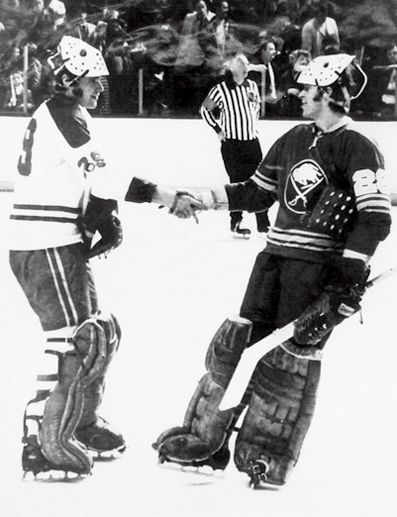
During that 1970-71 season, Dryden was hoping to get to play against the Montreal Canadiens, where his younger brother Ken was playing. On March 20, 1971-- the game was to happen, but the Canadiens started Rogie Vachon over Ken Dryden; so the Sabres played Joe Daley over Dave. However, Vachon got hurt, with allowed Ken to play-- to which, Sabres coach Punch Imlach immediately replaced Daley with Dave-- marking the first (and only) time two brothers have faced off against each other in goal in a NHL game. After the Canadiens won, the Drydens met at center ice and shook hands in a sign of respect.
Dave Dryden would be back in Buffalo in the 1971-72 season, playing in 20 games and going 3-9-5. However, Dryden started to come out of his shell in the 1972-73 season, playing in 37 games and putting together a 14-13-7 record, but going 0-2 in the playoffs. The starting role of the Sabres would go to Dryden in the 1973-74 season; playing in 53 games and finishing with a solid 23-20-8 record with a stellar 2.97 GAA.
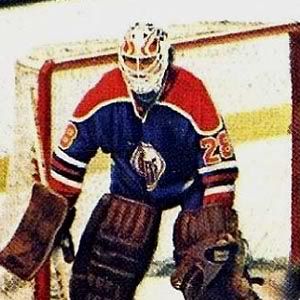
As Dryden's stock was on the rise, the WHA came calling with the Chicago Cougars plucking Dryden away from the NHL for the 1974-75 season, going 18-26-1 in 46 games with the Cougars. The new Edmonton Oilers would claim Dryden in the WHA Dispersal Draft, as he would take the starting gig in Edmonton, going 22-34-5 in 62 games of the 1975-76 season. It would be a topsy-turvy 1976-77 season for Dryden, playing in 24 games with Edmonton, going 10-13-0 for this troubles. However, Dryden would be traded to the New England Whalers in January 1977, but refused to report to the Whalers and subsequently suspended. Dryden's refusal paid off, as the Whalers traded him back to Edmonton in September of 1977, and Dryden would going 21-23-2 for the 1977-78 season.
It was a banner year for Dryden in the 1978-79 season, for good and bad reasons. Of course, the WHA was the starting point for Wayne Gretzky, who scored his first professional goal in the WHA on Dryden-- when Gretzky was part of the Indianapolis Racers. Gretzky would then be dealt to the Oilers, which helped Dryden's career season-- as he would go 41-17-2 for the powerhouse Oilers, even though they would lose in the AVCO Cup finals. That season, Dryden won the Ben Hatskin Trophy for Best Goaltender, as well as the Gordie Howe Trophy for WHA MVP of the season.
The Oilers would move over to the NHL for the 1979-80 season, but Dryden almost didn't make the trip over. The Buffalo Sabres claimed Dryden prior to the Oilers' Expansion Draft, but the Oilers reclaimed him as a priority selection in the Draft. Yet, Dryden would only see 14 games, with a 2-7-3 record in those games before retiring.
However, before he retired; Dryden created an innovation in goaltending equipment, which would be a godsend for today's keepers. Dryden created the first fiberglass mask with a cage; which was a primitive look at what we see today in the NHL. It provided full protection to the head, while allowing a clear sight with the cage element to it.
After retiring, Dryden would go to coach the OHL's Peterborough Petes for two seasons, then being the goaltending coach of the Detroit Red Wings for the 1983-84 season. Currently, Dryden is the chairman for Sleeping Children Around the World, a charity providing bed kits and clothing to children in developing nations. This charity was started by Dryden's father, Murray.
While he had to live in the shadow of his overly successful brother, Dave carved a niche out for himself in a solid fashion. He was never put into the most flattering positions, the fact he stuck it out through the lean years and actually knew where he wanted to be and not accepting anything less, he showed the winning instinct that seemed to be a family trait, regardless of personal achievement.
Thursday, February 17, 2011
Bett and Bals: "As Atlanta Burns"
With all the fun stuff going on in Phoenix and things wrapping up in Buffalo, many people forgot Atlanta and their ownership woes. Luckily, the Thrashers made news once again with an owner saying that if things can't get better-- relocation is a possibility with a new owner....yet one not in the equation is Jim Balsillie....until now. (We start off with Jim Balsillie in the kitchen eating a bowl of cereal, as he hears Gary coming through the kitchen entrance in a huff)
Gary Bettman: How in the hell is this going to work?? We have some issues with Phoenix still not getting ready to get sold, now Atlanta is talking about their issues?? Luckily, we have Buffalo being sold.....AGAIN, but at least this guy is a legit money-maker and just loves giving money out to hockey teams and to start hockey teams.
Jim Balsillie: I have that kind of power and I don't get a look. Granted, Buffalo is like Hamilton with better wings-- but still.
GB: That's just it though-- he didn't threaten to relocate them to some crazy city. But still-- the Sabres are good. Why can't the Thrashers work?? They've got a solid team, they've got a solid arena-- why can't they draw anything from that??
JB: They say if you don't follow history, you're bound to repeat it. I know the NHL doesn't like to look too much into the past unless they can make a buck off it merchandise wise-- but there's a reason the Flames didn't work in Atlanta. They couldn't make the ends meet and it seems to be going the same way with the Thrashers....but the Thrashers had more staying power.
GB: How is this possible though?? It seemed that they had enough owners to cover their costs-- why are they now say that all this stuff is too rough to cover and what-not??
JB: That's just it-- they have nine owners.....but it's spread out over three cities and one guy wanted to overthrow the entire group. It's bedlam and it's very rare that multi-person ownership groups do well, sans Edmonton where everyone in the city was pretty much an owner. The question is now-- what's next; I mean.....I'm still around.
GB: Sadly, I know that. But luckily I got a text saying Stephen Rollins is interested-- you may remember him from playing with the every popular New Jersey Rockin' Rollers franchise....
JB: Who?? What?? Another guy from the film game in the fold, though?? That's worked so well with Bruce McNall and Jerry Bruckheimer, hasn't it?? Sure, the native thing works-- but at what point will that not be enough to keep the team there. You could have Lil' Jon buy the team, but even though he has connections to the area and the game-- if he can't make money off of it; you're right back to where you started.
GB: This was supposed to work-- I mean, Tampa seemed to right themselves.....Dallas is selling, the Panthers are still in Miami-- why can't this all work out. Why has Carolina been the only team not to have an ownership issue since moving to these "non-traditional" markets?? I think the only thing good is that we have people interested out there....even if they aren't know for their fantastic work.
JB: And lost in all of this-- me. A lot of money, a love for the game-- why not give someone like me or even relocation a chance?? It's not like it's a bad idea, plus it would probably go to a hockey market to actually get more money into your wallet-- which is good for the business. What's with the gunshy reaction??
GB: It's a bigger level than just us, Jimbo.
JB: Don't call me that.
GB: It has to do with everyone involved. I mean, if the Thrashers go-- do the people have to foot the bill for an empty arena?? Will the Hawks be the next to go?? Why should we take entertainment away from the people who actually go to the event?? That's why we have revenue sharing, so teams like this can thrive and all that fun stuff.
JB: Even so, some owners are going to be ticked off with others who aren't making money-- and with the CBA coming up; you may need some solidarity going against Donald Fehr's NHLPA rather than in-fighting about some other owners not picking up their own weight.
GB: We're going to be stronger than ever. We're making a lot of money. Our gimmicks are getting more and more attention, our sponsorships are up by far-- to think we won't be united going into the CBA is ludicrous.
JB: (Phone rings) Interesting-- but that's not ludicrous-- this is Ludacris
GB: How do you know him?? What's going on with that??JB: It's something you don't need to be so curious about, but he's an Atlanta guy....should I ask him??
GB: OH MY....YES!! Why do you even have to ask that??
JB: Okay. Hey Chris-- yeah-- oh you're outside?? Yeah he wants to talk about it. It's crazy. Sure, I'll get him to go to the door and you two can chat. Yeah-- see you in a second.
GB: Excellent!! See, I do need you, but don't really need you. (Rushes to the door and opens it)
Judge Redfield T. Baum: T-BOMB!!!!
GB: Sweetsassychrist!! (falls over)
JB: Wow....what'chu got in that bag, Red??
JRTB: TEA BAGS!!!
JB: And that's how the gimmick works.
Monday, February 14, 2011
Absurd Goalie Monday: Clint Malarchuk
While we've had a lot of comebacks, this one could be more of the interesting ones-- especially because it was only a week until he played again. Yet, while it was only seven days-- the severity of his comeback made people sit there in amazement after what he had gone through. It's one moment that he will be infamously known for and many will never forget. This is the profile of Clint Malarchuk.Starting in Junior A with the Fort Saskatchewan Traders, Malarchuk went 23-9-1 in 33 games during the 1977-78 season, as the Traders would be the runner-up in the AJHL season. Overtaking the starting role in the 1978-79 season, Malarchuk would get 52 games in with a 36-15-1 record, helping the Traders actually win the Centennial Cup for the AJHL championship. That season also saw Malarchuk get his feet wet in the WHL, playing 2 games with a 1-0-1 record for the Portland Winterhawks. Malarchuk would stay in Portland for the 1979-80 season, splitting time with Darrell May-- getting in 37 games in with a 21-10-0 record. Malarchuk would split with May again for the 1980-81 season, playing in 38 games with a 28-8-0 record, then going 3-2 in the playoffs.
Malarchuk was drafted by the Quebec Nordiques in the 1981 Draft during the fourth round, and he would go to the Fredericton Express of the AHL for the 1981-82 season, gaining the starting role while playing in 51 games, though he sported a dismal 15-34-2 record; while he got a call-up to Quebec for two games, going 0-1-1 in those games. The 1982-83 season started the shuttle years for Malarchuk, as he would shift between Fredericton and Quebec. With Fredericton, he'd go 14-6-5 in 25 games, sharing the Hap Holmes Memorial Award for lowest goals-against with Brian Ford; while with Quebec, Malarchuk went 8-5-2 in 15 games. For the 1983-84 season, Malarchuk stayed up with the Nordiques for most of the season, playing in 23 games, going 10-9-2 overall-- then spent 11 games in Fredericton with a 5-5-1 tally. Due to a logjam in net, Malarchuk was relegated to only Fredericton in the 1984-85 season; going 26-25-4 for the season playing in 56 games, then going 2-4 in six playoff games.
There was a bit of a reprieve during the 1985-86 season, as Malarchuk would stay up with the Nordiques the entire season, while making a play for the starting gig. With a 26-12-4 record in 46 games, Malarchuk was priming himself for the long-haul. However, it came falling down, as he would go 18-26-9 in the 1986-87 season, which pretty much derailed his time in Quebec.
In June of 1987, Malarchuk and Dale Hunter were traded from Quebec to the Washington Capitals for Alan Haworth, Gaeten Duchense, and a first-round pick.....which turned out to be Joe Sakic. Malarchuk would get the starting gig in Washington, while he went 24-20-4 in 54 games, then going 0-2 in three playoff games. Yet-- thanks to the play of former AGM Pete Peeters, Malarchuk had to split time for the 1988-89 season and would go 16-18-7 in 42 games with the Caps before he was moving again.
At the trade deadline, Malarchuk, Grant Ledyard and a sixth-round pick was traded from Washington to the Buffalo Sabres for Calle Johansson and a second-round pick. Malarchuk played seven games to round out the year with a 3-1-1 record....but the year almost finished in tragedy.
Everyone knows the story, on March 22nd 1989-- the skate blade of St. Louis Blues forward Steve Tuttle hit Malarchuk's neck, severing the internal jugular vein. Malarchuk had blood gushing out of his neck and was very close to dying, and would have if he was at the other end of the ice. However, thanks to the quick thinking of then Buffalo trainer and former Army medic Jim Pizzutelli, Malarchuk was able to be saved. The doctors stitched up Malarchuk with over 300 stitches to close up the wound and didn't think he should play the rest of the season-- but he did. In later interviews, Malarchuk said that he left the ice as quick as possible so that his mother wouldn't see him die on the ice. It was bleak in his mind that he had the trainer call his mother and a Pastor was called in for him.
The 1989-90 season saw Malarchuk back in Buffalo to back-up another former AGM, Daren Puppa. Malarchuk would get in 29 games with a 14-11-2 record for the end of the season. Malarchuk would return for the 1990-91 season, but the record wouldn't be as forgiving-- finishing with a 12-14-10 record in 37 games. The 1991-92 season had Malarchuk behind the Puppa and another former AGM Tom Draper, as Malarchuk would 10-13-3 in 29 games and would spend two games with the AHL's Rochester Americans, going 2-0-0. Yet, the Sabres had too many goalies for the 1992-93 season and Malarchuk was loaned out to the IHL's San Diego Gulls and would play 27 games, in which he would regain his form with a 17-3-3 record, then going 6-4 in 10 playoff games, helping the Gulls get to the Turner Cup finals, despite losing. Malarchuk would share the James Norris Trophy for lowest goals-against with Rick Knickle.
That would mark the start of Malarchuk in the IHL, as he would stay in the league, but with the Las Vegas Thunder for the 1993-94 season. He would take the torch, playing in 55 games with a 34-10-7 record. Staying with Las Vegas in 1994-95 season, Malarchuk would see his time reduced, playing 38 games with a 15-13-3 record, as Malarchuk would retire after the season ended. However, it would be short-lived, as Malarchuk would come out of retirement to play four minutes in the 1995-96 season for the Thunder. Malarchuk would have a short retirement again, going 1-1-0 in three games for the 1996-97 season before he would be done for good.
After his playing career, Malarchuk would go into coaching-- first with the Las Vegas in the 1997-98 season, then moving to the Idaho Steelheads of the WCHL from 1998 until 2000. Malarchuk would get the call to the NHL to be a goaltending consultant to the Florida Panthers for the 2002-03 season, then getting on with the Columbus Blue Jackets from 2006 until 2010 before catching on with the Atlanta Thrashers this past summer.
Even after his throat incident, Malarchuk almost got into a fatal situation his farm in Nevada, as he had a self-inflicted gunshot wound to his chin after setting his gun between his legs when waiting to hunt. Malarchuk and his wife deny it was a suicide attempt; but he was consuming alcohol, which didn't blend well with his medication for OCD-- a condition he developed after the throat injury.
It's been a topsy-turvy career and life for Malarchuk, but he has been able to overcome things that most people probably couldn't do after it happened. He beat the odds in hockey and cheated death twice-- plus found a career after the game and stayed in the game thanks to it. You can't keep a good man down, and Malarchuk seems to be living proof.
Monday, December 20, 2010
Absurd Goalie Monday: John Blue
In the giving spirit of things, I'll give a chance to a lucky emailer to pick out the AGM for this week, and it's a great one at that (Thanks to Justin W.). From a kid who grew up in a hockey obscure market, then going on to being a surprise in the NCAA, going to the Olympics, then to the NHL-- but never panned out to the hype that go him there. While he was a higher rating than the starter in NHL94, he saw less than 50 games in his NHL career, but found a new calling when it was all said and done. This week, the career of John Blue.The mention of a hockey obscure market is that Blue grew up in Huntington Beach, California, where surfing and volleyball seem to be the norm. However, Blue liked the calling of hockey and playing in net. So much so that he uprooted from California to move to Des Moines, Iowa in order to join the USHL's Des Moines Buccaneers and experience more competitive hockey. He would only play 15 games in the 1983-84 season, but he was exposed to where he needed to be in order to be successful in the game.
Blue went to the University of Minnesota starting in the 1984-85 season and Blue was able to get into the starting role in his freshman year. That year, Blue was stellar, going 23-10-0 in 34 games, including two shutouts. His performance got him WCHA Second Team All Star honors. Blue continued to hold-steady in the 1985-86 season, going 20-9-0 in 29 games, this time going into the First Team All-Star for the WCHA. Blue's play was able to get him drafted by the Winnipeg Jets in the tenth round of the 1986 Draft. With that momentum, Blue went into the 1986-87 season with confidence and it showed in his play, going 21-9-1 in 33 games on the year. In his time, Blue was able to get Minnesota into the NCAA Tournament, making it to the Frozen Four twice (1986 and 1987).
With his play in college, he was picked to help represent the USA in the 1988 Olympics, which meant that Blue had to leave school and go play with the US National Team in preparation. Blue would appear in 13 games for Team USA in pre-Olympic exhibitions, going 3-4-1. However, Blue was not used when the Olympics were played.
After he returned from the Olympics, his rights were traded from Winnipeg to the Minnesota North Stars for a draft pick. Blue would turn pro at the tail-end of the 1987-88 season, playing in the IHL for the Kalamazoo Wings for 15 games and going 3-8-4 and playing in one playoff game, which was a loss. The 1988-89 season was split for Blue, who would play for the Wings again for 17 games (8-6-0), but would also be shuffled to the Virgina Lanchers of the ECHL, where he would play for ten games with a 4.00 GAA. Blue would be shuttled around in the 1989-90 season, starting off with Kalamazoo for four games going 2-1-1 before being loaned to the Phoenix Roadrunners of the IHL, where he would play 19 games going 5-10-3. Blue would be sent to the ECHL's Knoxville Cherokees for 19 games, compiling a 6-10-1 record. Blue would also represent the USA in the 1990 World Hockey Championships, going 2-2-0 in five games of play. It was another roundabout season for Blue in 1990-91, where he would play with Knoxville for three games (1-1-0), then to the IHL with Kalamazoo for one game (a win), then out to play for the Peoria Rivermen for four games (4-0-0), then moving to the Albany Choppers for 19 games 11-6-0. Even with that moving around, Blue would play for Team USA again in the World Championships, though he wouldn't see any game time.
Becoming a free agent at the end of the season, Blue signed on with the Boston Bruins before the 1991-92 season, giving him some kind of stability, as he would play the season with the Maine Mariners of the AHL. Blue would get 43 games in during the 1991-92 season, going 11-23-6 for the season. Another call from Team USA at the World Championships, but another tournament with no games played. The 1992-93 season had Blue start with the Providence Bruins, where he would play 19 games with a 14-4-0 record before getting a call-up to Boston. In Boston, Blue would back-up Andy Moog and see 23 games of action, putting together a 9-8-4 record, also seeing two playoff games, going 0-1. Blue would start in Boston for the 1993-94 season, but would struggle in his 18 games, going 5-8-3 before being sent down to Providence, going 7-11-4 in his 24 games there. With the 1994-95 lockout, Blue didn't play much; but would start up in Providence when things got going-- playing 10 games with a 6-3-0 record, but would go 1-3 in four playoff games.
Blue went unsigned at the start of the 1995-96 season, which landed him in the IHL, first with the Phoenix Roadrunners, where he would play eight games with a 1-5-0 record. Then he was traded to the Fort Wayne Komets, where he would play five games with a 1-2-2 record before getting another shot at the big time.
Blue was signed as a free agent in late December of 1995 by the Buffalo Sabres. He would play five games with the Sabres, going 2-2-0 before he was sent down to the Rochester Americans of the AHL. With the Amerks, Blue played in 14 games, going 4-6-1 and 0-1 in the playoffs.
The 1996-97 season relegated Blue to the WPHL, playing with the Austin Ice Bats, where he would split time with Chad Erickson. Blue would play 33 games and put up a 17-11-5 record, while going 0-2 in the playoffs. Blue retired after that season.
Currently, Blue is the Lead Pastor of the Pacific Pointe Church in Irvine, California. During is playing career, Blue's faith in Jesus was question and he turned to the Bible after looking at his life and how it had gotten away from him. Blue also held Bible studies with former NHLer Curtis Brown and current NHLer Brian Pothier.
Blue discovered that there's more to life outside the game and that hockey was just a game. Even though he did have some personal accolades, he did see a bigger picture in the end and followed through on it. Kind of ironic that he's profiled this week, as many celebrate the birth of Jesus. In any case, God bless Blue for seeing a bigger picture, bigger than himself.
Labels:
Absurd Goalie Monday,
AHL,
Boston Bruins,
Buffalo Sabres,
College Hockey,
IHL,
John Blue,
Minor League Hockey
Subscribe to:
Posts (Atom)