Showing posts with label Back-Up Goalies. Show all posts

Monday, July 15, 2013

Absurd Goalie Monday: Alphonse "Frenchy" Lacroix


When it comes to goalies, it's always a rough task to come on in an emergency situation like an injury. Even worse back in the olden times when only one goalie dressed at a time as the concept of a back-up hadn't been invented as of yet. However, this week's AGM had the task of going in for, at the time, one of the most heralded teams in the NHL to that point with only an amateur background to boot. This week, the profile of Alphonse "Frenchy" Lacroix.

Lacroix started off as a 16-year-old with Newton High School in Massachusetts in the 1914-15 season, going 5-1-1 in seven games, while in the 1915-16 season; Lacroix would post a 5-2-0 record. In his final high school season, Lacroix went 7-0-1 in eight games.

Post-high school, Lacroix would play in the amateur ranks with the Boston Navy Yard in 1917-18 and posting a 7-4-0 record in a 11 games, as well as playing exhibition games for the Navy Yard in the 1918-19 season. Begining in the 1919-20 season until the 1923-24 season, Lacroix would play for the Boston AA Unicorns across different amateur leagues. Lacroix would go 15-4-0 in the 19 games played in that time-frame and 4-3 in seven playoff games.

Playing in the amateur ranks allowed for Lacroix to be selected for the 1924 Olympics by the USA, where Lacroix went 4-1-0 in his five games played and helped the US to a silver medal. Lacroix would return to the Unicorns for the 1924-25 season, playing in 21 games and ending up with a 15-6-0 record.

In November of 1925, the Montreal Canadiens signed Lacroix as an emergency goalie. When Georges Vezina started to cough up blood on the ice due to an undiagnosed tuberculosis; Lacroix would play in five games and going 1-4-0 before yielding the crease to Herb Rheaume for the duration of the 1925-26 season. Lacroix would spent the 1926-27 season under contract with the Canadiens, but not play a game with them that season.

Lacroix returned to the amateur ranks, playing with the Providence Reds of the Can-Am League in the 1927-28 season, posting a 1-3-0 record in four games. Also that season, Lacroix played for the Lewiston St. Doms in the Northeast League and went 8-12-2 in 22 games played. Returning to the St. Doms in the 1928-29 season, Lacroix went 3-1-0 in four games, then 2-1 in three playoff games. Lacroix would return to the Can-Am League in the 1929-30 season with the Reds again, playing in only one games-- which was a win. In the 1930-31 season, the Boston Tigers would use Lacroix in net for four games, where Lacroix went 1-3-0 before he would retire after the season was over.

Having to come into the NHL with no professional background and take over for a legend like Vezina is a taunting task for someone who actually had professional games under his belt. However, with a silver medal in tow and a decent amateur background-- Lacroix did what he could in the emergency situation.

Sunday, April 14, 2013

On the Topic Of Joey MacDonald's Future in Calgary


With the Calgary Flames season in disarray, the look is to the future-- which many think is not looking too much better for the foreseeable future-- especially between the pipes. With the future of Miikka Kiprusoff up in the air with how serious he is when it comes to his retirement threats, what's to come next for the goaltendings.

Enter Joey MacDonald and his audition that has been going in the past two weeks or so. MacDonald has gone 4-1-0 since March 27th in his seven appearances with the Flames and, to me, I think he's at least garnered another contract for at least next season to be in a 1A/B model for the 2013-14 season for the incoming European goalies-- or as a back-up for Kiprusoff should he not stick to his retirement talk.

MacDonald has been a somewhat serviceable back-up or third string goalie, though his numbers tell a different tale. Despite being 7-6-1 overall for the Flames, the fact he has been playing better as the team has been getting somewhat better is a definite good sign for things moving forward. Plus, considering the fact MacDonald has been known to linger on the bench for long stretches at a time-- should Kipper come back, he'd be one of the best choices for a back-up as any of their younger guys or European import.

Taking into account that Kiprusoff won't be back-- what could the Flames do with their prospects coming over for next season. Karri Ramo has been highly regarded by GM Jay Feaster as the best goalie not in the NHL, but while he has done well in the KHL-- it doesn't mean it'll always translate to the NHL game. Same goes for the other European goalie in Reto Berra, who has done well in the Swiss league, but may not be able to thrive in the NHL or North America as a whole.

Already in their system is Danny Taylor, who was signed by the Flames when Kipper went down with an injury. Taylor overtook the starting role in Abbotsford of the AHL from Barry Brust, who was hot for Abbotsford early in the season, but Taylor has taken the NHL experience and stepped his game. So much so that the once promising prospect in Leland Irving has been relegated to third-string in Abbotsford and very much off the radar for the Flames.

With all this uncertainty, it definitely makes a strong case for MacDonald to actually get another shot with the Flames. He's the devil that is known and can actually get the job done on a team that may not know or understand it's new identity. MacDonald is having a strong stretch run and if Feaster just let's MacDonald get away in hopes that the imports without contracts and who have been out of (or not been in) the NHL for a while will be a better option-- then he deserves to be tarred-and-feathered after his firing.

Thursday, March 29, 2012

Isles Smartly Sign Grahame...Wait, What??

John Grahame has signed with the Islanders. In 2012.

I'll just let that sink in.

If he plays, the Islanders would have had six goalie play in a game for the the team, one off the NHL record.

The question however that seems to come up is why would the Islanders do it if they have guys like Kevin Poulin and Anders Nilsson in Bridgeport of the AHL to come up?? Why not give the young guys some time in the NHL??

The point is that this is a stop-gap move. The Bridgeport Sound Tigers are in the mix for a division title and a spot in the playoffs in the AHL. To pull up that team's goalie just to sit on the bench in the NHL and MAYBE get some playing time in-- seems a bit ridiculous for the long-run, especially for meaningless games in the NHL, since the Isles have been eliminated.

While it's suspect, especially since it's been a while since John Grahame has been in the NHL (he did play in the KHL and last year in the AHL), it's a smart move to have a guy that's in some kind of game shape, rather than someone that could be just a beer-league guy to sign to an amateur try-out contract or to pluck someone from the AHL or ECHL in order to get them a taste of the show AND maybe stifle the chances of that team to actually make the playoffs or be there for a stretch to get them in the playoffs.

Yet, the biggest question is whether or not John Grahame will get some time in net. Considering there is five games left, considering the Islanders seem to be cursed with goaltending injuries-- you would think he could get some time in there to see if he can actually hack, as well as saving up Al Montoya from possible bad things happening to end the season.

Grahame has been the goalie coach for the USHL Sioux City Musketeers this past season and was 23-19-5 over 48 games in the past two seasons prior with the AHL's Lake Erie Monsters, so he could be ready to actually get something done. There's two games that I could see Grahame getting without having accusations of the Islanders tanking-- one against Winnipeg and one against Columbus-- as both teams are eliminated from the playoffs. Heck, if Montoya slips and Grahame comes in as a reliever and lights it up tonight; it could be sooner.

In the end, people will say this was an out of left field thing for the Islanders and another sign this is a team with no direction at all. I say it's a smart decision when you take into account that their younger guys will be able to experience meaningful games in the minor leagues rather than gathering dust on a NHL bench.

Monday, March 05, 2012

Otter-ly Deplorable


(Yes, I do pun headlines. Deal.)

While he may not make the AGM ranks, Connor Crisp was thrown into a situation he probably never thought he'd be in; emergency back-up. A center by trade, Crisp went from the press box to the goal crease in a span of 20 minutes. You can read the great write-up by Neate Sager at Buzzing the Net for all the details, but it's interesting how this all came to be and why it will may not happen again.

First and foremost-- props to Crisp for man-ing up and taking on the task of doing this. Second, props to the Ice Dogs for not celebrating goals and then giving Crisp his props at the end.

The problem I have isn't with the Ice Dogs putting up 13 goals in all of this, because they aren't going to let up because it's major junior and every game is supposed to matter. You could tell the players were pissed off as anyone from having to face against a returning-from-injury forward having to be put into net, as it is a brotherhood out there at the end of the day.

My problem is with the Erie Otters' management and how they actually didn't call up someone who had experience in net, even if they are from the Junior A ranks or minor-midget ranks to just sit and be a back-up. You shouldn't have to throw a player, who has been injured most of the season, into a situation like that-- even though the Otters are going to be last in the OHL this year.

Otters' GM Sherry Bassin had this to say:
"Late last night, our backup goaltender (Devin Williams) failed a concussion test. I looked at our alternatives; one of our goaltenders (Adam Wood) was playing in the Ontario Junior C Championships, the other (Corey Foster) in the Midget Ontario Championships. I studied our alternatives based on the 2000 or so games I've been involved in. This turned out to be a bad decision. I accept full responsibility and apologize publicly for the embarrassment to the league and the sport of hockey that I love. I have deep respect for our league and sport."
Though he did take blame for this, you have to figure that the OHL will have more to say about this. It's one thing to have not enough skaters to actually field a solid team, but it's another thing to only bring one legitimate goaltender with you on a road-trip. Even as a last place team, you need to have some dignity for the game. This isn't your local beer league where you can do this and have guys yuk it up. A lot of these guys  want to have a future in hockey on a higher level and display their skill-- which won't fully happen against a forward going into goal.

While this is a fun story, you have to bet that not only the OHL, but the entire Canadian Hockey League will have a new rule to actually carry two ACTUAL goalies suited up for their games. Honestly, the team shouldn't have been allowed to play when there was no back-up on the bench or out there for warm-ups. Yet, since there's no rule against it-- they let it happen.

The OHL got some decent press because of this story, it was for the wrong reason in the end. After you get past the great story of Crisp actually getting in there, it makes it a sideshow that could and should have been prevented. Especially since Crisp is coming back from a serious shoulder injury, which could have gotten re-aggravated in this little stunt. Then it would have been much, much worse.

By the way, Crisp saved 32 of 45 shots in his 58 minutes of action, which will probably be his last between the pipes.

Tuesday, February 14, 2012

Teaching How to BUGI

In a world where there's plenty of random stats that may or may not lead to looking at a player differently; I've decided to do that on my own. I was thinking last night about how bad your team is if you're getting the back-up put into the line-up to start against your team. So...why not go ahead and research it all.

Of course, you have a lot of "back-ups" who are call-ups and get a start every now and again, but they still count. Call-up or not, the fact they were in the AHL and then next thing you know they're starting against your team-- it could be an issue. Yes, yes-- I know the injury bug has caught teams before-- but let's not ruin my fun...or something.

That notwithstanding-- I'll horribly present you you the BUGI-- Back-Up Goalie Index.

Before I break it all down-- here's some pre-footnotes, which may not be a thing, but it will be now:

-For back-up status as of February 14th, 2012-- the goalie has to play 20 or less games
-Three teams didn't qualify for that: Colorado, Edmonton, and St. Louis
-Columbus and Toronto's regular tandem had over the games, but Allen York and Ben Scrivens started games
-11 of the 25 remaining teams had multiple back-ups

In all of this, the Eastern Conference has 22 goalies designated as back-ups, while the Western Conference only had 18. Back-ups have faced the Eastern Conference 205 times, the Western Conference 170 times. Intraconference has the Eastern Conference facing other Eastern back-ups 167 times, while Western teams face their own conference 104 times. The East has only faced Western back-ups 38 times; West faced Eastern back-ups 66 times.

Now, onto the specifics:

EASTERN CONFERENCE


The Carolina Hurricanes get the most within their conference and then move overall in the conference when it comes to the back-ups. The Bruins got the least within and total in their conference. A very interesting stat is the Toronto Maple Leafs not facing a Western Conference back-up, while the Montreal Canadiens only have seen one.

WESTERN CONFERENCE


As you see, a lot less back-ups, no teams totaled over 20 games, while the Eastern Conference had three. Vancouver, Dallas, and surprisingly Calgary have faced the least in their division-- as Calgary's surprise could be because of Miikka Kiprusoff playing most of the time and giving them a chance to win most nights. St. Louis and Anaheim have faced the least outside their conference; while the total sees Anaheim, Calgary, and Vancouver tied for least faced back-ups. In a surprise, the Nashville Predators have faced the most back-ups, despite being fifth in the Western Conference standings and tied for fifth in all of the NHL in points.

---------

I understand this will not catch on, nor should it. But it's is interesting to see which team face the most back-ups. Especially considering how bad the Blue Jackets and Islanders are-- they don't face as many back-ups as you would have thought.

Monday, February 14, 2011

Absurd Goalie Monday: Clint Malarchuk

While we've had a lot of comebacks, this one could be more of the interesting ones-- especially because it was only a week until he played again. Yet, while it was only seven days-- the severity of his comeback made people sit there in amazement after what he had gone through. It's one moment that he will be infamously known for and many will never forget. This is the profile of Clint Malarchuk.

Starting in Junior A with the Fort Saskatchewan Traders, Malarchuk went 23-9-1 in 33 games during the 1977-78 season, as the Traders would be the runner-up in the AJHL season. Overtaking the starting role in the 1978-79 season, Malarchuk would get 52 games in with a 36-15-1 record, helping the Traders actually win the Centennial Cup for the AJHL championship. That season also saw Malarchuk get his feet wet in the WHL, playing 2 games with a 1-0-1 record for the Portland Winterhawks. Malarchuk would stay in Portland for the 1979-80 season, splitting time with Darrell May-- getting in 37 games in with a 21-10-0 record. Malarchuk would split with May again for the 1980-81 season, playing in 38 games with a 28-8-0 record, then going 3-2 in the playoffs.

Malarchuk was drafted by the Quebec Nordiques in the 1981 Draft during the fourth round, and he would go to the Fredericton Express of the AHL for the 1981-82 season, gaining the starting role while playing in 51 games, though he sported a dismal 15-34-2 record; while he got a call-up to Quebec for two games, going 0-1-1 in those games. The 1982-83 season started the shuttle years for Malarchuk, as he would shift between Fredericton and Quebec. With Fredericton, he'd go 14-6-5 in 25 games, sharing the Hap Holmes Memorial Award for lowest goals-against with Brian Ford; while with Quebec, Malarchuk went 8-5-2 in 15 games. For the 1983-84 season, Malarchuk stayed up with the Nordiques for most of the season, playing in 23 games, going 10-9-2 overall-- then spent 11 games in Fredericton with a 5-5-1 tally. Due to a logjam in net, Malarchuk was relegated to only Fredericton in the 1984-85 season; going 26-25-4 for the season playing in 56 games, then going 2-4 in six playoff games.

There was a bit of a reprieve during the 1985-86 season, as Malarchuk would stay up with the Nordiques the entire season, while making a play for the starting gig. With a 26-12-4 record in 46 games, Malarchuk was priming himself for the long-haul. However, it came falling down, as he would go 18-26-9 in the 1986-87 season, which pretty much derailed his time in Quebec.

In June of 1987, Malarchuk and Dale Hunter were traded from Quebec to the Washington Capitals for Alan Haworth, Gaeten Duchense, and a first-round pick.....which turned out to be Joe Sakic. Malarchuk would get the starting gig in Washington, while he went 24-20-4 in 54 games, then going 0-2 in three playoff games. Yet-- thanks to the play of former AGM Pete Peeters, Malarchuk had to split time for the 1988-89 season and would go 16-18-7 in 42 games with the Caps before he was moving again.

At the trade deadline, Malarchuk, Grant Ledyard and a sixth-round pick was traded from Washington to the Buffalo Sabres for Calle Johansson and a second-round pick. Malarchuk played seven games to round out the year with a 3-1-1 record....but the year almost finished in tragedy.

Everyone knows the story, on March 22nd 1989-- the skate blade of St. Louis Blues forward Steve Tuttle hit Malarchuk's neck, severing the internal jugular vein. Malarchuk had blood gushing out of his neck and was very close to dying, and would have if he was at the other end of the ice. However, thanks to the quick thinking of then Buffalo trainer and former Army medic Jim Pizzutelli, Malarchuk was able to be saved. The doctors stitched up Malarchuk with over 300 stitches to close up the wound and didn't think he should play the rest of the season-- but he did. In later interviews, Malarchuk said that he left the ice as quick as possible so that his mother wouldn't see him die on the ice. It was bleak in his mind that he had the trainer call his mother and a Pastor was called in for him.

The 1989-90 season saw Malarchuk back in Buffalo to back-up another former AGM, Daren Puppa. Malarchuk would get in 29 games with a 14-11-2 record for the end of the season. Malarchuk would return for the 1990-91 season, but the record wouldn't be as forgiving-- finishing with a 12-14-10 record in 37 games. The 1991-92 season had Malarchuk behind the Puppa and another former AGM Tom Draper, as Malarchuk would 10-13-3 in 29 games and would spend two games with the AHL's Rochester Americans, going 2-0-0. Yet, the Sabres had too many goalies for the 1992-93 season and Malarchuk was loaned out to the IHL's San Diego Gulls and would play 27 games, in which he would regain his form with a 17-3-3 record, then going 6-4 in 10 playoff games, helping the Gulls get to the Turner Cup finals, despite losing. Malarchuk would share the James Norris Trophy for lowest goals-against with Rick Knickle.

That would mark the start of Malarchuk in the IHL, as he would stay in the league, but with the Las Vegas Thunder for the 1993-94 season. He would take the torch, playing in 55 games with a 34-10-7 record. Staying with Las Vegas in 1994-95 season, Malarchuk would see his time reduced, playing 38 games with a 15-13-3 record, as Malarchuk would retire after the season ended. However, it would be short-lived, as Malarchuk would come out of retirement to play four minutes in the 1995-96 season for the Thunder. Malarchuk would have a short retirement again, going 1-1-0 in three games for the 1996-97 season before he would be done for good.

After his playing career, Malarchuk would go into coaching-- first with the Las Vegas in the 1997-98 season, then moving to the Idaho Steelheads of the WCHL from 1998 until 2000. Malarchuk would get the call to the NHL to be a goaltending consultant to the Florida Panthers for the 2002-03 season, then getting on with the Columbus Blue Jackets from 2006 until 2010 before catching on with the Atlanta Thrashers this past summer.

Even after his throat incident, Malarchuk almost got into a fatal situation his farm in Nevada, as he had a self-inflicted gunshot wound to his chin after setting his gun between his legs when waiting to hunt. Malarchuk and his wife deny it was a suicide attempt; but he was consuming alcohol, which didn't blend well with his medication for OCD-- a condition he developed after the throat injury.

It's been a topsy-turvy career and life for Malarchuk, but he has been able to overcome things that most people probably couldn't do after it happened. He beat the odds in hockey and cheated death twice-- plus found a career after the game and stayed in the game thanks to it. You can't keep a good man down, and Malarchuk seems to be living proof.

Monday, September 13, 2010

Absurd Goalie Monday: Mark LaForest

While the theme of these AGMs are usually lost potential for goalies, this one is a story of a guy who had to deal with a lot of bad NHL teams, but a lot of great minor league teams. Each task, he took in stride; though-- happy to just be there in the show after going undrafted in the first place. Plus, he took all the time in the minor in stride. This week, we take a look at the career of Mark LaForest.

Laforest's first foray into the goaltending fraternity started in the Ontario Junior B ranks with the Welland Cougars, playing 23 games with a 5.56 GAA. That was able to take him into the OHL, playing with the Niagara Falls Flyers for the 1981-82 season. LaForest was part of a large goaltending contingent in Niagara, getting in 24 games-- the most of the five goalies used-- and went 10-13-1 in those games. LaForest moved with the team to North Bay and would see a lot more time in net, playing 54 games in the 1982-83 season with a solid 34-17-1 with a 3.73 GAA, but then went 4-4 in the eight playoff games.

After going undrafted, LaForest was signed by the Detroit Red Wings and would head to the IHL to start the 1983-84 season. LaForest would start with the Kalamazoo Wings and play for 13 games with a 4-5-2 record before getting a call up to the AHL's Adirondack Red Wings with a 3-3-1 record for his seven games of action. For the 1984-85 season, LaForest would play first back with Adirondack for 11 games with a 2-3-1 record, but would move to the ACHL's Mohawk Valley Stars for eight games at the end of the season. The 1985-86 season would be a changer for LaForest, who would start with Adirondack again, but only for 19 regular season games (13-5-1, 2.99 GAA) before getting a call up to Detroit to play for the Wings. LaForest would get 28 games in on a horrific Wings team, going 4-21-0; but at least have that for experience. LaForest was sent back to Adirondack in time for the AHL playoffs, where he went 12-5 to help Adirondack win the Calder Cup. LaForest won the Baz Bastien Award for Outstanding Goaltender award for the year in the AHL. LaForest would be back in Adirondack for the 1986-87, playing 37 games and going 26-8-2 with a 2.83 GAA and .911 save percentage. LaForest would get a mid-season call-up with Detroit, playing five games with a 2-1-0 record.

In June of 1987, LaForest was traded to the Philadelphia Flyers for a second round pick in the 1987 Draft. LaForest would start the 1987-88 season with the Flyers, playing four games before being sent to the AHL for the Hershey Bears for five games, going 2-1-2 in that time. LaForest would get called-up mid-season to Philadelpha and play 17 more games with a total record of 5-9-2; as well as getting two games of playoff time in, going 1-0 in his games. At the start of the 1988-89 season, LaForest would catch on with the Flyers for the first part, going 5-7-2 in 17 games before being sent down to Hershey, where he would go 2-0-0 in three regular season game and then 7-5 in 12 playoffs games.

In September of 1989, LaForest was traded from the Flyers to the Toronto Maple Leafs for a 6th and 7th Round Pick in the 1991 Draft. LaForest caught on with the Maple Leafs as a back-up to Allan Bester and former AGM Jeff Reese. LaForest got into a bit of injury trouble after injuring some knee ligaments slipping on some eyes outside of his house. He got sent to the AHL's Newmarket Saints for some rehab (6-4-0) before being called back up to Toronto to end the season with a 9-14-0 record in 27 games.

LaForest would be on the move again in June of 1990, as he and Tie Domi would get traded from Toronto to the New York Rangers for Greg Johnston. LaForest would be on AHL duty with the Binghamton Rangers for the 1990-91 season, splitting time with Sam St. Laurent. LaForest would go 25-14-2 in his 45 games, though he only went 3-4 in his nine playoff games. Even so, LaForest won the Bastien Award again for that season and named to the AHL's second All-Star team. LaForest would be back in Binghamton in the 1991-92 season, taking most of the time over Boris Rousson with 43 games played and a 25-15-3 record to show for it.

Left unprotected for the Expansion Draft, LaForest was claimed by the Ottawa Senators in the 1992 Draft. LaForest would stay in the AHL with the New Haven Senators to start off the 1992-93. He would play in 30 games with New Haven, sporting a 10-18-1 record. LaForest would also play 10 games in the Colonial Hockey League for the Brantford Smoke with a 5-3-1 record for his time there. The 1993-94 season saw LaForest on an island all his own-- Prince Edward Island, where the Senators took their affiliation. LaForest would get 43 games in for lowly PEI with an 9-25-5 record. Due to his loyalty or lack of other options, LaForest got a call up late in the season by Ottawa, playing in five games with an 0-2-0 record.

Without a team to sign him, LaForest signed with the Milwaukee Admirals of the IHL for the 1994-95 season. LaForest continued to play well in the minors, with a 19-13-7 record in the regular season and a 7-4 record in the playoffs. LaForest would stay in Milwaukee for the 1995-96 season, improving his game from the previous year. LaForest was able to get 53 games of action and come home with a 26-20-7 record and only a 2-3 playoff record. LaForest went back to the Binghamton Rangers for the 1996-97 season, but only for nine games with a 0-4-1 record. After being let go, LaForest would head to the Colonial League again with the Utica Blizzard for six games with a 1-2-2 record. With no other suitors, LaForest hung up his pads after the season.

LaForest's last known whereabouts was in Niagara Falls working for the Niagara Fallsview Casino Resorts. Though his record in the NHL wasn't what he thought it would be, considering that he did so well in the minors. Even so, LaForest looks back fondly on his career, mostly the Calder Cup championship season. Oddly enough, he follows the formula for the AGM somewhat, but giving the circumstances he was put in-- he could have done a lot more; though it doesn't seem like he regrets it.

Tuesday, September 07, 2010

Twitiocy on Parade

There's a reason why I don't follow many pro athlete's on Twitter...and Dan Ellis proved that to me last night during his debacle last night, which is documented well on the Amazing Greg Wyshynski's page and on Sens Town, who has a very detailed account of what happened.

Long and the short of it, Ellis was referring to Reggie Bush referring to the NFL CBA and Ellis mistakenly decided to parlay that to his own life and career. First off, you can't compare the money coming in from the NFL to the NHL, so that's where Ellis should have just stopped sympathizing since he knows not of the NFL players and junk like that. Second, you KNOW when you're going to talk about losing money in this economy and in your profile; you won't get any slack-- especially after bragging about getting a Jaguar.

All of this comes on the heel of another jobber, Paul Bissonnette, comes back to Twitter in some kind of triumphant, Family Guy/Futurama revival to those who actually follow him. Of course, you know of his forte about leaving Twitter when he made a pretty shaky comment about the Ilya Kovalchuk contract. Since coming back, he's been talking about the homeless and all that other stuff; which-- if you enjoy that with the occasional shock-value humor, by all means enjoy. I'm not down for the fact I don't find him interesting or entertaining; but to each their own.

This display, coupled with the Martin Havlat episode we've seen in the past, is probably the reason why having this kind of access to the players isn't as fancy as it's cracked up to be. Aside from the fact they really don't have too much fascinating to say, gems like Ellis's comes up and really put out some kind of uproar. Sure, there's guys like Mike Commodore and Mike McKenna, who really don't do too much shocking on Twitter, but do provide some decent "tweeting" when they do it; Commodore about horse-racing and other assorted things, while McKenna actually is pretty solid on open-wheel racing and about the goaltending science during his season. They provide some kind of entertainment, without having to try all that hard to do it.

There's many who talk about media training, but you can bet that now social media will be apart of that now, if it isn't already. It should especially be for hockey players, who seem to put themselves out there a lot more and get a lot more heat for doing so in the process. I mean, when's the last time Martin Havlat had a tweet about his goings on?? The answer is February 16th. That shows that either he (a) has nothing to say or (b) doesn't really care too much about putting himself out there. If it's B, then by all means-- don't do it. You aren't going to look any better if you put yourself out there online over putting yourself out there in-person.

Sure, this will soon blow over; but the damage done and the disconnect that has happened because of it will not be soon forgotten, especially by those with long memories and long caring. You have to wonder what kind of heckling (if any) will be done and have kind of damage control that the Tampa PR will have to do in order to get things right; especially if there's people who are up and arms, trying to cancel season tickets to the Bolts due to this. That's the people who you have to mostly feel sorry for, the ones who have to clean up the mess left by someone who thought it was right to say what they did, but forgot that it's being broadcasted to the world.

Monday, September 06, 2010

Absurd Goalie Monday: Corey Schwab

With news this week of a signing, this week's AGM will have a lot to do in order to make sure that said signing can live up to the hype he got. Granted, for this AGM, he's got titles in the top-two North American hockey leagues and knows how be at the top of his game; but also knows how to bounce back from a less than desired result. This week, we'll key in on the career of Corey Schwab.

Schwab's career started with the Seattle Thunderbirds of the WHL in the 1988-89 season. As a rookie, Schwab had to play behind workhorse Danny Lorenz and saw Schwab get 10 games (mostly in relief) in with a 2-2-0 record. Schwab was able to get some more time for his draft year in the 1989-90 season and saw 27 gamed with a 15-2-1 record, which could have been a sign of things to come. However, Schwab was in a talent-rich draft year, which saw him go in the 10th round of the Draft to the New Jersey Devils; who drafted a young Martin Brodeur in the first round the same year. Schwab didn't disappoint in the 1990-91 season, where he was able to get some time as a starter, playing 58 games, going 32-18-3; but he went 1-5 in his six playoff appearances.

In the 1991-92 season, Schwab went pro, playing with the Utica Devils to start off with, fighting for time with Doug Dadswell and Chad Erickson. Schwab went 9-12-1 while in Utica and would be sent to the IHL's Cincinnati Cyclones for eight regular season games (6-0-1) and nine playoff games (6-3). Schwab started in Cincinnati to kick off the 1992-93 season, playing three games (1-2-0) before being called up to Utica. In Utica, Schwab teams with Brodeur, but got the bulk of the workload, playing 40 games; going 18-16-5 for the year. The Devils moved affiliates to Albany with the River Rats, to which Schwab played the 1993-94 season. He would get 51 games, going 27-21-3, but only went 1-4 in the five playoff games he played. For the 1994-95 season, Schwab teamed up with rookie Mike Dunham and would take the AHL by storm. Schwab played 45 regular season games and went 25-10-9 and went 6-1 in seven playoff games, helping lead the River Rats to the Calder Cup. Schwab and Dunham won the Jack Butterfield Trophy for co-playoff MVPs, as well as the Hap Holmes Trophy for fewest goals-against, and was named to the second All-Star team.

The 1995-96 season had Schwab start off with a groin injury, but then played five games (3-2-0) in Albany, before getting called up to be the back-up to Martin Brodeur in New Jersey. Schwab got 10 games in (mostly relief), going 0-3-0. It seemed like that performance wasn't enough, as Schwab was dealt in the summer of 1996 to the Tampa Bay Lightning for former AGM Jeff Reese and two draft picks in the 1996 Draft.

Schwab was in the right place at the right time, as another former AGM, Daren Puppa, was out with an injury and yet another former AGM, Rick Tabaracci, was the starter. Schwab was able to get some back-up time, playing in 31 games and going 11-12-1 in his tenure on a mediorce Lightning team. Puppa came back from injury and was dueling with Schwab for playing time in the 1997-98 season. However, on December 31, 1997; Schwab broke his ankle and put him out for the season, playing in only 16 games with a 2-9-1 record. Fully recover for the 1998-99 campaign, started off with the Cleveland Lumberjacks of the IHL, going 1-6-1 in eight games. Schwab got called-up to Tampa and pulled platoon duty with Puppa and then Bill Ranford. Schwab got 40 games in and had a record of 8-25-3 record on a dismal Bolts team.

Schwab got a bit of a reprieve as he was claimed by the Atlanta Thrashers in the 1999 Expansion Draft, but would only spend 16 games (9-4-2) with their IHL affiliate, the Orlando Solar Bears before being traded to the Vancouver Canucks for a draft pick. Schwab played six games, going 2-1-1 for the Canucks, but spent most of the 1999-2000 season with the Syracuse Crunch of the AHL. With the Crunch, Schwab had a 7-5-0 record in 12 games. Schwab would spend the 2000-01 season with the Canucks IHL affiliate, Kansas City Blades. As the starter, Schwab played 50 games with a 22-24-1 record.

After signing with Toronto for the 2001-02 season, Schwab was to back-up Curtis Joseph, but got a fair amount of time in. Playing 30 games, Schwab went 12-10-5. Though some wanted him back as a sturdy back-up, the Leafs allowed him to walk.

The Devils got back Schwab by free agency and he saw very limited time in the 2002-03 season behind Brodeur. With only 11 games to his name, Schwab went 5-3-1 with a solid 1.47 GAA and .933 save percentage for the trap-happy Devils. Schwab was able to get two playoff games in, both in relief of Brodeur and one in the Cup Finals, as the Devils won the Stanley Cup and got Schwab a ring for his troubles. It was good, because the 2003-04 season was not kind to Schwab. He was only able to play in three games (2-0-1) due to a groin injury that saw him miss 55 games that season. After the 2004-05 lockout, Schwab retired from hockey.

Schwab has stayed in the NHL in a coaching role, first with the Tampa Bay Lightning from 2005 until 2008 and now with the San Jose Sharks, where he will be the goalie coach to two new acquisitions-- Antero Niittymaki and most recently, Antii Niemi.

During his career, Schwab had a lot more downs than ups, but was able to do his best when dealing with goaltending carousels and other guys trying to pick up his spot. Of course, he also had to deal with many injuries and sub-par teams. Even so, he does have two championships to his name, which has to count for something.

Monday, June 07, 2010

Absurd Goalie Monday: Chris Terreri

There are few guys who have been as innovative as this guy. If not for this guy, the odds of water bottles being on top of the net may not have happened....for at least a few more years. That notwithstanding, he is the last starter of the New Jersey Devils before the Martin Brodeur era came into town, something that may or may not be used in any kind of trivia. This week, we look at the career of Chris Terreri.

The Providence, Rhode Island native started his career with the West Warwick Wizards in high school before committing to Providence College. Terreri got off his freshman year with only 11 games in 1982-83, but played admirably; going 7-1-0 with two shutouts and 1.93 GAA. That was good enough for the New Jersey Devils, who drafted Terreri in the fifth round of the 1983 Draft. His sophomore year, Terreri would play behind Mario Proulx in net, seeing a much different result-- playing in 10 games with a 4-2-0 record and higher 3.07 GAA. In his junior year in 1984-85, Terreri would make Providence proud, first going 21-15-5 on the season; while propelling the Friars to the first every Hockey East championship, beating Boston College 2-1 in the Championship game. That would move them onto the NCAA Tournament, where the Friars would be in tough in the first round, winning by one goal on aggregate against Michigan, then beating Boston College in the Frozen Four in three overtimes. However, the magic would run out with RPI beating Providence 2-1 in the finals. Terreri would take NCAA Tournament MVP, NCAA All-Tournament Team, and Hockey East MVP for the season.

I mentioned in the opening, the water bottle being utilized. During that three overtime game in the tournament, Terreri and BC goalie Scott Gordon skated to their nets during one of the overtime periods and placed a water bottle on top of their nets. It was the first time this practice was used and showed a sign of solidarity, as both agreed to take one rather than having the playing field unbalanced. Bob Froese was the first NHL goalie to use a water bottle in those 1985 playoffs, though the Islanders called foul on Froese and the Flyers at first, the bottle stayed (because it was velcroed to the net) and it went into practice full-time the next season.

Terreri would close out his college career in the 1985-86 season, not being as fortunate as the year before, going 6-16-0 in his 22 games, closing it out on a disappointing note. He would, however, go play for the United States in the World Championships, playing in five games with one shutout, despite the country finishing 6th.

Terreri would then move onto the pros, playing mostly for the Maine Mariners in the AHL in the 1986-87 season, backing up Kirk McLean. Terreri played 14 games, going 4-8-1 while in Maine, but did get a call-up to New Jersey, playing seven games and going 0-3-1 in his games at the first part of the calendar year.

The 1987-88 season saw Terreri stay out of the pros for the first part of the season, joining the US National Team in order to play in the 1988 Olympics in Calgary. He would play 26 games in preparation, going 17-7-2 in the warm-ups, but only got action in three games behind Mike Richter, going 1-1-0 in his games, as the US would finish 7th. Off the high of the Olympic experience, Terreri would go to the Utica Devils of the AHL, where he would put up an impressive 5-1-0 in his seven games played. The 1988-89 season had Terreri in a starter's role in Utica, getting in 39 games to prove himself and going 20-15-3; which got him a call-up to New Jersey, but more troubles going 0-4-2 in the eight games of action.

In the 1989-90 season, Terreri was the full-time back-up to Sean Burke in New Jersey. Terreri did see a good amount of time and actually was able to prosper while in New Jersey compiling a 15-12-3 record; his most successful in Jersey to date. He would be tested in the 1990-91 season, as he would get much of the starter's time, as management disputes with Sean Burke left Terreri as the main guy. Terreri did well when thrown into the fire, putting up a 24-21-7 record and went 3-4 in the playoffs. With Burke sitting out the 1991-92 season, it was put onto Terreri, who performed so-so with a 22-22-10 record, going 3-3 in the playoffs, as the Devils were ousted in the first round again. There would be split time with Terreri and former AGM Craig Billington in the 1992-93 season, which saw Terreri lose his grasp on the gig; going 19-21-3 on the year.

Terreri would start off the 1993-94 campaign as the starter, but while his numbers were alright, he was warming the seat for the prospect behind him-- Martin Brodeur. Terreri had an impressive 20-11-4 season with a 2.72 GAA on the defensive Devils team. Terreri saw less time in the 1994-95 shortened-season, playing 15 games and going 3-7-2. However, Terreri was along for the ride during the playoffs, which he was able to get a Cup ring for it-- as the Devils won their first Stanley Cup. Terreri started off in New Jersey for the 1995-96 season, but only got four games (3-0-0) in before he moved off the East Coast for the first time in his career.

In November of 1995, Terreri was traded to the San Jose Sharks for a second round pick in the 1996 Draft. Terreri would take over the starting role on the lowly Sharks, playing in 46 games and going 13-29-1 record in San Jose. In 1996-97, Terreri would be behind newly-acquired Kelly Hrudey and only get 22 games in, going 6-10-1, but with an impressive 2.75 GAA and .901 save percentage. Even still-- it wasn't enough to keep him in town long.

In January in 1997, Terreri, along with Ulf Dahlen, Michal Sykora, and conditional draft pick were traded to the Chicago Blackhawks for Ed Belfour. Terreri would only get seven games in during the season, but had a 4-1-2 record in those games. Terreri would get the starting gig for the 1997-98 season, but due to a fractured finger and strained groin (not at the same time), he would only get 21 games in and lose his gig at the #1 spot. He would go 8-10-2 in Chicago and 2-0-1 in his three games of rehab with the IHL's Indianapolis Ice.

Terreri would go back into a familiar place in the 1998-99 season, as the Blackhawks traded Terreri back to the New Jersey Devils for a conditional pick. Terreri knew his role in New Jersey, playing behind Brodeur once again. The 1998-99 season only yield 12 games for Terreri, but he was up to the task, with an 8-3-1 record. In the 1999-2000 season, Terreri was less impressive, only having a 2-9-0 record in his 12 games, but would be on the roster for yet another Stanley Cup ring, as the Devils defeated the Stars to win their second Stanley Cup. Prior to the 2000-01 season, Terreri was picked up in the Expansion Draft by the Minnesota Wild, but he was traded back to the New Jersey Devils with a 9th round pick for Brad Bombardir. Back with the Devils, Terreri got 10 games in and went 2-5-1 before the Devils knew he couldn't be a viable option anymore.

At the 2001 Trade Deadline, Terreri and a 9th round pick were traded to the New York Islanders for John Vanbiesbrouck. Terreri would only play eight games for the Islanders, going 2-4-1. When he knew he couldn't hack it, Terreri hung up the skates....temporarily.

After his retirement, Terreri caught on as an assistant coach with the then-affiliate of the Devils, the Albany River Rats. Thanks to some injuries, however, Terreri had to strap on the pads once more during the 2005-06 campaign, as he would come in net for relief of the River Rats goalie, letting up four goals in 31 shots in 40 minutes of play, as well as getting the loss to his credit. Terreri now serves as goalie coach for the Devils affiliate in Lowell.

You could see that it took awhile for Terreri to grow accustomed to the level of play that he was playing at, but when he finally got into his comfort zone; he excelled very well. He has many individual and team accolades to be proud of and his experience of getting accustomed to new levels should pay off when the Devils finally get the need for young goaltenders in their system.
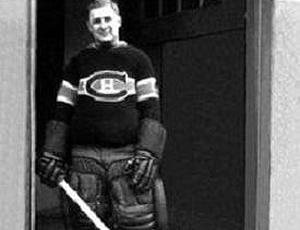
Monday, May 31, 2010

Absurd Goalie Monday: Bob Essensa

While it's one thing to buzz about the Stanley Cup final goalies, we go to one where never had a sniff at the Cup of Lord Stanley. Much to that, not even out of the first round for this week's AGM. In fact, if not for an epic collapse of the team he coaches now; he may have gotten a shot at a ring, even if it was from the bench. This week, we look at the career of Bob Essensa.

Essensa started off playing Midget AAA and Junior B with the Harry Carr Crusaders in the 1981-82 and 1982-83 season respectively. After an impressive season in 1983, Essensa got selected in the fourth round by the Winnipeg Jets. Essensa wasn't going to jump into the pro games just yet, as he opted to play at Michigan State in the NCAA.

Essensa's freshman year, he sat behind Norm Foster while only getting 17 games in. Yet, with those games, Essensa made the most of his starts, going 11-4-0 with two shutouts and a 2.79 GAA. Sophomore year in 1984-85, Essensa would be behind Foster yet again, but this time with 18 games in and 15-2-0 with another two shutouts and a 1.64 GAA, which was enough for Essensa to get on the CCHA First All-Star Team. Essensa would split the starting gig with Foster in the 1985-86 season. Essensa got 23 games in, while going 17-4-1 with a shutout, and a higher 3.33 GAA. And while he didn't get to play in the playoffs, Essensa was part of the 1986 NCAA Championship team with Michigan State beating Harvard 6-5. In the 1986-87 season, both Essensa and Foster were back for their senior years and dominated again. Essensa got 25 games in with a 19-3-1 record and 2.78 GAA. Michigan State won the CCHA tournament, but lost in the NCAA Championship game to Ed Belfour's North Dakota Fighting Sioux.

Essensa's move to the pro game started with the Moncton Hawks in the AHL in the 1987-88 season. The Hawks were in a logjam for goalies with Essensa, Steve Penney, Dave Quigley, with former AGM Pokey Reddick coming down for some stints in the season. That first season, Essensa only saw 27 games and went 7-11-1, which is a far cry from his years in college. Essensa would start the 1988-89 season with the Fort Wayne Komets of the IHL, playing 22 games going 14-7-1, before being called up to the Jets behind Reddick when Alain Chevrier got shipped to Chicago. Essensa would get 20 games in and go 6-8-3 with a shutout to his record. Back to Moncton for the start of the 1989-90 season, where Essensa would play six games (3-3-0, 2.51 GAA) before moving over the Winnipeg for the rest of the season, where he would take over the starting role from another AGM Daniel Berthiaume and Stephane Beauregard, while going 18-9-5 for the year and going 2-1 in the playoffs against the Edmonton Oilers. After being put in Moncton for two games (1-0-1), Essensa went back to the starting role in the 1990-91 season, where he would struggle with a 19-24-6 record and would miss the playoffs.

It was a horrible season for injuries in the 1991-92 season, as he would start the season off injured thanks to the sprained knee, then would deal with a left hamstring and left knee injury towards the middle of the season. With all of that, Essensa would only get 47 games in, going 21-17-6, but would lose out on his gig to another AGM, Rick Tabaracci in the playoffs, where he would only see one game, coming on in relief. Essensa would get back into the swing of things in the 1992-93 season playing mostly uninjured, sans two games, with 67 games in going 33-26-6 with two shutouts, but went 2-4 in the playoffs; which got the Jets ousted again in the first round. It was a very down season for Essensa in 1993-94, as he got all of the wins when he played, as his back-ups Beauregard and Mike O'Neill got zero wins in back-up duty. Essensa would get a 19-30-6 record before the Jets had to make a move.

That move would have Essensa and Sergei Bautin be dealt from Winnipeg to Detroit for Dallas Drake and former AGM Tim Cheveldae. Essensa would finish out the season in a disappointing fashion, going 4-7-2 in 13 games played. The 1994-95 season would see Essensa relegated to the IHL with the San Diego Gulls, playing only 16 games with a 6-8-1 record. A little better fortune for Essensa in 1995-96, though the bulk of the season was with the Fort Wayne Komets of the IHL, playing 55 games for them and going 24-14-5 with a .912 save percentage and 2.89 GAA. Though in the playoffs, he would only go 2-3 and the Komets were ousted in the first round. Essensa got a brief call-up to the AHL's Adirondack Red Wings, going 1-2-0 in his three games.

In the summer of 1996, Essensa was moved to the Edmonton Oilers from Detroit for future considerations. Essensa would be playing behind workhorse Curtis Joseph, which only allowed Essensa to see only 19 games of action in the 1996-97 season, going 4-8-0 in those games. More of the same in 1997-98, playing less games (16), but a better record at 6-6-1. The 1998-99 season was a bit better for Essensa, as he would get more time with Joseph leaving Edmonton; but would have to fight for space with another former AGM, Mikhail Shtalenkov, which would see Essensa get 39 games played and a 12-14-6 record with a 2.76 GAA.

With Tommy Salo in the fold, Essensa would sign as a free agent with the Phoenix Coyotes for the 1999-2000 season and would play alongside Shtalenkov again, before Sean Burke was moved to Phoenix and took over the starters role. Essensa would go 13-10-3 with the Coyotes, but would move onto the Vancouver Canucks as a free agent in the 2000-01 season. Essensa would get plenty of time with Vancouver, playing with Felix Potvin before Potvin was moved and Dan Cloutier came in. Essensa would go 18-12-3 for the season, but 0-2 in the playoffs as the Canucks were swept. Essensa had one last kick-in-the-can when he signed with the Buffalo Sabres, but would be behind Martin Biron, only getting nine games in before being pushed out by Mika Noronen. Essensa went 0-5-0 in that season and would hang up the pads once and for all.

Essensa would take a few years off from the game, but came back in 2005-06 as the Boston Bruins goaltender coach, where he still is employed now.

With Essensa, he was caught in a bind most of the time with a lot of goalies in one crease and Essensa being the odd-man out. While his college career made him a word-of-mouth star, he could never rekindle the magic when he got to the pros. Whether it was the team in front of him or his loss of the gift that got him to the show; Essensa could never find his groove for a long time. But, he did have one of the funniest and interestingly pronounced names out there.

Monday, May 10, 2010

Absurd Goalie Monday: Bob Mason

There's not much else to say about why this week's was chosen for the AGM. However, I do remember back in the day, I did have the buttons of both Capitals goalie that the booster club was giving out. One was Don Beaupre and the other was this week's inductee, who has plenty of success as a 1b or back-up and then in the minors-- but he'll be remembered mostly for being the goalie who was the loser in one of the longest overtime playoff games ever. This week, we give to you-- Bob Mason.

Mason started off his career path with the University of Minnesota-Duluth Bulldogs in the 1981-82 season, where he overtook the starting role over Jon Downing and played 26 games 9-15-3 for his freshman year, but got a bigger role in his sophomore year, where he came into his own. Mason played 43 games games going 26-16-1 with a 3.49 GAA . Mason was able to get the Bulldogs into the NCAA tournament, but couldn't get out of the first round. His season was able to get Mason WCHA MVP and First-Team All-Star honors for his year.

Mason got noticed by the United States National Team, who was preparing for the 1984 Olympics. Since the team had to be full of amateurs, Mason couldn't sign on with anyone and leave school to take the position. Mason took the call and played on the National Team for the 1983-84 season, going 17-10-5 with a 2.82 GAA in 33 games. In Saravejo, Mason backed-up Mark Behrend and played three games and went 1-0-1. After his strong college and international performance, Mason got signed as a free agent in late February of 1984 by the Washington Capitals. Mason played two games for the Capitals at the end of the season going 2-0-0, then was sent to the AHL's Hershey Bears going 1-4-0 in five games.

At the start of the 1984-85 season, Mason started off with the Binghamton Whalers of the AHL, but got a solid call-up in November of 1984 for the Capitals. Mason won eight game straight during his call-up and 8-2-1 with a 2.81 GAA for the season. With the Whalers, Mason went 10-6-1 in 20 games. The 1985-86 season saw Mason back in Binghamton, as the Capitals had too many contracted goalies on the big club. With the Whalers, Mason went 20-11-2. Mason went up to the Caps for one game and got a win in replacing Al Jensen. Mason finally got the call up to the big club for the 1986-87 season, though he spent two more games in Binghamton, going 1-1-0. When he got the call-up to Washington, he had to battle former AGM Pete Peeters for playing time; but Mason was able to get a majority of the starts when all was said and done, playing 45 games and going 20-18-5 with a 3.24 GAA.

However, Mason's shining moment with the Capitals came during the first round of the 1987 NHL Playoffs. The Capitals took on the Islanders and Mason was put to the back-up role for Peeters. After Game Two, Mason was the guy who got the call for the Caps, as he won Games Three and Four and replaced Peeters in Game Five. The Caps lost Game Six, which set up one of the most epic Game Sevens the Playoffs. The game started on April 18th and didn't end until Easter Sunday on the 19th. The game saw many chances in overtime, 132 shots total by the teams, which resulted in Pat LaFontaine scoring on Mason to end it deep into the fourth overtime. Mason stopped 54 shots and went through 10 bottles of water throughout the course of the game. The Easter Epic will forever live in Caps fans minds as a testament to their snake bitten history. (YouTube Highlight Pack)

It would be Mason's last game for the Caps (for now), as he signed on as a free agent with the Chicago Blackhawks. Mason would battle for time with last week's AGM Darren Pang for time, which helped when they came out with almost a split. It saw Mason go 13-18-8 for the 1987-88 season. It was short timing in Chicago, as the Hawks traded Mason to the Quebec Nordiques for Mike Eagles. Mason would spent the first part of the season in Quebec, going 5-14-1 (that includes on loss at the end of the year) and would be sent to the Halifax Citadels in the AHL because of his poor play and being pushed out by another former AGM Mario Gosselin and Ron Tugnutt. With Halifax, Mason got better with a 11-7-1 record.

Mason was traded back to where it all started for him in the summer of 1989, as the Nordiques sent him to Washington for future considerations. Mason book ended the 1989-90 season with stints with the Baltimore Skipjacks of the AHL, but had a stint in the middle of the season with the Caps, going 4-9-1 in 16 games, but went 8-2-2 in 13 games with the Jacks.

The 1990-91 season was rough, as Mason was a free agent without a team. He would keep training until the Vancouver Canucks signed him as an insurance policy in December of 1990. Mason would go to the IHL and the Milwaukee Admirals. With Milwaukee, Mason went 8-12-1 in 22 games, but got a short stint with Vancouver, going 2-4-0 in his six games with the Canucks.

Mason stayed with the Admirals for the 1991-92 season, getting the starting time over Troy Gamble and Corrie D'Alessio. Mason played 51 games and went 27-18-4, but only 1-2 in the playoffs. The Canucks moved their affiliate to the AHL and the Hamilton area. Mason continued to get starters time, but this time had to fight off the youngsters like Gamble, Mike Fountain, and Jason Fitzsimmons. Mason would see 44 games with a respectable 20-19-3 record, but saw no playoff time.

With his contract up, Mason returned to Milwaukee for the 1993-94 season, as he would team with with Larry Dyck for the Admirals tandem, seeing each of them get equal time. Mason had 40 games under his belt with 21-9-8 record for his troubles. Mason would spend 13 more games with the Admirals, going 7-4-1 after going 0-1-0 with the Fort Wayne Komets to start the 1994-95 campaign. It would be the last Mason would play hockey.

Nowadays, Mason has gotten into the coaching aspect of things. He started off with the Atlanta Thrashers in their first two years of existence, but has since moved onto the Minnesota Wild, helping the likes of Niklas Backstrom and Josh Harding ply their craft and deal with the barrage of shots they are facing. He also mentors young goalies during the summer camps he holds along with Islanders goalie Dwayne Roloson.

While the lasting mark of Mason will be the four overtime epic in 1987, he also will be seen as another story of logjams getting in the way of his playing prowess. While his minor league records show he had potential, and while he had some success in the NHL; he couldn't keep the NHL success constant, which really was his demise. Though, that seems to the case for most of the AGMs; lack of consistency really ruining promising careers.

Monday, April 26, 2010

Absurd Goalie Monday: Robb Stauber

In the playoffs, goaltending is key and could be the make-or-break part of a series. Replacing a goalie could be a great shift in momentum or a sign of giving up, with this year showing a little of both with so many goalies being pulled. However, for four games in 1993's playoffs, this week's AGM may have helped swing the momentum to his team's side; especially since they lost big in Games 2 and 3 before they put him in. It was his only career NHL playoff action. This week, we look at the career of Robb Stauber.

Stauber was a stand-out for the Duluth-Denfield Wildcats in the Minnesota high school ranks with a 2.48 GAA in 49 games. This drew the attention of the University of Minnesota Golden Gophers, who recruited Stauber for their squad. It also drew the attention of the Los Angeles Kings, who selected Stauber in the 6th round of the 1986 Draft.

Stabuer's freshman year in 1986-87 was able to ease him into the program, only playing him 20 games behind starter John Blue, with Stauber going 13-5-0. That year, Stauber also got the chance to play with Team USA in the World Juniors, where he would see four games of action. The 1987-88 season saw Stauber take over the starting role for the Gophers, playing 44 games and going 34-10-0, with a decent 2.72 GAA. It was a great year for Stauber, who was named the WCHA MVP, WCHA Goaltender of the Year, WCHA First Team All-Star, NCAA First Team All-Amercian, and he won the Hobey Baker Award for top US Collegiate Player. The 1988-89 season would be hard to top, but Stauber did what he could, playing only 34 games, but would go 26-8-0 with an even better 2.43 GAA, which would give him WCHA Top Goaltender honors once again. Stauber went to play of his country again, as he would play for Team USA in the World Championships, going 3-3-0.

Stauber jumped into the professional ranks in the 1989-90, spending most of his time with the New Haven Knighthawks, playing only 14 games and going 6-6-2, then going 2-3 in his five playoff games. Stauber got some time in March of 1990 with the Kings, going 0-1-0 in his two appearances. It was another year in New Haven for Stauber, who played 33 games for the Knighthawks, but struggled going 13-16-4; which got Stauber some time in the IHL with the Phoenix Roadrunners going 1-2-0 in his four games of play with the Runners. Stauber stayed with the Runners for the 1991-92 season, playing 22 games behind Darryl Gilmour and David Goverde; but the struggles continued with Stabuer going 8-12-1. Yet in the 1992-93 season, luck was on Stauber's side as he was the back-up for the Kings for the season, backing up Kelly Hrudey. Stabuer would go 15-8-4 in his 31 games, but he really shined in the playoffs.

The Kings were playing the strong Calgary Flames team in the first round. Even with the Kings winning the first game, Kelly Hrudey let up 14 goals in the next two games. Down 2-1, Stauber was thrown into net and won the next three for the Kings, allowing only 11 goals in those three games, and helping the Kings advance to the second round. Stauber was on a short-leash, as he lost Game One in the next round to the Vancouver Canucks and was along for the ride with the Kings going to the Stanley Cup Finals, but losing to the Montreal Canadiens.

The good times wouldn't last as Stauber struggled in the 1993-94 season, going 4-11-5 with the Kings, which saw him get demoted again to the Roadrunners, where he would go 1-1-0 in his three appearances. With the shortened 1994-95 season, Stauber would only play one game for the Kings, in relief, and getting a no-decision. It was his last showing in the Kings uniform.

On Valentine's Day of 1995, Stauber and the Kings broke up, as Stauber, Alexei Zhitnik, Charlie Huddy, and a 5th round pick were traded to the Buffalo Sabres for Grant Fuhr, Philippe Boucher, and Denis Tsygurov. Stauber would play six games for the Sabres, this time backing up Dominik Hasek; where he would go 2-3-0 in his games. The 1995-96 season would see Stauber again relegated to AHL work, this time with the Rochester Americans. Six goalies went through the Amerks that year, Stauber was one of the back-ups and went 6-7-1 in his 16 games played.

After that, Stauber would sign as a free agent with the Washington Capitals, but would stay in the AHL with the Portland Pirates for the 1996-97 season, again as a back-up. He would get 30 games in going 13-13-2. Stauber would stay in the AHL in the 1997-98 season, this time with the Hartford Wolfpack after signing with the New York Rangers. Stauber played 39 games that year, getting back to his winning form with a 20-10-6 record. However, when put into the playoffs, he was unable to help his Wolfpack going 3-4 before giving way to Dan Cloutier to take over the playoff reigns. Stauber would play five games for the Manitoba Moose in the 1998-99 season, going 2-1-1 and would hang up the pads for a bit. Stauber would play parts of three seasons in three different leagues with the Jacksonville Barracudas of the ACHL in 2002-03 (0-1-0), the WHA2 in 2003-04 (1-1-0), and then in the SPHL (2-1-0).

After his everyday playing career, Stauber would coach the University of Minnesota team as an assistant and goalie coach. He also runs the Goalcrease Training Center in Edina, Minnesota, as well as playing Bandy for the Duluth Dynamo and US National Team. Bandy is basically field hockey......ON ICE and is called "Russian hockey."

Stauber had a lot of promise coming out of his college career and had some bright spots early, but it seemed that he couldn't get a good rhythm going when he got to the pros thanks to happenstances beyond his control. At least now, like so many others, he can train the young goalies how to both physically and mentally deal with the ups and downs.

Monday, April 12, 2010

Absurd Goalie Monday: Jeff Reese

From the word go, this goalie was the perennial third-stringer due to teams being completely stacked from top to bottom on their depth charts for netminders. However, his time from the bench and press box allowed him to garner enough knowledge about the game and its angles that he took the usual path into coaching after his career was finished. This week, we tell the tale of Jeff Reese.

When he was growing up, Reese started for the Hamilton Kitty B's in midget hockey and showed himself off well enough to get picked up by the London Knight in the OHL for the start of the 1983-84 season. The Knights trusted Reese so much, they threw him right into the starting role and Reese adjusted well enough to salvage a 18-19-1 record in 43 games. The Knights rode Reese into the playoffs but lost in the second round.Reese was seen as a "work in progress" for his draft year, as he was selected 67th overall in the 1984 Draft by the Toronto Maple Leafs. Reese learned enough from that previous year to take into the 1984-85 season where his record improved to 31-15-1 with a 3.88 GAA. Though in the playoffs, Reese couldn't get the Knights past the quaters thanks to the messed up scoring system the OHL had. Reese went 5-2-0, but still wasn't enough. His last year in junior for the 1985-86 season was less than memorable as in 57 games, Reese went 25-26-3, even with a decent 3.93 GAA. It would be Reese's last year for the Knights.

With the start of the 1986-87 season, Reese moved onto the AHL with the Newmarket Saints, the affiliate of the Maple Leafs. Reese didn't get much of a break, as he was thrown into the starting role quick playing 50 games and getting a 17-29-2 record for his troubles. There started to be quick a logjam in ever aspect of the Leafs goaltending, but Reese did start his season on top in Newmarket for the 1987-88 season, with a brief call-up in the middle of the year to Toronto. With the Saints, Reese saw his time dwindle after his call-up; splitting with Tim Bernhardt and Jim Ralph; Reese compiled a 10-14-3 record with the Saints and 1-2-1 record for the Leafs in his five games. One last split year that focused on Reese's AHL development in the 1988-89 season, with 37 games in Newmarket (17-14-3) and 10 games in Toronto (2-6-1).

Reese would finally move up to the Leafs as a third wheel in the 1989-90 season behind Allan Bester and Mark LaForest, but injuries would rear it's ugly head, as Reese dealt with injuries to his knee-cap; breaking it in the first month of the season which saw him sidelined until December. Reese would come back to play for Newmarket for seven games at a 3-2-2 record before moving up to Toronto and going 9-6-3 in his 21 games. For the 1990-91 season, there seemed to be a set-back thanks to the knee-cap injury. Former AGM Peter Ing took over Reese's spot and Reese struggled, as he went 2-7-1 to start the season and it got him sent to Newmarket for retooling. Reese would only get three games in with the Saints because of the stacked goaltending, but we went 2-1-0 in those games. Reese got recalled in the new year and went 4-6-2 before he broke his transverse processes, which is used to attach muscles in the vertebrae, and was out the rest of the year. The 1991-92 season started off rough again for Reese, as he went 1-5-1 in his first eight games. He would then be involved one of the biggest moves in NHL history.

On January 2, 1992; Reese, along with Alexander Godynyuk, Gary Leeman, Michel Petit, and Craig Berube were traded to the Calgary Flames for Doug Gilmour, Jamie Macoun, Kent Manderville, Ric Nattress and former AGM Rick Wamsley.

Reese would finish the 1991-92 season backing up Mike Vernon in Calgary going 3-2-2 in his games. In the off-season, Reese had more bad luck; cutting his hand before the season, which saw him miss three games at the start of the season. Reese did see 23 games behind Vernon, going an astonishing 14-4-1. Reese would also set a record for most assists by a goalie in a game. On February 10th, 1993; during a 13-1 romp of the San Jose Sharks, Reese had three assists for his team-- not bad for a guy up and down through the system. Reese would only play one game for the Flames in the 1993-94 season (a no-decision) before he was on the move again.

In November of 1993, the Flames sent Reese and future considerations to the Hartford Whalers for Dan Keczmer. Reese would be back into a logjam in Hartford playing behind Sean Burke and two former AGMs, Frank Pietrangelo and Mario Gosselin. Because of that, Reese would only see 19 games, but went 5-9-3 for the year. Thanks to the work stoppage, Reese would only have to deal with Burke, but thanks to struggle-- his record was a less than desired 2-5-1 in 11 games. With yet another AGM, Jason Muzzatti, waiting in the wings, Reese only got seven appearances with the Whale in the 1995-96 season (2-3-0) before he set sail again.

The Whalers traded Reese to the Tampa Bay Lightning for a ninth-round pick in the Draft. Reese was the back-up to another AGM, Daren Puppa, and played in 19 games with an even 7-7-1 record. It was very short-lived as Reese was traded in the off-season to New Jersey for Corey Schwab. The 1996-97 season saw Reese play only three games (0-2-0) with the Devils before being send down because of yet another logjam in net. He would then spend most his time in the IHL with the Detroit Vipers, playing 32 games and going 23-4-3 with a 1.87 GAA. His played helped the Vipers in the playoffs where they won the Turner Cup for the season. Reese would share the James Norris Trophy for lowest GAA with Rich Parent that season. It would be another year for Reese in the IHL for the 1997-98 season, as he played again for the Vipers and Reese shined more with a 27-9-8 record and was able to help the Vipers to the IHL Championship again, but lost to the Chicago Wolves.

Reese was a free agent for the duration for the 1998-99 season before signing again with where he started in Toronto in January of 1999. Reese would only play two games with Toronto (1-1-0) before being sent to the AHL and the St. John's Maple Leafs where he would keep his minor league magic alive, going 17-7-3. Reese would be traded in the off-season to the Tampa Bay Lightning, again, but Reese would call it a career before he ever played again for the Bolts.

However, after his career, Reese would go on to coach the Bolts starting in the 2001-02 season, as a goalie/assistant coach. Reese had a helping hand in the Bolts 2004 Stanley Cup victory. Reese spent eight seasons with the Bolts before getting into the Philadelphia Flyers organization this summer as goalie coach-- for which he obviously has his hands full in his first year.

With all the beating and banging, Reese found his spots when he needed and was able to do the job when called upon. While he did bounce around the league and between the minors and pros, he didn't seem to give up when he could have easily faded away into the background. With all the knowledge took from training and grinding to get his playing time, he uses now to mentor the other goalies coming up through the ranks and to help them with some logjam issues they may face. Plus, with his six interactions of other AGMs; he takes over Vincent Riendeau for most interactions of this series.

Monday, April 05, 2010

Absurd Goalie Monday: Peter Skudra

This is a more recent retiree, but is one that many remember. While it may not be for his unusual path to the NHL, it could be more for the guy who really started the all-white trend that we see today when it comes to goalie pads....or not. Either way, this Latvian went undrafted when he came to North America, but plied his trade and then got into the NHL that way. This week, we'll peer into the career of Peter Skudra.

When Skudra started his career in Latvia in 1990-91, he mostly stayed in the lower leagues. He would play in the Russia-3 league with Energo Riga for the 1990-91 and 1991-92 season before moving up and playing with Pardaugava Riga in the 1992-93 season. That season, Skudra would play 27 games for Pardaugava and collect a 2.96 GAA. Skudra was good enough to play for Latvia in the C-Division of the World Championships for Latvia. He only played in two games, but did not allow a goal, registering a win for his country in the tourney. Skudra would return to Pardaugava for the 1993-94 season but would only 14 games and registering a 3.22 GAA for the season. While he accompanied Latvia in the B-Division of the World Championship, he did not play.

Trying to take his game to the next level, Skudra moved to North America without being drafted, which could be considered odd back in those days. The 1994-95 season saw Skudra start with the Central League's Memphis Riverkings, playing two games and recording one loss, before he moved to the ECHL with the Greensboro Monarchs; where he fared much better. In 33 games with the Monarchs, Skudra had a 13-9-5 record and went 2-2 in six playoff games that season as well. For the 1995-96 season, Skudra started with the Erie Panthers and played 12 games going 3-8-1 before moving to the Johnstown Chiefs and playing in 30 games with a 12-11-4 record. While it wasn't the success that Skudra was hoping for, he kept at it with the Chiefs to start out the 1996-97 season going 2-1-1 in his four games before moving up to the AHL with the Hamilton Bulldogs. In the 32 games with the Bulldogs, Skudra didn't play spectacular, which seemed to be the case for all the 'Dogs goalies that year. So, Skudra's 8-16-2 record made him the second winningest goalie on that team for the season.

While it wasn't the best, it did get the attention of some NHL teams, which got Skudra his first contract in the NHL with the Pittsburgh Penguins before the start of the 1997-98 season. Though, he started off that season with the Houston Aeros of the IHL, playing in nine games with a 5-3-1 record before being called up to Pittsburgh. Skudra was the third wheel behind Tom Barrasso and Ken Wregget, but having dealt with injuries during the season. Skudra didn't waste his chance, though, going 6-4-3 with a 1.98 GAA in 17 games with the Penguins, but was a casualty of numbers and was sent down to the IHL with the Kansas City Blades. Skudra played as well in KC as he did in Pittsburgh, going 10-3-0 in his 13 games, but going 4-4 in his eight playoff appearances. The 1998-99 season saw Skudra as the back-up for Tom Barrasso and played in 37 games, going 15-11-5 with a 2.79 GAA, though he was getting heat from J-S Aubin, who came in late in the season. The 1999-2000 season brought a lot of goalie turmoil, as Skudra was behind not only Tom Barrasso, but also now Aubin. Yet, when Barrasso was shipped to Ottawa, they brought in Ron Tugnutt; who outranked Skudra. Skudra only had 20 games with the Pens that season recording a 5-7-3 record for the year.

Before the start of the 2000-01 season, the Buffalo Sabres plucked Skudra off of waivers. Skudra would play one game with the Sabres, only for 27 second, before being sent down to the AHL's Rochester Americans, where he would play two games winning both games before being put on waivers again and got picked up by the Boston Bruins. It was a logjam in Boston, but Skudra still got 26 games, but a disappointing 6-12-1 record, while playing three games in the AHL with the Providence Bruins, winning all three.

The 2001-02 season saw Skudra without a NHL contract, so he would go to the AHL's Hartford Wolfpack to play for three games (2-1-0) before getting a contract with the Vancouver Canucks to back-up Dan Cloutier. Skudra's first year in Vancouver saw him play 23 games, going 10-8-2 with a 2.42 GAA and .907 save percentage. He was able to get two games played in the playoffs, losing one and having a no-decision in the other. Skudra would be back for the 2002-03 season, against playing 23 games with the Canucks and went 9-5-6 with a higher 2.72 GAA and lower .897 save percentage. Skudra would play one game with the AHL's Manitoba Moose, winning it for the Moose.

After that season, the Canucks passed on Skudra for Alex Auld as their back-up. That would push Skudra to move back over to the Russian league, starting in the 2003-04 season. He would split that season between Ak Bars Kazan and Voskresensk Khimik, where Skudra would play 43 games total, recording six shutouts with a 1.97 GAA. Skudra would be back with Khimik in the 2004-05 season, play 43 games with three shutouts and a 2.49 GAA. Skudra would play for CSKA Moscow for the 2005-06 season, but see less time and only 24 games. He would go on to record three shutouts and a 2.24 GAA. The 2006-07 second had Skudra split between CSKA Moscow and Novokuznetsk Metallurg, playing 32 games total; but no stats were around for those years.

Before the start of the 2007-08 season, with no contract in sight from anywhere; Skudra decided to retire from playing and became the goalie coach of Metallurg, which is his last known whereabouts.

While he didn't take the normal route, Skudra kept his head up and kept plugging away at playing wherever he could in order to reach the NHL. While it took him a while and he only saw back-up minutes, often being pushed out of the equation when all is said and done-- he got to where he wanted to be. Plus, his white pads were that of legends and made him stand out from the crowd-- and may have been a trendsetter for what we see today.

Monday, March 22, 2010

Absurd Goalie Monday: Craig Billington

With the revival of the New Jersey Devils green and red theme this past week, there was a gauntlet thrown down by Spector's Hockey Lyle Richardson on Face Off Hockey Show this past week. As I had never (shockingly) done an AGM about a Devils goalie, I was challenged to do so. While there's not many outside of Martin Brodeur in terms of legendary goalies-- I had the field to work from. This week....I chose one who was actually casted aside because of Brodeur coming up. This week, we'll look at the career of Craig Billington.

Billington started off with the London Diamonds in Junior B and registered a decent 3.41 GAA in his 23 games, which got him noticed by the OHL's Belleville Bulls, where he was drafted and took the jump to the OHL. Starting off in the 1983-84 season, Billington got the bulk of the starts in a crowded Belleville crease. In 44 games, Billington put up a 20-19-0 record for the Bulls and would really set his pace for his junior career. While it wasn't much, Billington caught the eye of NHL scouts and the New Jersey Devils drafted him 23rd overall in the 1984 NHL Draft.

The 1984-85 season showed how Billington excelled in his junior years, this time helping pace the Bulls with a 26-19-0 record. Yet, the season was much more for Billington, who was selected to the Canadian Junior Team that year for the WJC held in Finland. Billington was stellar in his five games, going 3-0-2 and aiding the Canadian to the Gold Medal, upsetting the powerful Soviets. Billington was named best goaltender in the tournament, as well. Billington started the 1985-86 season with the Devils, playing behind Chico Resch and Alain Chevrier. Billington played in five games, going 3-0-0 with the Devils before being sent back to Belleville in order to get ready for another appearance in the WJC. For those few Belleville games, Billington went 2-1-0. Onto the 1986 WJC, this time being played on home ice in Hamilton. Billington was on again, going 4-1-0 with a 2.80 GAA, but it was in a Silver Medal effort for the Canadians. Billington returned to New Jersey, but did not fair well; rounding out his season with a 1-9-1 record and 4-9-1 overall.

The 1986-87 season saw Billington be demoted to the AHL's Maine Mariners in order to get some more seasoning to him, which worked rather well. In his 20 games, Billington compiled a 9-7-2 record, gaining him a call-up to New Jersey in the new calendar year. Billington continued his struggles behind Chevrier, going 4-13-2. The Devils management was not convinced of Billington's abilities, thus sending him to play for the Utica Devils in the AHL for the entire 1987-88 season, which wasn't as bad as his tenure in Jersey, but a 22-27-8 record wasn't the desired return the Devils were looking for. It was another year in Utica for Billington, as he got better with a 17-18-6 for the 1988-89 season, as well as a 1-1-0 record in his three appearances in New Jersey. Better news for Billington in the 1989-90 season, as his tenure with Utica was even more improved with a 20-13-1 record.

Rather than toil in the minors again, Billington took a year off from the Devils organization for the 1990-91 season, playing for the Canadain National Team in the meantime. With the National Team, Billington went a solid 17-14-2 with a respectable 3.15 GAA. It allowed Billington to play in the World Hockey Championships, though he didn't get much time and only had one tie to his record for the tournament in three games played, but gained a silver medal for his collection.

Billington returned to the Devils organization for the 1991-92 season to back-up Chris Terreri and it seemed like the time in the AHL and for the National Team helped, as the Billington has his best season yet, going 13-7-1 record behind Terreri. The good record helped him split starts with Terreri in the 1992-93 season, playing in 42 games and sporting a 21-16-4 record. However, with a young netminder by the name of Martin Brodeur coming through the system, Billington's value was at it's peak in order to deal him, which is what they did.

In June of 1993, Billington, Troy Mallette, and a 4th Round Pick were traded from New Jersey to the Ottawa Senators for Peter Sidorkiewicz and Mike Peluso. The 1993-94 season saw Billington thrown into the Ottawa starting role, which wasn't a good thing considering how terrible they were back then. It showed in his performance, as he went 11-41-4 in his 63 games played. Billington lead the lead in losses and goals against (254). The shortened 1995 season, Billington played nine games in Ottawa, going 0-6-2 before he got a bit of a reprieve.

At the trade deadline, the Senators traded Billington to the Boston Bruins for an eighth-round pick. Billington was to back-up Bill Ranford and he did a solid job, going 5-1-0 in his eight appearances. Billington stayed with the Bruins for the 1995-96 season, against backing up Ranford, but with mixed results. In his 27 appearances, a 10-13-3 record was all he had to show for it.

The summer of 1996 was an odd one for Billington. He remained unsigned until just before training camp, when the Florida Panthers signed him as a free agent. However, before he could ever play a regular season games, the Colorado Avalanche picked him up from the Waiver Draft and used him to back-up Patrick Roy. Coming off a Stanley Cup, the Avalanche needed a solid back-up if Roy were to go down. The 1996-97 season saw Billington play 23 games and went 11-8-2 and had a solid 2.65 GAA and a .909 save percentage, while the 1997-98 season was every better stats-wie, outside of record mind you, as in 23 games he put up an 8-7-4 record with a 2.32 GAA and .923 save percentage. It was converse for the 1998-99 season, as Billington's record improved (11-8-1) but his numbers went down (2.86 GAA, .894 save percentage).

While his time with the Avs was great, he was traded by Colorado to the Washington Capitals for future considerations in the summer of 1999. Billington would be behind another workhorse in Olaf Kolzig. Billington didn't have the best years in Washington, starting off the 1999-2000 season, with only 13 appearances, going 3-6-1 for the year. It didn't get much better in the 2000-01 season, with a 3-5-2 record in only 12 appearances. Yet again in the 2001-02 season, Billington got more starts, but not much more of a solid record going 4-5-2 in 17 games, though his shining moment as a Capital happened on December 22nd, 2001, as the Caps were playing the Penguins. Billy Tibbetts had bumped Kolzig and the two got into it. Then Penguins goalie Johan Hedberg was inching out to start something and began to chirp at the Capitals bench. Billington, taking exception to it, taunted the "Moose" by putting up moose antlers with his glove and blocker. Epic win.

After only five games in the 2002-03 season, Billington called it a career on January 7th, 2003 and was immediately hired as the goalie coach for the Colorado Avalanche. Billington still is currently with the team, going from goalie coach to Director of Player Development and now onto the VP of Hockey Operations and Assistant GM of the Avalanche.

While he got off to a rocky pro start, the fact Billington was able to rediscover his game, whether it be taking a hiatus or getting a change of scenery. With his year observing the game, it's only fitting he's not overseeing the Avalanche in their rebuilding seasons and could be credited with some of their success this season, too.

Friday, March 19, 2010

Fly-By-Net in Philly

Oh, Philadelphia. What hockey deity did you upset in the last decade to give you the issues in net that you've had?? Even though it seems other teams seem to be have a revolving door in net (as I stated before with the Nashville Predators), but when other teams have some sort of plan in place; the Flyers just seem to be flying by the seat of their pants.

This year, for example, they parted way with their '08-'09 tandem of Martin Biron and Antero Niittymaki and went with returning for the third-time back-up Brian Boucher and took a risk with the returning from the KHL Ray Emery. The Emery project seemed to be getting off to a good start, going 10-3-1 in his first 14 games, but when he got sidelined with a hip injury, the Flyers turned to Boucher for a bit, who struggled with a 4-8-0 record, the Flyers took Carolina Hurricane cast-off Michael Leighton off waivers and Leighton shined with the Flyers going 16-5-2 in Emery's absence. While Emery went 5-3-0 before being put out for the season, things looked nice with Leighton playing. That's when the house of cards came falling down, as Michael Leighton is out 8-10 weeks with a high ankle sprain. That would put Leighton's return at mid-May at the earliest. This leaved Boucher and unproven pro and pride of Silver Spring, Maryland Jeremy Duchesne as the goalies for the Flyers. A team that many thought would make a move for a goalie at the deadline, never did.

Though, when you think Philadelphia-- many things jump to mind. Cheesesteaks, rowdy fans, and goalie issues. Since the lockout, Robert Esche, Antero Niittymaki, Martin Biron, Martin Houle, Emery, Boucher, and Leighton (twice) have been in net for the Flyers. If you even trace back before the lockout until the 1999-2000 season; add Jeff Hackett, Sean Burke, Neil Little, Roman Cechmanek, Boucher again, Maxime Ouellet, and John Vanbiesbrouck. That's 13 goalies in ten seasons. While it's not out of control in terms of size, it is a little suspect how none of them could really stick around for the long-term. While you can say it's a matter of not having a consistent team around them or the pressure on being the franchise keeper could be factors, yet at the same time; you'd think you throw enough stuff against the wall, there's something that's bound to stick. You can even say that since Ron Hextall, there hasn't be a goalie who has been capable to carry the Flyers banner-- and he stopped being a starter after the 1998-99 season.

While Johan Backlund does show promise, who's to say how long it will take in terms of making him the starter for the Flyers. Outside of Backlund, there doesn't seem to be much around the corner. Duchesne is very unproven, Michael Teslak is starting to come on his own in the ECHL, but is a ways away, Jakub Kovar is in the Czech Republic, while Major Junior goalie Nicola Riopel played very well with Moncton, but had his issues in Adirondack early in the season. The transition for most of these guys will be rough and may never come at all.

Though, it can't be put on them. Philly is a demanding city and the front office knows that. Odds are, these young guys will toil a while in the minors or juniors and never get the chance to make the club because the Flyers are serial free-agent goalie signers. Odds are they will never have the chance and maybe ruin some of these guys leaving them in the minors longer than they need to and risk have them going overseas or have them bolt in free agency. But that's life in the City of Brotherly Love. There's never seen to be any net gains, but more net congestion.