Showing posts with label Amateur Hockey. Show all posts

Monday, July 15, 2013

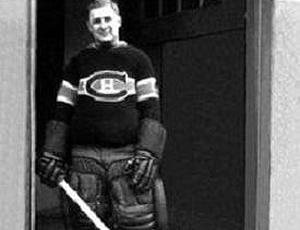
Absurd Goalie Monday: Alphonse "Frenchy" Lacroix


When it comes to goalies, it's always a rough task to come on in an emergency situation like an injury. Even worse back in the olden times when only one goalie dressed at a time as the concept of a back-up hadn't been invented as of yet. However, this week's AGM had the task of going in for, at the time, one of the most heralded teams in the NHL to that point with only an amateur background to boot. This week, the profile of Alphonse "Frenchy" Lacroix.

Lacroix started off as a 16-year-old with Newton High School in Massachusetts in the 1914-15 season, going 5-1-1 in seven games, while in the 1915-16 season; Lacroix would post a 5-2-0 record. In his final high school season, Lacroix went 7-0-1 in eight games.

Post-high school, Lacroix would play in the amateur ranks with the Boston Navy Yard in 1917-18 and posting a 7-4-0 record in a 11 games, as well as playing exhibition games for the Navy Yard in the 1918-19 season. Begining in the 1919-20 season until the 1923-24 season, Lacroix would play for the Boston AA Unicorns across different amateur leagues. Lacroix would go 15-4-0 in the 19 games played in that time-frame and 4-3 in seven playoff games.

Playing in the amateur ranks allowed for Lacroix to be selected for the 1924 Olympics by the USA, where Lacroix went 4-1-0 in his five games played and helped the US to a silver medal. Lacroix would return to the Unicorns for the 1924-25 season, playing in 21 games and ending up with a 15-6-0 record.

In November of 1925, the Montreal Canadiens signed Lacroix as an emergency goalie. When Georges Vezina started to cough up blood on the ice due to an undiagnosed tuberculosis; Lacroix would play in five games and going 1-4-0 before yielding the crease to Herb Rheaume for the duration of the 1925-26 season. Lacroix would spent the 1926-27 season under contract with the Canadiens, but not play a game with them that season.

Lacroix returned to the amateur ranks, playing with the Providence Reds of the Can-Am League in the 1927-28 season, posting a 1-3-0 record in four games. Also that season, Lacroix played for the Lewiston St. Doms in the Northeast League and went 8-12-2 in 22 games played. Returning to the St. Doms in the 1928-29 season, Lacroix went 3-1-0 in four games, then 2-1 in three playoff games. Lacroix would return to the Can-Am League in the 1929-30 season with the Reds again, playing in only one games-- which was a win. In the 1930-31 season, the Boston Tigers would use Lacroix in net for four games, where Lacroix went 1-3-0 before he would retire after the season was over.

Having to come into the NHL with no professional background and take over for a legend like Vezina is a taunting task for someone who actually had professional games under his belt. However, with a silver medal in tow and a decent amateur background-- Lacroix did what he could in the emergency situation.

Monday, February 11, 2013

Absurd Goalie Monday: Flat Walsh


Back in the day, many players and goalies would go through many systems in order to get to the NHL or at least establish an amateur career, as well. This week, we talk about a couple programs that were used before this week's AGM actually got to the NHL. This week, the profile of James "Flat" Walsh.

Walsh's first step on his trek was playing for the Kingston Collegiate Institute in the 1914-15 in the OHA junior system, with a 3-1-0 record in four games played. Walsh went into the Kingston Frontnacs' system in the 1915-16 season, splitting time with the junior team and the senior team. From the 1916-17 until the 1918-19 season, Walsh played in the Kingston Athletic Club between the junior and intermediate systems, going 3-0-0 in the junior system in the 1916-17 season and 3-1 in the playoffs; while with the intermediate team in the 1918-19 season-- Walsh went 3-1-0, then 4-4 in the playoffs.

Starting in the 1919-20 season, Walsh moved onto the Sault Ste. Marie Greyhounds, who played in the NOHA and NMHL for each season. Combined in the 1919-20 season, Walsh compiled a 10-6-3 record in 19 games; then in the 1920-21 season, Walsh finished with a 20-4-1 record in the 25 games he played. In the last duel season, Walsh played in 20 games with a 18-2-0 record to show. Walsh played only with the NOHA side of the Greyhounds in the 1922-23 season, playing in 8 games and finished with as 4-4-0 record, then went 4-1 during the Allan Cup qualifications. Walsh played seven games in the 1923-24 season, posting a 6-1-0 record, then 5-2 in seven playoff games. While Walsh was rostered in the 1924-25 season, he didn't have record, but moved to the CHL with the Greyhounds and played 32 games, with a single shutout and 3.13 GAA.

The 1926-27 season was a rough one to start as Walsh signed with the AHA's Detroit Greyhounds, playing in six games-- all of which were losses. Then the team folded mid-season, leaving Walsh without a gig.

That didn't last too long as the Montreal Maroons signed Walsh as a free agents, where he was used as an emergency goalie, playing a single game in both the 1926-27 and 1927-28 season, having a loss to show in those two games that he appeared in.

During the 1928-29 season, Walsh was loaned out to the New York Americans during the dispute between the Americans, the NHL, and goalie Roy Worters' contract. With the Americans, Walsh played in four games with a 2-0-2 record, but would transfer back to the Maroons mid-season, playing in seven games with a 1-4-2 record

In the 1929-30 season, Walsh was back in Montreal and got the chance to shine when starting goalie Clint Benedict broke his nose and was forced to retire. Walsh stepped in to the starting role and played in 30 games and finished with a 16-10-4 record, then went 1-3 in the playoffs. The Maroons thought that Walsh couldn't handle the duties along, so Walsh split time with Dave Kerr-- Walsh played 16 games with a 7-7-2 record, then played in 27 games for the 1931-32 season, posting a 14-10-3 record and then 1-1-2 playoff record. Also during the 1931-32 season, Walsh played in the Can-Am league for the New Haven Eagles, going 7-9-2 in 18 games.

For the 1932-33 season, Walsh played in three games with the Can-Am League's Quebec Castors (2-1-0), then 22 games with the Maroons, finishing with an 8-11-3 record. However, Walsh came down with influenza, which it took two weeks for him to overcome. The fan-favorite goalie was forced to retire because of it.

After he got better, Walsh went onto coaching for the Maroons until they folded up. Walsh would pass away December 2, 1959.

It took Walsh a while and several programs to get things going for him, but as he moved forward he seemed to progress well. It included a team folding up for him to achieve his NHL dream and when he was there, it seemed that confidence wasn't there for him either. Walsh did leave a lot of fans for his friendly nature, which could be considered a little more valuable, especially in his quick retirement.

Monday, April 02, 2012

Absurd Goalie Monday: Earl Robertson

While nowadays you have a lot of goalie who go through the trenches to get to the NHL, back in the day, it was really a task to go coast-to-coast. Starting in the middle of the continent and then going out west before vaulting east-- this week's AGM was the true road warrior and came from utter obscurity to the top of the mountain and back again. This week, the profile of Earl Robertson.

In 1925, Robertson started his long journey with the Regina Falcons of the Saskatchewan Junior League, playing in eight games and compiling a 4-3-0 record, which going 0-2 in the playoffs, and 0-2 again in the Memorial Cup Finals. The 1926-27 had Robertson stay in Regina, playing six games with a 4-2-0 record, as well as losing his only playoff games. Robertson moved to Vancouver to their Senior League playing for the Vancouver Monarchs in the 1927-28 season, finishing with a 4-2-2 record in eight games, while also going 1-2-1 in four Allan Cup games.

Finally getting out of the amateur ranks, Robertson joined the Pacific Coast League in the 1928-29 season for the Victoria Cubs, compiling a 7-21-6 record for 34 games. Robertson played 31 games in the 1929-30 season and another 10 games for the Tacoma Tigers in the 1930-31 season; but no records are available for those years. Also in the 1930-31 season, Robertson went to the California Pro League, playing and winning his one game with the Oakland Sheiks. Staying in the California League in the 1931-32 season, but playing for the Hollywood Stars; Robertson went 20-7-4 in 31 games before moving along again. Robertson joined the Edmonton Eskimos of the Western Canadian/Northwest Leagues for the 1932-33 and 1933-34 seasons for a total of 60 games, compiling 10 shut-outs, but no win-loss records are available.

After dealing out west, Robertson moved to the Windsor Bulldogs of the International League for the 1934-35 season, playing in 40 games and finishing with a 14-19-7 record; while in the 1935-36 season, Robertson improved himself with an 18-19-11 record with the Bulldogs, as well as an 0-2-0 record with the Rochester Cardinals of the IHL that same season.

In a world of inter-league trades, the Bulldogs traded Robertson to the NHL's Detroit Red Wings for cash before the 1936-37 season, to which the Red Wings would sent Robertson back to the IHL and the Pittsburgh Hornets-- where he would go 14-15-0 in 29 games. However, Robertson's shining moment would come in the 1937 Stanley Cup Finals, where he was called into duty to fill in for the injured Normie Smith. Robertson went 4-2 in the playoffs, helping the Red Wings to their second-straight Stanley Cup championship. Robertson also holds the distinction of stopping the first penalty shot given in the Stanley Cup playoffs.

Though, the celebration was short lived, as Robertson was on the move again-- this time to the New York Americans for John Doran and cash. Robertson got thrown into the starting role for the Americans in the 1937-38 season, playing in 48 games and compiling a 19-18-11 record and 3-3 in six playoff games, while the 1938-39 season yielded a 17-18-10 record in 46 games. The 1939-40 season was a dismal one for Robertson, going 15-29-4 in 48 games, while going 1-2 in three playoff matches.

Robertson came to a cross-roads starting in the 1940-41 season, playing in 36 games for the Americans and going 6-22-8, before he was sent to the AHL's Springfield Indians, posting a 4-5-2 record in 11 games and 1-2 in the playoffs. While the Americans moved to Brooklyn in the 1941-42 season, Robertson didn't spend much time there-- playing only 12 games in the NHL (3-8-1) before settling in at the AHL level with Springfield, finishing there with a 24-14-3 record in 41 games down there, then 2-1 in three playoff games.

After sitting out the 1942-43 season, Robertson played the 1943-44 season with the Edmonton Vics of the Senior Leagues, though Robertson would only play in exhibition games and three Allan Cup games, where he would lose all three before retiring for good. Robertson passed on in 1979 at the age of 67. In 2008, Robertson was inducted into the Wetaskiwin and County Sports Hall of Fame in Wetaskiwin, Alberta.

It was a long strange trip for Robertson, showing him every aspect of hockey life and pretty much every part of the globe in a time where hockey wasn't as popular as it is today. When he finally made the show, Robertson had the highest high-- but then suffered struggling seasons afterwords and then flamed out it would seem. Even so, all the travels didn't deter Robertson from his dream, which he got and did what few could-- a Stanley Cup.

Monday, November 15, 2010

Absurd Goalie Monday: Joe Miller

It's time to go into the way back machine for this AGM entry, who has quite the tale to tell. This goalie was a top amateur goalie, who plotted his way through the ranks, ended up with a sub-par team, but still managed to earn a Stanley Cup championship in probably the most unlikely way and I don't mean because of the team he was on. This week, we profile the career of Joe Miller.

Miller started out his career back in an exhibition based league, playing for the Pittsburgh AA's, where he would dominate, winning 37 out of the 40 games he played in at only 16 years old. Miller would stay in the exhibition league, playing the 1917-18 season with the Renfrew Creamery Kings-- but he would only play in seven games with a 4-3-0 record.

With the 1918-19 season, Miller would move to the Ottawa City Hockey League to play for the Ottawa New Edinburghs. Miller would play only four games in the first season, going 3-1-0 with two coming by way of shutout. The 1919-20 season would give Miller more time, with seven games played and a 4-2-0 record. In both the 1920-21 and 1921-22 season, Miller would see a downturn in his stats, even though he got more time in the net. The '20-21 season had Miller in the net for 11 games with a 4-6-1 record, while an 13 game season in '21-22 would yield a 4-7-2 record. The New Edinburghs would improved for the 1922-23 season, with a 10-6-2 record for Miller at the end of the season and a playoff appearance, which would end badly with a 1-3-1 record, where apparently ties were possible. Miller's last season with the New Edinburghs would be the 1923-24 season, where he would go 9-3-0 in his 12 games, but go 0-2 in the playoffs.

With the 1924-25 season, Miller would go back to Pittsburgh to play with the Fort Pitt Panthers of the USAHA. Miller would play 22 games, going 17-5-0; but the playoffs seemed to be a hinderance to him, going 1-3 in his four appearances. Miller would move to the Central Hockey League (the first incarnation) and play with the St. Paul Saints in the 1925-26 season. Miller would post six shutouts in his 38 games during the '25-26 campaign. The Saints moved to the AHA in the 1926-27 season, which had Miller play 30 games with a 13-12-5 record.

NHL teams were lined-up to get Miller, and he would finally sign. Miller would play with the New York Americans in the 1927-28 season for half of the season, going 8-16-4 in 28 games. The second half of the season, Miller went to the CPHL to play for the Niagara Falls Cataracts, where he would put up two shutouts in the 13 games he played there.

Yet, the 1928 playoffs were something that Miller never would have gotten to if it wasn't for a little luck. In the Stanley Cup finals, New York Rangers goalie Lorne Chabot got injured during Game Two. Rangers' GM Lester Patrick had a deal in place with the Americans to take Miller out on a loan, but the Montreal Maroons wouldn't allow Miller to play in Game Two, forcing Patrick to take the reigns, and win. Miller would take over in Game Three of the Finals, which would be the only game he lost. Miller only let in three goals in the last three games of the Finals, carrying the Rangers to winning the Stanley Cup.

After the Cup Finals, the Americans got Miller back, but would trade him to the Pittsburgh Pirates for Roy Worters. The 1928-29 season was rough for Miller, as he played a league high 44 games, but had one of the worst records with a 9-27-8 record with an astonishing 11 shutouts. It wouldn't get much better for the 1929-30 season for Miller or the Pirates, as he would go 5-30-3 in his 43 games. The Pirates moved from Pittsburgh to Philadelphia to become the Quakers, but the change of scenery didn't help Miller, as he would go 2-9-1 in 12 games for the Quakers.

Miller would play one more season in the IHL with the Syracuse Stars in the 1931-32 season, but would go a subpar 5-12-3 in 20 games. After that, he would hang up the pads for good.

Miller passed away at the age of 62 in 1963.

Though he didn't have the most orthodox career, he was able to get the job done when called upon and was able to deal with being thrown into the Finals with no prep at all. Of course, the teams he did play on seemed to let him down a bit once he got to the NHL, but he was the king of the amateurs and had enough buzz about him to get a deal in the NHL and get his chance, albeit in the most unorthodox way possible.