Showing posts with label Montreal Canadiens. Show all posts

Monday, July 15, 2013

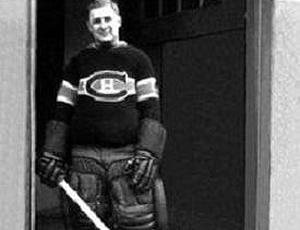
Absurd Goalie Monday: Alphonse "Frenchy" Lacroix


When it comes to goalies, it's always a rough task to come on in an emergency situation like an injury. Even worse back in the olden times when only one goalie dressed at a time as the concept of a back-up hadn't been invented as of yet. However, this week's AGM had the task of going in for, at the time, one of the most heralded teams in the NHL to that point with only an amateur background to boot. This week, the profile of Alphonse "Frenchy" Lacroix.

Lacroix started off as a 16-year-old with Newton High School in Massachusetts in the 1914-15 season, going 5-1-1 in seven games, while in the 1915-16 season; Lacroix would post a 5-2-0 record. In his final high school season, Lacroix went 7-0-1 in eight games.

Post-high school, Lacroix would play in the amateur ranks with the Boston Navy Yard in 1917-18 and posting a 7-4-0 record in a 11 games, as well as playing exhibition games for the Navy Yard in the 1918-19 season. Begining in the 1919-20 season until the 1923-24 season, Lacroix would play for the Boston AA Unicorns across different amateur leagues. Lacroix would go 15-4-0 in the 19 games played in that time-frame and 4-3 in seven playoff games.

Playing in the amateur ranks allowed for Lacroix to be selected for the 1924 Olympics by the USA, where Lacroix went 4-1-0 in his five games played and helped the US to a silver medal. Lacroix would return to the Unicorns for the 1924-25 season, playing in 21 games and ending up with a 15-6-0 record.

In November of 1925, the Montreal Canadiens signed Lacroix as an emergency goalie. When Georges Vezina started to cough up blood on the ice due to an undiagnosed tuberculosis; Lacroix would play in five games and going 1-4-0 before yielding the crease to Herb Rheaume for the duration of the 1925-26 season. Lacroix would spent the 1926-27 season under contract with the Canadiens, but not play a game with them that season.

Lacroix returned to the amateur ranks, playing with the Providence Reds of the Can-Am League in the 1927-28 season, posting a 1-3-0 record in four games. Also that season, Lacroix played for the Lewiston St. Doms in the Northeast League and went 8-12-2 in 22 games played. Returning to the St. Doms in the 1928-29 season, Lacroix went 3-1-0 in four games, then 2-1 in three playoff games. Lacroix would return to the Can-Am League in the 1929-30 season with the Reds again, playing in only one games-- which was a win. In the 1930-31 season, the Boston Tigers would use Lacroix in net for four games, where Lacroix went 1-3-0 before he would retire after the season was over.

Having to come into the NHL with no professional background and take over for a legend like Vezina is a taunting task for someone who actually had professional games under his belt. However, with a silver medal in tow and a decent amateur background-- Lacroix did what he could in the emergency situation.

Friday, May 10, 2013

Thanks For Coming Out, 2013 Montreal Canadiens


Even though the Senators helped them get to that 2nd-seed, the Montreal Canadiens may believe now that it was a trap, as the Sens handled the Habs in five games in the series which had the most gamesmanship in the first round by a long-shot. Verbal jabs aside, the Habs couldn't get anything working past Game Two and despite some bad breaks along the way-- they could get over them and now look ahead to next year.

It wasn't a total lost year for the Habs, as they did rebound nicely from the dismal season they had last year and utilized a youth movement with Alex Galchenyuk and Brendan Gallagher playing a big role in the Canadiens rebuild this season, especially with all the injuries they had to deal with (13th in Man Games Lost). Max Pacioretty came back with a vengeance  leading the team in scoring with the returning Michael Ryder almost being a point-per-game player (21 pts. in 27 games) when he moved back to Montreal. Yet, the Habs are probably not going to be a high scoring team when they get back to a full season, but they do get a lot of contribution from the defensive side of things.

That's where PK Subban and the oft-injured Andrei Markov come in, both putting up 30 points and having 10 or more goals and 20 or more assists in their columns. Had Raphael Diaz played a full season, he'd be up there, too-- but injuries definitely held him back. There's a lot of promise in Diaz, so that's a high spot.

And there not much more you can say about Carey Price, who had a solid first season with his new contract in tow. More over, Peter Budaj showed how much of a valuable back-up he could be with his 8-1-1 record and coming in to perform solidly and give Carey Price a rest.

Even with all of this success and what Marc Bergevin has done with this team, the mishap in the playoffs will be what most fans will remember, especially with the bit of a slip-up they had in the last weeks of the season. It's always a grind in Montreal, a bigger one when they fall out of the playoffs in a premature fashion.

Monday, April 08, 2013

Absurd Goalie Monday: Rob Holland

As greatness retires, it's always big shoes to fill. This week's AGM is one guy who didn't get the chance to make his mark after a legendary goalie because he didn't develop fast enough in the minors. While he did make a name in the minors, his short time in the NHL is something he would probably want to actually make up for. This week, the profile of Rob Holland.

In the 1974-75 season, Holland started playing in Junior A with the Longueuil Lions; where he would play for 36 games. Moving up to the QMJHL's Montreal Juniors, Holland played 37 games in the 1975-76 season, finishing with a 17-16-2 record, then 2-4 in the playoffs. For the 1976-77 season, Holland stayed with the Juniors and went 17-21-3 in 45 games before going 4-7 in 13 playoff appearances.

The Montreal Canadiens selected Holland in the 4th Round of the 1977 Draft and for the 1977-78 season, placed him in the AHL with the Nova Scotia Voyageurs, where Holland would finish with a 13-14-11 record, as well as finishing with a 2-3 playoff record. Back in Nova Scotia for the 1978-79 season, Holland played in 43 games and posted a 18-19-2 record, while losing his only playoff appearance. Holland and Maurice Barrett would share the Hap Holmes Award for fewest goals against in the AHL.

With Ken Dryden retiring, and Holland not progressing as the Canadiens had thought; the Habs sent Holland and Pat Hughes to the Pittsburgh Penguins for Denis Herron and a pick. For the 1979-80 season with the Penguins, Holland played in 34 games and finished with a 10-17-6 record. In the 1980-81 season, Holland bounced around-- playing for the Penguins for 10 games (1-5-3), then moved to the AHL with the Binghamton Whalers for seven games (1-4-0), and landed finally in the Central League with the Indianapolis Checkers for 15 games (6-6-2).

In the summer of 1981, the Penguins traded Holland's right to the New York Islanders, but Holland spent the 1981-82 season with the Indianapolis Checkers, playing in 30 games and compiling a 15-11-1 record, being a part of the Adams Cup winners with the Checkers, and sharing the Terry Sawchuk Trophy for fewest goals-against with Kelly Hrudey. Also in 1981-82, Holland spent seven games with the IHL's Toledo Goaldiggers. During the 1982-83 season, Holland returned to Indianapolis and played in 38 games; finishing with a 24-11-1, then 2-1 in the playoffs on his way to a second straight Adams Cup championship, as well as a second straight Terry Sawchuk Trophy with Hrudey.

Holland returned to Indianapolis in the 1983-84 season, but the record didn't go with him through history. However, as the Checkers moved to the IHL, Holland did too-- playing in 57 games during the 1984-85 season and sporting a 23-29-3 record. In the 1985-86 campaign, Holland played in 39 games for Indianapolis (conflicting records provided), as well as moving to the AHL's Springfield Indians for eight games and finished there with a 6-2-0 record.

Finally in the 1986-87 season, Holland moved to the Milwaukee Admirals of the IHL and played in 66 games in the regular season and six in the post-season. After that season, Holland would retire from hockey.

While he had the chance to follow in the footsteps of the legend, his team didn't believe in Holland's abilities to take over the workload. When he did get his chance, Holland wasn't on the right team with the support he could need. While he did gang-busters in the minors, he was never able to get back to the pinnacle of the NHL after his cup-of-coffee.

Monday, January 21, 2013

Absurd Goalie Monday: Claude Bourque

With humble beginnings and almost having his NHL days end before they started, this week's AGM built up his reputation from his home and then went to do what he could when he was called on to do so. Of course, it didn't help that the teams in front of him were horrible, but he made it-- so there's that. This week, the profile of Claude Bourque

Bourque started in the youth system of his native Moncton, Nova Scotia-- playing for the Moncton St. Mary's in the 1928-29 season, going 3-2-1 in six games; while in the 1929-30 season, he has the same record. In the 1930-31 season, Bourque traveled all over Moncton, playing with the junior team (Moncton CCJA: 3-1-0), another local minor hockey team (Moncton CNR Machinist: 1-1-0), and his high school squad (Moncton Aberdeens: 4-0-0, two shutouts). Bourque only played for CCJA in the 1931-32 season, posting a 6-0-0 record in six games, then going 2-1 in the playoffs.

The 1932-33 season had Bourque suit up for the Moncton Red Indians in the MCJHL and have a 4-0-1 record in five games, then 2-0 in the playoffs, while going 6-1-1 in the Memorial Cup tournament, missing out on the final series.

For the 1933-34 season and 1934-35 season, Bourque played for the Montreal Jr. Canadiens for 18 games, while the 1935-36 saw him play 21 games for the Sr. Canadiens, then 19 games for the Montreal Royals in the 1936-37 season. Bourque would then have his lower league tour end with the Verdun Maple Leafs in the 1937-38 season for 18 games.

The Montreal Maroons owned the NHL rights to Bourque, but as they were going through financial turmoil, they traded his contract to the Montreal Canadiens, who would put him to work in the 1938-39 season-- playing in 25 games and finishing with a 7-13-5 record. Also that season, Bourque spent two games with Verdun, then three with the Kansas City Greyhounds-- all of those losses. The Canadiens brought Bourque back up for the 1939-40 season, playing him in 36 games and having him end up with a 9-24-3 record. The Habs loaned Bourque to the Red Wings for a game to replace injured Tiny Thompson (a loss) before sending him to the New Haven Eagles, playing in six games with a 1-5-0 record.

The Habs traded Bourque to the New York Rangers in the spring of 1940 and the Rangers sent him to the AHL's Philadelphia Ramblers, where Bourque would play in 56 games and finish with a 25-25-6 record. In the 1941-42 season, Bourque stayed in the AHL, but played for the Buffalo Bisons, compiling a 24-24-5 record in 54 games.

After that season, Bourque enlisted with the Royal Canadian Air Force and would play with the team at the base he was stationed at, Lachine RCAF and play in 34 games, as well as 12 playoff games, before hanging up the pads for good. Bourque passed away in May of 1982.

While he was bounced around Nova Scotia before getting into some bad NHL situations, it seemed that Bourque was willing to play on and was getting better before he went to war. It was a hard time to get a goaltending job in the NHL, which probably didn't help any confidence or need for stability in Bourque's career.

Saturday, October 13, 2012

Stamkos, Reimer, Bryzgalov Highlight Early Saturday Games

Drew Stafford celebrates his game winner


1st Star: Drew Stafford, BUF: Game-winning goal, 1 assist
2nd Star: Chris Kunitz, PGH: 2 goals
3rd Star: Steve Ott, BUF: 1 goal

Drew Stafford goal three minute into over time helped the Sabres win their opening night tilt. While M-A Fleury had a 38 save night, it was not enough for the Penguins.


1st Star: James Reimer, TOR: 30 saves
2nd Star: Matt Frattin, TOR: 2 goals
3rd Star: Mikhail Grabovski, TOR: 1 goal, 1 assist

James Reimer put the summer goalie coach quarrel behind him and put up a 30 save performance while Matt Frattin took over the game early for the Leafs, helping take down their long-time rival.


1st Star: Marcus Johansson, WSH: 2 goals
2nd Star: Kyle Turris, OTT: 1 goal, 1 assist
3rd Star: Sergei Gonchar, OTT: 2 assists


Daniel Alfredsson's goal late in the third helped the Senators get past the Capitals and Braden Holtby. Though Marcus Johansson had a great game for the Caps, Craig Anderson was too much for the rest of the Caps, stopping the other 30 shots he faced.


1st Star: Tyler Seguin, BOS: 1 goal
2nd Star: Ilya Kovalchuk, NJ: 2 goals
3rd Star: Patrice Bergeron, BOS: 1 goal

A highlight goal from Rich Perverley and Patrice Bergeron helped the Bruins beat the Devils. Tuukka Rask stopped 25 shots in the winning effort, while Ilya Kovalchuk's offense was the bright spot for the Devils in the game.


1st Star: Ilya Bryzgalov, PHI: 32 saves
2nd Star: Wayne Simmonds, PHI: 1 goal
3rd Star: Danny Briere, PHI: 1 goal


Even without much goal support, Ilya Bryzgalov came up big to help the Flyers win their first two games of the season, getting a good showing from his defense, as well. Newcomer Brad Boyes had the lone tally for the Islanders.


1st Star: Steven Stamkos, TB: 2 goals

2nd Star: Stephen Weiss, FLA: 1 goal
3rd Star: Vincent Lecavalier, TB: 1 goal

With a new goalie in net, the Lightning broke open the scoresheet with Steven Stamkos getting his scoring touch back with two goals, including an open net. Anders Lindback faced 32 shots and saved 30 of them for his first win with his new team.

Thursday, October 11, 2012

Habs Take First Step Out Of Cellar; Flyers Picking Up Pieces

Opening Face-Off of the 2013 NHL '94 Season


1st Star: Rene Bourque, MTL: 2 goals
2nd Star: Max Pacioretty, MTL: 1 goal
3rd Star: Milan Michalek, OTT: 1 goal

The Ottawa Senators tried to regain the surprising status they had last season, trying to build off their momentum. However, Rene Bourque put up two goals and lifted the Canadiens to their first victory again under Michel Therrien by the 5-3 score. Carey Price stopped 28 of the 31 shots the Sens threw at him, as well as tallying an assist. Down the ice, Craig Anderson saw 40 shots and stopped 36 and didn't get much help as the Senators kept getting into penalty trouble, thus the barrage of shots. 


1st Star: David Krejci, BOS: 2 goals
2nd Star: Claude Giroux, PHI: 1 goal, 1 assist
3rd Star: Scott Hartnell, PHI: 1 goal, 1 assist

Both Scott Hartnell and Claude Giroux had a goal and an assist as the Philadelphia Flyers try to expand from last season with a 3-2 win over the Bruins. Ilya Bryzgalov stopped 32 in the victory, trying to rebuild his trust with the Philadelphia Faithful. The first start of the Tuukka Rask era in Boston was a bit shaky, but he stopped 33 shots and got help from David Krejci's two goals-- but came up short in the end. 

Danny Briere pots the first goal of the Flyers' season

Monday, September 10, 2012

Absurd Goalie Monday: Carl Wetzel

While many of these AGMs would move around towards the end of their career, this week's installment was on the go from the start. Over his 15 season career, he played in 14 different cities for 16 different teams. He was well-travelled, but not well recognized. So, that's what will happen now-- this week, the profile of Carl Wetzel.

Wetzel started his trek, literally, with the only team he had stability with-- the Hamilton Tiger Cubs of the OHA Junior "A" league starting in the 1956-57 season, playing in 48 games and finishing with a 24-22-2 record; the 1-3 in four playoff games. The 1957-58 season had Wetzel play in 50 games compiling a 26-17-7 record, then going 8-6-1 in 15 playoff appearances, losing in the finals to the Toronto Marlboros. He would also play 25 games in the 1958-59 season with Hamilton, but no record is indicated. Wetzel would also play one game that season with the WHL's Edmonton Flyers, which was a loss.

The nomadic side of Wetzel started with the 1959-60 season playing 62 games with the Omaha Knights of the IHL, but no record is given; then in the 1960-61 season-- Wetzel played 52 games for the IHL's Indianapolis Chiefs (no record), then played in the WHL with the Spokane Comets for five games (0-5-0), then was loaned out to the IHL's Fort Wayne Koments for eight playoff games (3-3). In the 1961-62 season, Wetzel played in the EPHL with the Sudbury Wolves, going 25-26-10 in 61 games and 1-4 in five playoff contests.

After that season, Wetzel would put his career on hold due to military services (likely due to the US Draft) and would only suit up once in the 1963-64 season as an emergency back-up to the WHL's San Francisco Seals.

Upon his return in the 1964-65 season, his hometown team, the Detroit Red Wings, picked him up-- but he would only play two games for them (0-1-0), while also spending four games with the AHL's Pittsburgh Hornets (1-3-0).

The Montreal Canadiens claimed Wetzel in the Reverse Draft before the 1965-66 season and would place him in the CPHL with the Houston Apollos; where he would play 51 games with a 21-24-6 record. Wetzel would also play one game for the AHL's Quebec Aces-- a loss.

Wetzel left the Canadiens organization to play for the USA National Team in the 1966-67 season. He would play 12 games throughout the season, as well as seven games in the World Hockey Championships. In the World Championships, Wetzel went 3-3-1 in seven games and be named Best Goaltender in the tournament and named to the All-Star Team.

In the summer of the 1967, the Canadiens traded Wetzel to the expansion Minnesota North Stars for cash. Wetzel, along with Bill Masterton, were the first two signed to the North Stars. Wetzel would play five games in the 1967-68 campaign with the North Stars finishing with a 1-3-1 record; but would spend most of the season with the CPHL's Memphis South Stars for 20 games, finishing with a 8-9-2 record. A more masterful memory for Wetzel was bring loaned to the AHL's Rochester Americans for ten games (3-3-1) and then 2-1 in the playoffs, helping them win the Calder Cup championship. The 1968-69 season had Wetzel back with the Memphis South Stars for 39 games, while also playing two games for the AHL's Cleveland Barons, winning the game he was in on the decision for.

The 1969-70 season had Wetzel play four games for the USHL's Rochester Mustangs, but would go back to play with the US National Team for 17 games. In the 1970-71 season, Wetzel stayed with the US National Team, playing in the World Championship again-- but wouldn't fair as he did in 1967-- finishing with a 1-6-0 record in eight games of the tournament.

Wetzel would cross over the Europe for the 1971-72 season with KAC Kitzbuhel in Austria, playing in 44 games before returning to North America and the WHA in the 1972-73 season with the Minnesota Fighting Saints, losing the only game he played. He would retire after that last season.

After taking time off, Wetzel did return to be an assistant coach for the North Stars in the 1987-88 season, but would drop off the map after that until he came back for the Minnesota Wild hosting the "Back on Home Ice" reunion for the North Stars March 29-31, 2012.

He went everywhere and Wetzel tried to make the most out of it. He saw a lot of North America and some parts of Europe when playing with the National Team. He served his country in military duties and in hockey duties. He was a hustler in order to sell himself off as an option to teams and he would do what he could to get some playing time.

Monday, June 18, 2012

Absurd Goalie Monday: Marc Denis

While this AGM did have some kind of prominence, it was with an expansion team. A once highly rated prospect, he was let go to the expansion team and moved onto an adventure of his own. While he didn't have the best career path, he did what he could with what was in front of him. This week, the profile of Marc Denis.

Denis' quest started in the 1992-93 season playing Midget "AAA" with Montreal-Bourassa for 26 games before moving onto the Trois-Rivieres Estacades in the 1993-94 season, putting together a 10-22-3 record in 36 games and 1-3 in the four playoff games he appeared in.

Denis started in the Major Junior ranks with the Chicoutimi Sagueneens in the 1994-95 season, playing in 32 games and putting up a 17-9-1 record and then going 4-2 in six playoff games. The 1995-96 season saw Denis get the starting role in Chicoutimi, playing in 51 games and posting a 23-22-4 record, then finishing 8-8 in 16 playoff games. Denis also played in the 1996 World Junior Championship, going 2-0-0 in this two games en route to Canada winning the Gold Medal. It was another big year for Denis in 1996-97, going 22-15-2 in 41 games, then 11-10 in 21 playoff games, as they won the QMJHL Title. The Sagueneens would go 0-3-0 in the Memorial Cup, however. Denis also played in the 1997 WJC, going 5-0-2 in seven games winning another Gold Medal. Denis was the best goaltending in the World Junior tournament. There were more awards for Denis that spring with him winning Canadian Major Junior Goalie of the Year award, as well as named to the CHL and QMJHL First All-Star Team.

Also during that 1996-97 season, Denis made his first appearance with the team that drafted him in 1996, the Colorado Avalanche, losing his first game in December of 1996. Denis also joined the AHL's Hershey Bears for the 1997 Playoffs, going 1-0 in four appearances, as the Bears would win the Calder Cup. Denis' first pro season was in the 1997-98 season with the Bears, where he would play 47 games and put up a 17-23-4 record and then 3-3 in six playoff games. In the 1998-99 season, Denis would be back in Hershey and finish up with a 20-23-5 record in 52 games and then 1-1 record in three playoff games. Denis was called up for four games with the Avalanche where he would go 1-1-1 in that span.

Back-up duty called for Denis in the 1999-2000 season, as he would be playing behind Patrick Roy. Denis would put together a 9-8-3 record in 23 appearances.

Before the 2000-01 season, Denis was traded from the Avalanche to the expansion Columbus Blue Jackets for a second-round choice. Denis played 32 games that season and finish with a 6-20-4 record. In the 2001-02 season, Denis played in 42 games, but only put up a 9-24-5 record. The 2002-03 season, Denis moved into the starter's role and played 77 games and put up a 27-44-8 record in that time. In the 2003-04 season, Denis' time shrunk with only 66 games in the cage, but had a 21-36-7 record to show for it. While he took the 2004-05 lockout season off, Denis returned to Columbus for the 2005-06 season and put together a 21-25-1 record in 44 games. Denis also played for Canada in the 2006 World Championship and would go 4-1-0 in five games for Canada's fourth place finish.

In the summer of 2006, Denis was traded from Columbus to Tampa Bay for Fredrik Norrena and Fredrik Modin. Denis stayed with the Lightning for the 2006-07 season, compiling a 17-18-2 record in 44 games. The 2007-08 season had Denis start out in Tampa, posting a 1-5-0 record in 10 games, but would be relegated to the AHL's Norfolk Admirals, finishing there with a 11-17-2 record in 32 games.

Denis signed as a free-agent in the summer of 2008 with the Montreal Canadiens, mostly playing that 2008-09 season with the AHL's Hamilton Bulldogs, playing in 46 games and finished with a 27-18-0 record and then 2-4 record in six games. Denis did play one game with the Canadiens, which was a no-decision. After a summer with no offers, Denis hung up the pads.

After his playing career, Denis would go on to become a goalie coach for the Chicoutimi Sagueneens in the 2009-10 season, while then moving over to become an analyst for RDS in Quebec.

It wasn't the easiest of rides and may not have had the best of teams, but he showed that if he does have a good team in front of him, he could be productive. Even with mediocre teams in junior, he could lead them to a league championship. The odd death-kneel was the expansion team woes, which didn't see him climb out of that issue with flying colors.

Monday, April 23, 2012

Absurd Goalie Monday, Garry Bauman

From stand-out to stand-in to stand-up man, this week's AGM went through the usual turn most AGMs on here have done. However, in the end-- he taught the youth that came after him nothing about pucks and sticks and more applied knowledge that may occur in everyday life. This week, the profile of Garry Bauman.

Starting out his trek, Bauman played the Saskatchewan Junior League for the Prince Albert Mintos, playing 80 games over the 1958-59 and 1959-60 seasons. After not going the Major Junior route, Bauman moved onto the NCAA system, playing for the Michigan Tech Huskies starting in the 1961-62 season, where he would go 24-1-0 in 25 games, helping the Huskies win the NCAA National Championship. Bauman also earned NCAA West First-Team All-American honors, NCAA All-Tournament Team, and WCHA First All-Star Team honors. After a big start to his career, Bauman hoped to keep up the amazing play, but would fall short in the 1962-63 season, finishing with a 16-9-1 record, while ending out his college career with a 12-12-0 record in 24 games in the 1963-64 season. Bauman's save percentage (.916) and longest winning-streak (16 wins) still stand as record for Michigan Tech.

After college, Bauman signed with the Montreal Canadiens, who placed him in the Central League's Omaha Knights for the 1964-65 season, where he would attain a 22-16-5 record in 43 games, as well as going 2-4 in six playoff matches. The 1965-66 season saw Bauman move up to the AHL with the Quebec Aces, getting ample playing time with 52 appearances and a 36-11-4 record to show for it, going 2-4 in the playoffs again. Bauman played most of the 1966-67 season with the Aces, going 21-15-4 in 40 appearances, but would also get time with the Canadiens, going 1-1-0 in his two games there.

However, the best part about Bauman's call up is that he was afforded the chance to play in the All-Star Game that season, which was held for the first time mid-season since the original All-Star Game, which was to benefit Ace Bailey. Also, the previous Stanley Cup champions played a team of stars from other teams, which meant that Bauman got to play. Though it was only for 20 minutes, he stopped all 10 shots he faced. He and his goaltending partner Charlie Hodge are the only goalies to record a shutout in an All-Star Game.

Over the summer, six more expansion teams came into the NHL. Bauman was picked up in the Expansion Draft by the Minnesota North Stars, where he would play in the 1967-68 season, going a dismal 4-13-5 in 26 games, while also seeing time in the AHL with the Rochester Americans, losing two games in only three appearances. The 1968-69 season wasn't as stellar for Bauman either, as he would only play seven times for the North Stars (0-2-1), before being sent to the Central League's Memphis South Stars-- playing in six games there.

After taking a year off from hockey, Bauman returned to his native Alberta, playing for the Calgary Stampeders of the Alberta Senior League. He would play there for two season (1970-71 and 1971-72) before retiring for good.

With his hockey career done, Bauman went into teaching, at the Strathcona-Tweedsmuir School in Okotoks, Alberta. He stayed there until his retirement in 1999. He taught math and sciences at the school. However, cancer would claim Bauman's life in 2006, but the memory of his good deeds off the ice will live on.

His career was short, but left a lasting memory in some circles. While going on a scholarship to college to having a cup of coffee in the NHL, moving onto teaching children how achieve their academic best-- Bauman would probably remember more fondly onto the off-ice side than any achievements on the ice.

Saturday, March 03, 2012

Where Will Wilson Land??


With his firing, Ron Wilson becomes the belle of the coaching ball and there's plenty of upcoming suitors that will be going after his services. Yet the big onus could be on putting him into the right position in order to have success with any team. Even with that, the playoff success is one that is another question-- especially for a team who may or may not want to actually want to advance further than they have. Wilson has been to the Cup Finals once and Conference Finals once, but other than that-- if his team makes the playoffs, it all ends after round two; which for some teams, won't be enough.

One place that has been under fire for coaching has been the Washington Capitals, a team that Wilson has coached before and took to the Stanley Cup. While Dale Hunter is still learning the ropes as a NHL coach, the demand from the fans and upper management may not fit what Hunter has to offer-- even if given a full off-season to get a game plan going. I tweeted a tongue-in-cheek line about the Caps bringing an old coach back; but apparently-- a buddy of mine at the 5-0 Caps loss to the Devils, said that there was a "We Want Wilson" chant in the Verizon Center.

Now, I don't know if it was in frustration or in jest from the many fans who remember Wilson's tenure-- or just hatred of Hunter's tenure-- but a return to Washington may not be a bad idea in the front, but the playoff issues are of a concern. That said, if Wilson would let the stars of the team be as free-wheeling as they were before the huge system change under Bruce Boudreau-- the odds of being successful could very well be fantastic for the Caps. However, that also buries Hunter and his legacy in DC, making everyone in the situation look horrible.

If not DC, then the other option would possibly be Columbus and the Blue Jackets. While Todd Richards has done a respectable job in the interim as coach, the ability to seize someone like Wilson and help him guide a team like the Blue Jackets may be fantastic for the organization and possible coax Rick Nash to want to stay. Though, Columbus may not be the best fit for Wilson and he may not want to actually be in that market with so many question attached to their future and ability to get players onto the team via free agency.

Two Canadian teams that could go after Wilson may be Montreal and Edmonton. The thing that hinders Wilson for the Canadiens is his possible lack of French, which would make people rise-up in an uproar, despite being the best candidate for the job. Edmonton may be a little more realistic, as Tom Renney could be on his last legs there. The fact that Wilson would inherit a great young core of forwards, he may fit in well with the pick-up of some defensive assets. One final destination could be the New York Islanders, but it seems Charles Wang and Garth Snow could be keen on keeping Jack Capuano behind the bench for the long-term.

While the reality of the situation is that maybe two of these teams would be very interested in having Wilson as a coach, odds are he may not be out on the open market for long. With his coaching abilities and decent track record overall, added to his technological advances behind the bench-- it could be great for a younger team that is on the cusp. Yet, with his inability to get the Maple Leafs over the hump could show that a once great coach could have let the game pass him by and he may not be a fit for any team, regardless of the history that he has.

Thursday, January 19, 2012

Another Post on Trivial Times in Montreal


The headline reads "Un Genou Au Sol." Or, for Randy Cunneyworth, "Knee on the Ground" and for those who want to REALLY simplify it-- "Death Kneel."

That's the state that the Montreal media has when it comes the the 17-21-8 Montreal Canadiens. In this day in age, in the riches this franchise has had for the better part of the century-- the media and everyone around the team seems to be treating this season like it's the worst ever in the storied history of the franchise. Yet, when you look at the past two decades, it could be a lot worse.

In fact, should the Habs not be able to catch-up those for wins their fans will so desperately crave to prove their own self-worth through a hockey club-- this would only be their eighth season under .500 since the 1950-51 season. That's right, readers-- in the past 61 years, the Montreal Canadiens have only had SEVEN seasons under the .500 mark in their record not including this year. Many teams would hope to be around for 61 years in the same place, much less be over .500 in those 55 years.

The 1950-51 season was the one that is the starter for this, where the Habs went 25-30-15 in the 70 game season under Dick Irvin's helm during the original six days. After that, you have to really fast-forward to the 1983-84 season where the 35-40-5 record yielded two coaches of Bob Berry and Jacques Lemaire were steering the ship. Though the shortened season of 1995 put the 18-23-7 record under Jacques Demers, the 1996-97 team under Mario Tremblay's watch is where the recent troubled waters could stem from-- as they went 31-36-15, where the 1998-99 franchise with Alain Vigneault had a 32-39-11 standing at season's end. Then a split between Vigneault and Michel Therrien went 28-40-8 in 2000-01, while the last sub-500 team was the 2002-03 season, where Therrien and Claude Julien finished with a 30-35-8 record.

But because of the heritage this team has in the annals of hockey history, because of the cultural mark they have with the French-Canadian contingent-- the team will forever be under the microscope, maybe even more than the Toronto Maple Leafs. You could see that on display when it comes to the Cunneyworth protests a number of people had a few weeks ago shows that. The fact that the coach's language skills gets more press and more heat than the team that was put together by the French-Canadian GM shows that the cultural aspect of things means more to the people at some points than winning, especially if it hides the fact that the moves of one are masked.

Yet, Spector's Hockey's Lyle Richardson amongst others have suggested that it's time to clean house from top to bottom. Some say it's because the cultural aspect has gotten in the way of winning, others thing the right people aren't in there; but the formula is close. I believe that there's too many excuses and too many unsolved distractions from the top to the viewing public which is completely screwing over this team and what they are trying to do-- it's only welcoming havoc to arise.

While this season won't be the worst ever in the past six decades for the Canadiens, something in the air has panic abound from the general public in the area, which then expands to the entire country, then into the entire hockey world. While it could only be much ado about nothing in the end of things, the buzz we're getting half-way into the season for a team that's only four games under par shows that the hockey crazed market may want to check itself into an asylum before they become their own worst enemy.

Monday, January 16, 2012

Absurd Goalie Monday: Wayne Thomas

This week's AGM does have quite the track record-- being a Stanley Cup winner, to taking over for a star goalie, to being rostered, but never playing a game in the season. For all the hallowed franchises he play with, he would take his knowledge of the game to behind the bench and into the the front office. This week, the profile of Wayne Thomas.

Thomas started his trek in Junior A with the Ottawa Jr. Senators from 1965 until 1967, as well as playing with the Morrisburg Combines in the 1967 Allan Cup. Starting in the 1967-68 season, Thomas started to play for the University of Wisconsin, though he would not play in his first year. Thomas did see time in the 1968-69 season for the Badgers, going 9-6-1 in 16 games. In the 1969-70 season, Thomas compiled a 14-7-0 record in 21 games, helping him receive Second-Team All-Star honors in the WCHA.

Thomas was initially property of the Toronto Maple Leafs, but would traded to the Los Angeles Kings in 1968,  then the Kings would trade him to the Montreal Canadiens in 1970. After leaving Wisconsin-- Thomas would play for the AHL's Montreal Voyageurs for the 1970-71 season going 8-17-6 in 33 appearances. The Voyageurs moved to Nova Scotia for the 1971-72 season, which seemed to help Thomas; who finished that season with a 22-8-10 record in 41 games. Thomas only played in six games for Nova Scotia in the 1972-73 season, before getting the call by the Montreal Canadiens, where he'd play 10 games with an 8-1-0 record. Despite not dressing for a playoff game, Thomas received a Stanley Cup ring and included in the team picture at the end of the season-- but is not engraved onto the Stanley Cup.

With Ken Dryden opting to study law for the 1973-74 season, Thomas assumed the starting role-- playing in 42 games, finishing with a 23-12-5 record while splitting time with Bunny Larocque and Michel Plasse. Yet, in the 1974-75 season, Thomas was listed on the active roster for the Canadiens, but never played a single minute the entire season.

With his time in Montreal done, the Canadiens traded Thomas to the Toronto Maple Leafs before the 1975-76 season, where Thomas would take the starting role, going 28-24-12 in 64 games and a 5-5 playoff record. Thomas would also play in the 1976 All-Star Game. However, the 1976-77 season would be a little rough for Thomas, who lost his starting job and only appear in 33 games with a finishing record of 10-13-6 and 1-2 in the playoffs.

Before the 1977-78 season, the New York Rangers claimed Thomas in the Waiver Draft, though he struggled in his 41 games that season, finishing with a 12-20-7 record and 0-1 in the playoffs. Thomas's time in the pipes dwindled in the 1978-79 season, seeing only 31 games, but putting together a 15-10-3 record for the season. Thomas split his time in the 1979-80 season between the Rangers for 12 games (4-7-0) and five games with their AHL affiliate, the New Haven Nighthawks (5-0-0). Thomas would make one last gasp at playing int he 1980-81 season with the Rangers, but would go 3-6-1 in 10 games before he would hang-up the pads in retirement.

Not long after his retirement, Thomas went into the coaching ranks-- first with the Rangers as a goalie and then assistant coach, then getting his first head coaching job in the IHL with the Salt Lake Golden Eagles from 1985 to 1987, winning the 1986 Turner Cup with them; then onto the Peoria Riverman from 1988-90. Thomas would be promoted to assistant coach of the St. Louis Blues from 1990 until 1993, when he moved to be part of the coaching staff for the San Jose Sharks.

In March of 1996, Thomas was promoted to Sharks assistant General Manager and General Manager to their AHL team, which is the Worcester Sharks at the moment.

Though he had quite the ride for his playing career, his hockey sense allowed him to actually get an idea and prepared for something outside his playing career-- which he has turned into a great position and one of the respected front office people for the Sharks organization.

Monday, December 12, 2011

Absurd Goalie Monday: Frederic Chabot

With an unorthodox way into the NHL, this week's AGM is a guy who travelled through two major junior leagues before he was signed by a NHL team. While he did have a great career in the IHL and overseas; he got into organizations who didn't need the goaltending or didn't have the space for him to fit into. This week's AGM is Frederic Chabot.

Chabot started off in Midget AAA in Quebec with Trois-Rivieres Selects, playing in 34 games with a 25-9-0 record before moving onto the QMJHL in the 1986-87 season with the Drummondville Voltigeurs, playing in 62 games that season with a 31-30-0 record, then 2-6 in eight playoff appearances. The 1987-88 was a better on while in Drummondville, with Chabot going 27-24-4 in 58 games, but a 10-6 record in 16 playoff games; though they lost to the Hull Olympiques in the Finals. Chabot also went 0-3 in the three Memorial Cup games that Drummondville played in.

As an "over-aged" player, Drummondville waived Chabot and he landed in the WHL for the 1988-89 season, playing for the Moose Jaw Warriors, but ending his season there with the Prince Albert Raiders.

As his junior career ended, Chabot went to the IHL to play with the Fort Wayne Komets for the 1989-90 season, playing in 23 games with a 6-13-3 record. However, midway through the season, Chabot signed with the Montreal Canadiens, where they would place him in the AHL with the Sherbrooke Canadiens, going 1-1-0 in two games.

Chabot was back in the AHL for the bulk of the 1990-91 season, playing with the Fredericton Canadiens, going 9-15-5 in 35 games; also getting called up by Montreal for three games, going 0-0-1 in those appearances. Chabot was back with Fredericton in the 1991-92 season, compiling a 17-9-4 record in 30 games; then a 3-4 record in seven playoff games. Chabot also spent 24 games in the ECHL with the Winston-Salem Thunderbirds, finishing with a 15-7-2 record. The 1992-93 season had Chabot play in 45 games for Fredericton and finishing with a 22-17-4 record, then a 1-3 playoff record. Chabot racked up the travel miles for himself in the 1993-94 season, playing for Fredericton for three games (0-1-1), then moving to the IHL's Las Vegas Thunder for two games (1-1-0) and Montreal for one (0-1-0).

Chabot was dealt to the Philadelphia Flyers for cash, playing in four games for the Flyers and going 0-1-1. He would spent the bulk of his time with the AHL's Hershey Bears, finishing with a 13-5-6 record in 28 games, then 7-4 in 11 playoff games. Chabot was awarded the Baz Bastien Award for AHL's Outstanding Goaltender.

Chabot signed with the Florida Panthers before the 1994-95 season, but he would play in the IHL with the Cincinnati Cyclones, posting a 25-12-7 record in 48 games, then 3-2 in five playoff games. Back in Cincinnati for the 1995-96 season, Chabot had a 23-9-4 record in his 38 games, then going 9-5 in 14 playoff games. The 1996-97 season saw Chabot play with the Houston Aeros of the IHL, going 39-26-7 in 72 games before going 8-5 in 13 playoff games. That season, Chabot was awarded the James Gatschene Memorial Trophy for IHL MVP.

The Los Angeles Kings signed Chabot for the 1997-98 season, but only played 12 games for them, finishing with a 3-3-2 record. Chabot spent the rest of the year with Houston again, finishing with a 12-7-2 record and 1-3 playoff record that season.

The summer of 1998 was confusing for Chabot-- who was claimed by the Nashville Predators in the Expansion Draft; then picked off waivers by the Kings again, finally picked up off waivers again by the Montreal Canadiens. Chabot spent 11 games with Montreal in the 1998-99 season, finishing with a 1-3-0 record in Montreal, but most of his time would be back in Houston; going 16-4-1 in 22 games there. In the 1999-2000 season, Chabot was back in Houston, playing in 62 games and finished with a 36-19-7 record and going 6-5 in 11 playoff games. Chabot racked up the awards, winning the Gatschene Trophy for MVP again, sharing with Nikolai Khabibulin, while also winning the James Norris Trophy for fewest goals against. Chabot was back in Houston in the 2000-01 season, finishing with a 23-16-5 in 47 games, then going 3-4 in the playoffs.

Starting in the 2001-02 season, Chabot moved it over season-- playing for the Nurnberg Ice Tigers from 2001 until 2004. In the 2004-05 season, Chabot moved to Austria to play with the Vienna Capitals before going back to Germany for the 2005-06 season, this time with Alder Mannheim. After that season, Chabot hung up the pads for good.

Chabot would go far from hockey, as he stayed in Europe to be the goaltending coach for AIK Stockholm (Sweden) in 2006, then over to Germany to coach for the Berlin Ice Bears, before returning to North America to be the goaltending coach for the Edmonton Oilers. Chabot has also had ties with Hockey Canada's World Junior Program.

While he did get bounced around a lot and mostly made relief duties, the time he spent in the minors allowed him to garner knowledge to pass around to the youth players coming up through the ranks and now onto the new generation of goalies in Edmonton.

Monday, November 28, 2011

Absurd Goalie Monday: Phil Myre

The ultimate goal in life for a player is to get their name on the Stanley Cup. While this week's AGM did get a ring and was in the team picture, he didn't get on the Cup. Then two seasons later, he was off on a journeyman's career. This week, the profile of Phil Myre.

Myre started his career in the 1964 playoffs with the QMJHL's Victoriaville Bruins, going 1-1 in two of those games, then 0-1 in one Memorial Cup appearance. In his first full season in Victoriaville in the 1964-65 season, Myre played 21 games and finished up 14-7-0, then going 7-2 in nine playoff appearances, while going 0-3 in the Memorial Cup play-down games. Victoriaville moved to Shawinigan for the 1965-66 season, where Myre would go 38-6-0 in 44 games, then 8-4 in 12 playoff games and 11-4 in 15 Memorial Cup play-down games.

Myre was drafted by the Montreal Canadiens in the 1966 Draft, which was also a year that Myre went to the OHA's Niagara Falls Flyers starting in the 1966-67 season, leading them to a Memorial Cup championship following the 1967-68 season.

Turning pro in 1968-69, Myre played in the Central League for the Houston Apollos, going 24-19-10 in 53 games, then going 0-2 in the playoffs.

The 1969-70 season allowed Myre to play in 15 games for the AHL's Montreal Voyageurs before getting the call-up to the Canadiens, where he would play in 10 games with a 4-3-2 record. Myre stayed in Montreal for the 1970-71 season, playing in 30 games with a 13-11-4 record, but would be relegated to back-up when Ken Dryden made his mark in the league. While the Canadiens won the Stanley Cup that year and even though he qualified to be engraved on the Cup, the team left him off, even though he did receive a ring for his efforts. Myre only played nine games for the Canadiens in the 1971-72 season, going 4-5-0 in his efforts.

The Canadiens left Myre unprotected in the 1972 Expansion Draft, allowing the Atlanta Flames to pick him up. In that 1972-73 season, Myre tallied a 16-25-3 record in 46 games, while he went 11-16-6 in 36 games in the 1973-74 season-- in which he played in the team's first playoff series, going 0-3 in three games. Myre played 40 games in the 1974-75 season, finishing in with a 14-16-10 record; while in the 1975-76 and 1976-77 season, Myre went .500 in both seasons, with a 16-16-4 and 17-17-7 record respectively. Myre would only play nine games for the Flames in the 1977-78 season, going 2-7-0 before being put on the move.

Myre was traded to the St. Louis Blues in December of 1977 and would play 44 games for the Blues, going 11-25-8 in those last games. Myre return with the Blues in the 1978-79 season, going a dismal 9-22-8 in his 39 appearances.

Myre was traded to Philadelphia in June of 1979 and join a tandem with Pete Peeters for the 1979-80 season, with Myre going 18-7-15 that season, a season where he and Peeters had a 35-game unbeaten streak-- a NHL record. It wasn't a great for Myre in the 1980-81 season, as he would go 6-5-4 in 16 games before being on the move again.

The Flyers traded Myre to the Colorado Rockies for cash, in which Myre would play 10 games to end out the year and compile a 3-6-1 record. After the '80-'81 season, Myre played for Team Canada in the World Championships, but would go 2-5-0 in seven games. Myre returned to the Rockies for the 1981-82 season, playing in 24 games, finishing with a 2-17-2 record. Myre would also spend time that year with the Central League's Fort Worth Texans, playing in 10 games with a 4-5-1 record.

Myre signed with the Buffalo Sabres before the 1982-83 season, spending a majority of the season with the AHL's Rochester Americans, going 28-8-5 in 43 games, while playing in five games with Buffalo, going 3-2-0. Myre returned to Rochester for the 1983-84 season, going 19-9-1 in 33 games before hanging up his pads for good.

Post-playing career, Myre went into coaching, being an assistant with the Los Angeles Kings and Detroit Red Wings and then as a goalie coach for the Red Wings and also later as goalie coach with the Florida Panthers. Myre also got into some blogging (before it got hacked) and public speaking. Currently, Myre is working with the Montreal Canadiens in a scouting capacity.

While he had his hand in two big team trophies, he was only recognized for one, then started to bounce around from menial team to menial team-- which could have hurt his mentality in the long-run. He kept to it though and made himself a good life after his playing career was finished.

Monday, November 21, 2011

Absurd Goalie Monday: Denis DeJordy

This week, the focus on the AGM is for a guy who kind of changed the way the game is played-- yet not for his on-ice prowess, per se. What he did after his career has changed the way goaltending is handled today and made many discussion topics should things in net start to go wrong. Not to say his playing career wasn't shabby, but he could be a little more remembered for his first gig post-retirement. This week, the profile of Denis DeJordy.

DeJordy's first presence was with the Junior B Dixie Beehives before really making a name for himself in the 1957-58 season with the St. Catherine Teepees, going 32-14-6 in 52 games, while getting in one game in the AHL with the Buffalo Bisons, which was a loss. Returning to the Teepees in the 1958-59 season, DeJordy went 40-10-3 in 53 games, then 2-4-1 in the playoffs, as well as being named to the OHA First All-Star Team. DeJordy would also get the call by the Peterborough Petes for the 1959 Memorial Cup, but would go 1-4 against the Winnipeg Braves in the Finals.

Starting in the 1959-60 season, DeJordy moved to the new Eastern Professional League to play for the Sault Ste. Marie Thunderbirds where he would play 69 games and finish that year with a 27-31-11 record. The 1960-61 season had DeJordy start out in Sault Ste. Marie for 33 games (16-14-3) before moving up to the AHL and the Buffalo Bisons, playing in 40 games and finishing there with with a 20-18-2 record, then going 0-4 in the playoffs.

The 1961-62 season saw DeJordy return to Buffalo, where he would go 36-30-3 in 69 games, while then going 6-5 in 11 playoff games, losing to Springfield in the Calder Cup finals. DeJordy had his sights set on a championship when he came back to Buffalo in the 1962-63 season, going 37-23-7 in 67 games, then going 8-5 in 13 playoff games, helping the Bisons win the Calder Cup that season. DeJordy racked up the awards, too-- winning the Hap Holmes Trophy for fewest goals-against; the Les Cunningham Award for AHL MVP; and named to the AHL's First All-Star Team. Also in '62-'63, DeJordy made five appearances for the Chicago Blackhawks, going 2-1-2 in those games.

The 1963-64 season had DeJordy not playing much, as he play only one game with the Central Professional League's St. Louis Braves (a loss) and then only six games with the Chicago Blackhawks, finishing 2-3-1. It picked up in the 1964-65 season, as DeJordy played 30 games in Chicago, going 16-11-3-- as well as seven games in Buffalo for the Bisons, going 3-4-0 in that time. However, DeJordy was relegated to the Central Pro League with the St. Louis Braves in the 1965-66 season, playing 70 games and compiling a 30-31-9 record in the regular season and 1-4 record in five playoff games. DeJordy was named to the CPHL's First All-Star Team that season.

DeJordy returned to Chicago for the 1966-67 season, splitting duties with Glenn Hall and finishing with a 22-12-7 record in 44 games, then 1-2 in four playoff appearances. DeJordy and Hall would win the Vezina Trophy for the season, in a time where both goalies were rewarded for fewest goals-against in a season. Starting in the 1967-68 season, DeJordy got the majority of the playing time in Chicago, as he would play 50 games that season and finish up with a 23-15-11 record, then compiling a 5-6 playoff record. DeJordy struggle in Chicago during the 1968-69 season, playing in 53 games with Chicago, going 22-22-7, but would be sent down to the Central League's Dallas Blackhawks for 15 games, going 8-4-3 in those appearances. DeJordy started the 1969-70 season with Chicago, playing in 10 games with a 3-5-1 record, but his time there would be short.

DeJordy would be traded to the Los Angeles Kings late in the season, playing in 21 games to end the season and have a 5-11-4 record to show for it. Getting a full season with Los Angeles in the 1970-71 season, DeJordy would play in 60 games and finish with an 18-29-11 record. The 1971-72 season saw DeJordy only play five games, all losses, for the Kings before being on the move again.

DeJordy was traded to the Montreal Canadiens after those five games, which brought Rogie Vachon to Los Angeles in return. With a short stint, DeJordy went 3-2-1 in the seven games with the Canadiens.

DeJordy was on the move again, getting traded in the Summer of 1972 to the New York Islanders, but would never play there-- as he was traded to the Detroit Red Wings before the 1972-73 season, where he would play 24 games and wrap up an 8-11-4 record. He would always be sent to the Central League's Fort Worth Wings for ten games that season. The 1973-74 season had DeJordy play with the Baltimore Clippers of the AHL, going 21-13-6 in 42 games, named to the AHL's Second All-Star Team. DeJordy played only one game in Detroit that year, a loss. DeJordy retired after that season.

Immediately following his retirement, DeJordy became the first ever goalie coach in the NHL, as he would be in charge of Jim Rutherford and Doug Grant starting in the 1974-75 season. Also, during his playing days-- DeJordy owned a sporting good store in Quebec in the off-season.

Though his playing career didn't seem to leave a huge mark, the fact he pioneered the goaltender's coach position allowed more one-on-one direction to the goalies and actually give them the attention they need to focus on the game. Even so, DeJordy had a solid career and learned enough from his time to pass onto others.

Monday, October 31, 2011

Absurd Goalie Monday: Wilf Cude

Time to look back at a different time, a different era, and a time where we had a decent amount of British players in the league. This is a time were because franchises came and went, the goalies often were just hanging around, waiting for someone to get injured. Luckily, for this week's AGM-- he got on with a lot of teams because of injury. However, he has been blamed for being part of the darkest days of one of the leagues most hallowed franchises. This week, the profile of Wilf Cude.

Born in Barry, South Wales, Great Britain; Cude honed his craft when he moved over to Winnipeg, Manitoba, playing for St. Vital Athletic Club for three years and then moving to the senior leagues with the Winnipeg Wellingtons in the 1928-29 season. The 1929-30 season had Cude play with the Melville Millionaires, going 13-6-1 in 20 games that season.

In February of 1930, Cude signed with the Pittsburgh Pirates; but would never play a game there as the Pirates would relocated to Philadelphia and become the Quakers. The 1930-31, Cude would make his NHL debut with the Quakers, but would only go 2-25-3 in 30 games for the hapless Quakers, who could disband after the season.

With a lack of jobs, Cude would pretty much go anywhere and everywhere in the 1931-32 season. He would play two games with the Chicago Blackhawks (1-1-0), one game in relief for the Boston Bruins (no decision), and one game with the IHL's Syracuse Stars (a tie). Cude would spend most of the time that season in the Can-Am League with the Boston Cubs, finishing with a 7-7-1 record in 15 games. Cude played in the Can-Am again in the 1932-33 season, while returning to Philadelphia with the Arrows, going 21-9-2 in 32 games, then 2-3 in five playoff games.

In a cross-league trade, Cude was traded from Philadelphia to the Montreal Canadiens before the 1933-34 season, but would only play one games (a win and shutout) for the Canadiens. Cude would play in the IHL for 19 games with Syracuse (no record available), before the Canadiens loaned out Cude to the Detroit Red Wings for a bulk of the season. With the Wings, Cude went 15-6-8 with four shutouts, then going 4-5 in nine playoff games.

Cude would be returned to the Canadiens in the 1934-35 season, compiling a 19-23-6 record in 48 games, then 0-1-1 in two playoff games. It would be a bit worse for Cude in the 1935-36 season, only putting up a 11-26-10-- though he did have six shutouts in that season. The 1936-37 season was a bounce-back year for Cude, going 22-17-5 in 47 games, but going 2-3 in five playoff games. Back for the 1937-38 campaign, Cude had a 18-17-12 record, then 1-2 in the playoffs. The 1938-39 season saw Cude split work with Claude Bourque, as Cude played in 23 games with an 8-11-4 record.

For the 1939-40 season, Cude lost his spot with the Canadiens after only seven games (1-5-1) and spent most of the season in the AHL with the New Haven Eagles, playing in 44 games with a 23-18-1 record, then going 1-2 in three playoff games. Cude would return to the Canadiens again in the 1940-41 season, but only for three games, completing with a 2-1 record before retiring.

To note, Cude played in the Howie Morenz Memorial Game and the Babe Siebert Memorial Game, which were two of the first few All-Star games to take place.

After hockey, Cude owned a private distribution company in Quebec for British American Oil. After a lengthy illnes, Cude passed away in May of 1968 at the age of 57. Cude is an Honored Member of the Manitoba Hockey Hall of Fame.

He wasn't the biggest guy and didn't seem to have the most routine route to the NHL; he stuck to it and kept himself out there before getting the break he needed in Montreal. It just shows that if you stick around through the toughest of times, you will get rewarded at some point in time.

Monday, October 17, 2011

Absurd Goalie Monday: Doug Soetaert

It's a good thing to have parents who are into the game, even if it only means storing the local arena's gear in the basement of the house. However, if not for that, this week's AGM probably would have never been interested in the position enough to make it to this list. This week, the profile of Doug Soetaert.

Growing up in Edmonton, Soetaert's father was in charge of the community's equipment, including goal gear. That allowed Soetaert to put on the gear at will have his buddies shoot puck at him. That helped a lot, as he was a solid junior goalie from the 1971-72 season until the 1974-75 season playing with the Edmonton Oil Kings, where he would play 184 games in four seasons, compiling six shutouts in that span and 4.05 GAA. Also, Soetaert would be able to get onto the 1975 World Junior team, which was compiled of an All-Star team from the Western Canadian Junior League.

Soetaert played well enough to be drafted by the New York Rangers in the second round of the 1975 Entry Draft. The 1975-76 had Soetaert in the AHL with the Providence Reds, playing in 16 games and putting up a 6-9-1 record, while also playing eight games with the Rangers and finishing with a 2-2-0 record. It was another split year for Soetaert in the 1976-77 season, playing 16 games with the AHL's New Haven Nighthawks with a 6-9-0 record and then 12 games with the Rangers, ending there with a 3-4-1 record. New Haven is where Soetaert would play the majority of the 1977-78 season, playing in 36 games and compiling an even 16-16-6 record there; plus a 8-7 record in 15 playoff games. Soetaert also did get the call for six games with the Rangers-- another even year at 2-2-2.

The 1978-79 season had Soetaert as the back-up for the Rangers the majority of the year, going 5-7-3 in his 17 appearances, but did play in three games in New Haven at 2-1-0 clip. Soetaert would return to New Haven with the 1979-80 season, appearing 32 times with a 17-18-5 record to his name, with a playoff record of 5-3. Soetaert would fair better with the Rangers with a 5-2-0 record in eight appearances there. That allowed Soetaert to spend the 1980-81 season primarily in the Big Apple, playing in 39 games on Broadway and finishing up with a solid 16-16-7 record. Soetaert also touched back in New Haven, finishing with a 5-5-1 record in his 12 games played.

The Rangers were in a logjam with goalies, which made Soetaert expendable as they traded him to the Winnipeg Jets for a draft pick in the summer of 1981. Soetaert jumped into the line-up with the Jets in the 1981-82 season, playing in 39 games and compiled a 13-14-8 record, then going 1-1 in two playoff appearances. Soetaert was allowed more game time in the 1982-83 season by playing in 44 games and finishing with a 19-19-6 record, while in the 1983-84 season; Soetaert had played 47 games with a 18-15-7 record to show and a 0-1 playoff record.

Before the 1984-85 season, the Jets traded Soetaert to the Montreal Canadiens for Mark Holden. That first season with Montreal, Soetaert when 14-9-4 in 28 appearances backing up a young goalie named Patrick Roy. The 1985-86 season saw Soetaert do the same thing, playing in only 23 games and finishing with a 11-7-2 record and being along for the ride as the Canadiens won the Stanley Cup that spring.

The 1986-87 season had Soetaert return the Rangers as a free agent, where he would play 13 games with a dismal 2-7-2 record. It would be Soetaert's last, as he would retire after that season.

After his career, Soetaert went into the front office roles many former players do. Soetaert would first work with the IHL's Kansas City Blades for 11 seasons as a coach and GM; helping them win a Turner Cup and being named Executive of the Year in the IHL in 1992. Soetaert would also build up a solid junior team in the Everett, Washington with the Everett Silvertips, starting from the ground up and putting a solid contender in the WHL from the start. While he did take a small detour to help the Calgary Flames in their new AHL team (Omaha Ak-Sar-Ben Knights), but would only stay there for a season before returning to Everett as a GM, where he is today.

It was from the basement to Broadway for Soetaert and he did have quite the career. He did what he could in order to show his wears for the team he was drafted with, but also made notable strides late in his career, where he would also be witness to the start of a great goalie's career and winning a Cup ring in the process. He made a solid life for himself in the hockey world after his playing career is well. You can't really see much of a downside, if only the happenstance of things getting jammed up a bit stifling some progress.

Tuesday, August 09, 2011

On the Topic Of Mascots

As the Draft is being revealed as heading to Pittsburgh for June 2012, there needed to be some shuffling of scheduling for the Consol Energy Center. One of which was a "Furries" Convention that needed to be pushed a week earlier. If you're not familiar with the "Furries" craze....then read up on it at the link.

Not only is that kind of amusing to me, but it made me wonder about mascots and how fun it would be if the mascots actually picketed outside during the FanFest wondering where the convention was and why they weren't notified.

In any case, since it's August and not much is going on out there-- this is a post on mascots that are my favorite-- sans Boomer, because I've already done something about him before.

1. Harvey the Hound-- You always got to love the first in any movement and Harvey is the first mascot in the NHL. Introduced in 1983, Harvey has been most noticeable for having his tongue ripped out by then Oilers' coach Craig MacTavish. Plus, the fact they use-- I guess-- a rescue dog for the Flames and he doesn't have a shirt on.....makes it even more interesting. Good on Harvey for being the first and most unusual-to-the-team-name mascot.

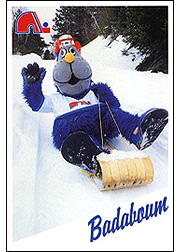
2. Badaboum-- This was the mascot of the Quebec Nordiques and it almost seemed like the starting for the Quebecors to actually have crazy muppet-esque mascots for their representation. Sadly, Badaboum did not make the trek to Colorado and could make a comeback (doubtful) if there's a team that relocates to Quebec City.

3. Youppi-- To continue with the Quebec theme, the Canadiens' mascot could be the most versatile, as Youppi was the iconic mascot of the Montreal Expos; but when they moved to Washington, DC-- the Habs picked up the pieces and kept the tradition of the Expos alive. They have the retired Expos numbers in the rafters and brought over Youppi in order to kept that tradition alive.

4. Stormy-- A hog shouldn't correlate with a hurricane, but it does in Raleigh. You see, the Hurricanes could have been called the Ice Hogs because of the all the hog farms in North Carolina. Yet, it still makes me laugh that a hog is the mascot of the Hurricanes-- but it's probably better than anything they could have come up with otherwise.

5. Nordy-- While I did say once that he was an odd looking mascot-- you have to respect the Wild's mascot. Not only is he half-bear, half-fox, half-man (ManBearFox??), but he has a mullet. Any mascot that can rock the mullet is alright in my books, even if they look freaky as hell and make people cock their heads to the sides wondering what it is.

That's my five-- and while these choices aren't like the NHL Guardians, it's a little more family friendly and unique to the team at each turn. Some have a lot to do with the team, some do not-- but the ones that do not are the best because of the guessing game of why they actually exist.

Wednesday, April 27, 2011

What's Next 2011: Montreal Canadiens

For the team who was the miracle of last year's playoffs, they couldn't get it done this year. It was a different goalie, but one who played as good, if not better, than the one last year, but they ran into their arch-rivals and couldn't seem to solve their Vezina nominated goalie. Now, what is there to do with the Montreal Canadiens.

Starting in net, which was the big story in the off-season, Carey Price did seem to live up to what the critics set out for him. While playing 72 games and winning 38 of them, Price was able to be 8th in save percentage (of goalies who played 25 or more games) and 10th in GAA (25 or more games). With that kind of workhorse ability and consistent play; the Habs look like geniuses in terms of which goalie was the right one to pick. However, they may want to get their back-up some more playing time, as not to burn out they young netminder. Alex Auld did well in his appearances and could probably be re-signed at a low cost.

The defensive story was that of PK Subban, who had solid rookie-campaign point-wise, though his minus-8 leaves something to be desired. Yet, the bigger issue is that only PK Subban and Jaroslav Spacek are under contract as defensement-- James Wisniewski, Roman Hamrlik, Andrei Markov, and Hal Gill are all UFAs. While Hamrlik will probably be gone and it'll take a big discount for Markov to come back-- Wisniewski will probably be a big focus on getting back into the fold, as he had 30 points and +4 rating in 43 games with the Habs. He brings a lot of intangibles and can log a lot of minutes for the team. Gill could be up in the air because he does bring shot-blocking ability and size....but there's not too much else that makes him overly worth keeping.

As for offense, the Habs came into the playoffs as the lowest scoring team out of the 16 teams that were in the start of the playoffs. They spread out their scoring throughout the depth chart, but at the same time-- didn't have someone who was one to take the reigns. While captain Brian Gionta lead the team, he still had under 30-goals, while they only had three other players with more than 15 goals on the year. Yet, with a lot of RFAs and only six forwards under contract-- who knows what will be done to try and get some secondary or primary scoring when it comes to this team.

They had the big run last season, but just couldn't get it going this year. Even so, the play of certain players, like Price and Subban, could have hushed the harshest of critics; even if it's just for a little while. The Habs will always be under an intense microscope and will never get any relief; but if they can get the right crew assembled-- they'll be able to drown out all the obnoxiousness from the press.

Monday, April 25, 2011

Absurd Goalie Monday: Steve Penney

In the playoff fantasticness, we get to someone who has a Cup ring to his name; but doesn't have his name on the Cup itself. The fact he was injured most of his career was the downfall which left his name off the Cup and left his career as a footnote in hockey history, when it could have been so much more. This week-- the profile of Steve Penney.

Penney's career started off unassuming enough, playing in 36 games with the Shawinigan Cataractes of the QMJHL in the 1978-79 season, then 31 in the 1979-80, where he would go 9-14-5, which wasn't the best-- but still got him drafted by the Montreal Canadiens in the 8th Round. Penney took that as motivation with Shawinigan in the 1980-81 season, going 30-25-4 in 62 games, then going 1-4 in five playoff games.

As Penney turned pro, he went to the IHL's Flint Generals, which he thought would be a short-term assignment. However, after spending the 1981-82 and 1982-83 seasons there and playing 36 and 48 games respectively; but he didn't seem to be going anywhere fast being tucked away in the minors like that.

Come the 1983-84 season, Penney took one more shot at moving up, but said he was going to be stuck in Flint again, he would quit hockey and go back to delivering beer in Saint Foy, Quebec. Luckily, Penney was mentored by Jacques Plante and was able to play good enough to be placed in the AHL with the Nova Scotia Voyageurs. With Nova Scotia, Penney played 27 games going 11-12-4, while getting a call-up to Montreal for four games, losing all four.

Yet, with Jacques Lemaire behind the Habs bench and hating the inconsistency from his current goaltending, Penney got some more chances. That shine in the 1984 Playoffs, where Penney got 15 games in, going 9-6 and cementing his role with the team. Penney would get the starter's role in 1984-85, playing in 54 games while sporting a 26-18-8 record, then going 6-6 in 12 playoff games. Penney got All-Rookie Team honors that year. The 1985-86 season started promising, but he would slip into the back-up role with the Habs as a young upstart named Patrick Roy came busting on the scene, as did a serious knee injury that limited Penney to 18 games (6-8-2). While the Habs won the Stanley Cup in 1986, Penney didn't have enough games in to get his name on the Cup, he did have an injury exemption-- but the Habs didn't use it. Penney got a Cup ring and had his picture in the team picture with the trophy-- but not engraved on the Cup. That said-- Penney was deemed expendable thanks to Roy's heroics and his own injury woes.

In August of 1986, Penney was traded to the Winnipeg Jets for Brian Hayward, another AGM. The 1986-87 season saw Penney get very limited time in Winnipeg, going 1-4-1 in seven games with the Jets, as other AGM inductees "Pokey and the Bandit" (Pokey Reddick and Daniel Berthiuame) were taking most of the time. Penney also spend '86-'87 with the Sherbrooke Canadiens for four games-- going 1-2-1. More of the same in the 1987-88 season, though Penney played most of his days with the Moncton Hawks, going 9-14-4 in 28 games, then going 2-4-1 in eight games as a call-up from Winnipeg. After that season, Penney hung up his pads and retired.

At last check-in, Penney was working as a sales representative for an eye-glass framing company.

While he rose to stardom and notoriety quickly, injuries and other goaltenders jumping onto the scene hurt Penney's chances as longevity. Many thought he was going to be the next Ken Dryden after his big playoff run; but if nothing else-- the injuries were the reason that Patrick Roy was able to launch into stardom and allowed him to get into games and hone his craft at a young age. I'm sure that Penney doesn't want to be remembered as the guy before Roy started....but it's better than nothing, I suppose.