Showing posts with label Olympics. Show all posts

Monday, July 15, 2013

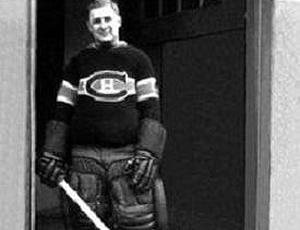
Absurd Goalie Monday: Alphonse "Frenchy" Lacroix


When it comes to goalies, it's always a rough task to come on in an emergency situation like an injury. Even worse back in the olden times when only one goalie dressed at a time as the concept of a back-up hadn't been invented as of yet. However, this week's AGM had the task of going in for, at the time, one of the most heralded teams in the NHL to that point with only an amateur background to boot. This week, the profile of Alphonse "Frenchy" Lacroix.

Lacroix started off as a 16-year-old with Newton High School in Massachusetts in the 1914-15 season, going 5-1-1 in seven games, while in the 1915-16 season; Lacroix would post a 5-2-0 record. In his final high school season, Lacroix went 7-0-1 in eight games.

Post-high school, Lacroix would play in the amateur ranks with the Boston Navy Yard in 1917-18 and posting a 7-4-0 record in a 11 games, as well as playing exhibition games for the Navy Yard in the 1918-19 season. Begining in the 1919-20 season until the 1923-24 season, Lacroix would play for the Boston AA Unicorns across different amateur leagues. Lacroix would go 15-4-0 in the 19 games played in that time-frame and 4-3 in seven playoff games.

Playing in the amateur ranks allowed for Lacroix to be selected for the 1924 Olympics by the USA, where Lacroix went 4-1-0 in his five games played and helped the US to a silver medal. Lacroix would return to the Unicorns for the 1924-25 season, playing in 21 games and ending up with a 15-6-0 record.

In November of 1925, the Montreal Canadiens signed Lacroix as an emergency goalie. When Georges Vezina started to cough up blood on the ice due to an undiagnosed tuberculosis; Lacroix would play in five games and going 1-4-0 before yielding the crease to Herb Rheaume for the duration of the 1925-26 season. Lacroix would spent the 1926-27 season under contract with the Canadiens, but not play a game with them that season.

Lacroix returned to the amateur ranks, playing with the Providence Reds of the Can-Am League in the 1927-28 season, posting a 1-3-0 record in four games. Also that season, Lacroix played for the Lewiston St. Doms in the Northeast League and went 8-12-2 in 22 games played. Returning to the St. Doms in the 1928-29 season, Lacroix went 3-1-0 in four games, then 2-1 in three playoff games. Lacroix would return to the Can-Am League in the 1929-30 season with the Reds again, playing in only one games-- which was a win. In the 1930-31 season, the Boston Tigers would use Lacroix in net for four games, where Lacroix went 1-3-0 before he would retire after the season was over.

Having to come into the NHL with no professional background and take over for a legend like Vezina is a taunting task for someone who actually had professional games under his belt. However, with a silver medal in tow and a decent amateur background-- Lacroix did what he could in the emergency situation.

Monday, July 08, 2013

Absurd Goalie Monday: Don Head

After a week off, the AGM this week focuses on a goalie who stayed to his amateur roots for longer than most in order to play in the Olympics. After that, he took another less taken road by going out west. This week, the profile of Don Head.

Starting in the Junior B system with the Weston Dukes during the 1950-51 season, Head would move forward during the 1951-52 with the Toronto Marlboros for 37 games, winning the Dave Pinkney Trophy for goalie with the best goals-against average for his team. Head would return to Weston for the 1952-53 season to end out his junior career.

Going the amateur route with Senior Hockey, Head played for the Stratford Indians from the 1953-54 season until the 1955-56 season, playing in a total of 74 games over that span. Head moved to the Windsor Bulldogs in the 1956-57 season, where Head would go 30-17-3 in 50 games, six wins by shutout. During the 1957-58 season, Head moved to the Chatham Maroons of the Northern Ontario Hockey Association and would play there for two seasons for a total of 96 games. Returning to Windsor for the 1959-60 season, Head used it as a tune-up for his role for Canada in the Olympics.

Head would pilot the Canadians into a solid position in the Olympics, going 5-1-0 in the seven games he played in, but they were upset by the United States, relegating the Canadians to take silver.

Starting in the 1960-61 season, Head moved onto his pro career with the WHL's Portland Buckaroos, where Head went 38-23-9 in his 70 games, then going 10-4 in the playofs to help Portland to the WHL title-- the Lester Patrick Cup. Head would win the WHL's Rookie of the Year award and Outstanding Goaltender Award for fewest goals-against on the season.

Portland would trade Head to the NHL's Boston Bruins ahead of the 1961-62 season, where Head would play in 38 games for Boston, posting a 9-26-3 record. Head would also spend five games in Portland that season on loan, going 3-1-1 in those games.

The Bruins traded Head back to Portland before the 1962-63 season, where Head would rebound from his NHL downside with a 43-21-6 record in 70 games, then 3-4 in the playoffs-- which was enough for another Outstanding Goaltender Award. Injuries hampered Head for the 1963-64 season, playing in only 16 games and having a record of 6-9-1; but Head would get back to play a majority of the games for Portland in the 1964-65 season, posting a 26-20-4 record in 51 games played, then 8-1 in the playoffs; helping Portland to another Lester Patrick Cup as champions.

Head's workload would decreased starting in the 1965-66 season, playing in only 36 games and finishing with a 20-12-3 record, sharing an Outstanding Goaltender Award with teammate Dave Kelly. During the 1966-67 campaign, Head played in 44 games for Portland, going 26-13-5, then 0-3 in four playoff appearances.

Portland traded Head to the Seattle Totems before the 1967-68 season, where Head would go 23-19-4 in 46 games and then posting an 8-1 playoff record to help the Totems to the Lester Patrick Cup, the team's second in a row. Back for the 1968-69 season, Head played in 44 games for Seattle and compiled a record of 22-13-4 (0-4 in the playoffs), while in the 1969-70 season; Head went 8-10-2 in only 20 games with the Totems. The 1970-71 season would turn out to be the last for Head, going 4-7-3 in 16 games before he would hang up the pads for good.

Head was inducted into the Oregon Sports Hall of Fame thanks to his time and achievements with the Buckaroos.

Though he had a cup of coffee in the NHL (which resulted in a Sports Illustrated cover....sort of) and Olympic glory, Head's contribution in the the semi-pro side of things made him a memorable aspect of Pacific Northwest sports lore. Though it might not be the big time for most, Head make the most of it and succeeded quite well due to it.

Monday, June 10, 2013

Absurd Goalie Monday: Jack McCartan


While many of the past goalies have toiled at their craft to be successful, this week's AGM took an unusual route. While he may not have been outfitted from the start, he lucked into the position and thanks to his baseball background, he was able to excel in net with a solid glove hand. This week, the profile of Jack McCartan.

McCartan fell into the goalie position, playing the spot in youth hockey when all the players too rotations in net, but didn't have the proper gear for it. McCartan acquire the gear of a friend, which enabled him to play for St. Paul Marshall High School and while his team was often defeated, McCartan played well enough to be name to the All-City Team in his senior season of 1953.

While he was recruited for a baseball scholarship, McCartan was lured back into hockey when at the University of Minnesota by hearing the puck bang against the boards when going to ball practice. After playing for the freshman team to start, McCartan played with the Golden Gophers for 67 games from 1955-56 until 1957-58, being named to the WCHA First All-Star Team in 1957 and 1958, and named to the NCAA First All-American Team in 1958.

McCartan continued his amateur aspirations in order to try out for the Olympic team, playing for the US National Team in the 1958-59 season for 29 games. McCartan did make the 1960 Olympic team, playing the unlikely hero for the underdog team that won the Gold Medal, as McCartan went a perfect 5-0-0 during the games and being named the Best Goaltender for the Olympics.

That exposure was notice by the New York Rangers, who signed him to a try-out contract following the Olympics, where he would play in four games and go 1-1-2 before being sent down to the Central League's Minneapolis Rangers for five games. The 1960-61 season had McCartan play only eight games for the Rangers (1-6-1), then being sent to the Eastern Pro League's Kitchener-Waterloo Beavers for the duration of the season, finishing with a 25-21-6 record in that span and 3-4 in the playoffs. Staying with the Beavers for the 1961-62 season, McCartan played in 70 games and posted a 36-24-10 record, then 3-4 again in the playoffs.

The Rangers would trade off McCartan to the WHL's Los Angeles Blades in the inter-league trade. McCartan played with the Blades for the 1962-63 season, putting up a 31-27-2 record, then 1-2 in three playoff games.

The Chicago Blackhawks would claim McCartan in the inter-league draft before the 1963-64 season, being relegated to the Central Pro League's St. Louis Braves and went 31-30-6 and 2-4 in the playoffs. McCartan only played in five games for the Braves in the 1964-65 season, going 1-4-0 before being on the move again.

The Blackhawks traded McCartan back to the LA Blades for the rest of the 1964-65 season, going 8-22-2 in the last 32 games of that year. McCartan stayed in the WHL for the 1965-66 season for the San Francisco Seals, going 23-27-3 in 53 games, while in the 1966-67 season for the California Seals; McCartan put up a 25-26-10 record, then 2-3 in the playoffs.

The 1967-68 season had McCartan playing in the CPHL again, this time for the Omaha Knights, but would go 9-25-7 in the 43 games he played.

After some summer shuffling, McCartan landed with the San Diego Gulls before the 1968-69 season, posting a 20-14-6 record in his first season there. Coming back for the 1969-70 season, McCartan got more games under his belt, finishing with a 21-20-9 record then 0-3 for the playoffs, while during the 1970-71 season, McCartan finished with a 24-20-11 record and 2-4 in the playoffs. Finally in the 1971-72 season with the Gulls, McCartan played in 36 games and posted a 14-16-2 record, then 0-2 in the playoffs.

With the WHA coming along, it gave McCartan another shot at the pros, as he was picked up by the Minnesota Fighting Saints in the 1972-73 season, playing in 38 games and having a 15-19-1 record, but only saw two games of action in the 1973-74 season for the Saints, but only in relief. McCartan went to the Southen League during the 1973-74 season for the Sun Coast Suns for six games (no record provide) as well. McCartan came back to the Saints for the 1974-75 season for two games, going 1-0-0 before hanging up the pads for good.

Post playing career, McCartan was a scout for the Vancouver Canucks for a time before he retired to Eden Prairie, Minnesota.

For not directly wanting to play goalie, McCartan got a lot of mileage from his career thanks to being able to get equipment from a friend and being lured back into hockey just from the sound of the puck hitting the boards in college. Though he toiled in the minors, his amateur career was more than enough for him to be remembered for the long run.

Friday, February 15, 2013

Destination Sochi: End of the Line


With the powers that be in the NHL, NHLPA, IOC, and IIHF meeting when it comes to the NHL's partcipation in the 2014 Winter Olympic Games in Sochi, Russia meeting, the question turns to what's going to happen next for the NHL in the Olympics.

Since the 1998 Games, when the NHL first started in the Olympics-- the NHL has lucked out with the Games being in locations where hockey is a followed sport or is close to locations where hockey is a popular sport, sans Nagano. The good part of Nagano is that the NHL was starting to get into Asian markets, even opening up the 1998-99 season in Japan.

Yet, with all of this, the Sochi Games could be the end of the line for the NHL's involvement. One of the reasons is that the Russians would want to represent their country at home. Of course, we all remember how many Russians said they would play regardless of the NHL's participation; so to include the NHLers would be the best bet for the NHL rather than losing the fire-power of Evgeni Malkin, Ilya Kovalchuk, and Alex Ovechkin, as well as Anze Kopitar-- who would want to help represent his native Slovenia in their Olympic journey. But after this-- it could be an indefinite hiatus for the NHL when it comes to the Olympics.

Past Sochi, there's South Korea in 2018 and 2022 is yet to be decided, but here are some potential bid cities. While the NHL would want to diversify their game, they don't seem to have the bump in Asia that they once had, so suspending the participation would probably happen, despite the IIHF and IOC actually wanting to have those high-profile names in one of the pinnacle events.

There's plenty of discussion about whether or not the NHL should be involved at all when it comes to the Olympics, as the whole "amateur" idea of the Games being put into check because of it, even with the exposure it gives to those involved. There's probably also a worry about the time that the NHL will have to take off because of it, the practice after the NHL is back in business, and the worry for some teams down the stretch when it comes to wear-and-tear of their players.

In the end, the NHL will go to Sochi and it probably won't take long to hash all of that out. The bigger concern is the involvement past this Olympics, which I'm sure the IOC would be pushing hard for a commitment, especially for a lesser revered venue and trying to get all the star power they could muster.

Monday, November 26, 2012

Absurd Goalie Monday: Jiri Crha

There have been many times where European goalies have under the radar of the NHL general managers and actually got signed to have some so-so results despite their hype. This week's AGM was one of the first guys who were actually involved in such a bidding war. This week, the profile of Jiri Crha.

Before coming over to North America, Crha spent many years over in his native Czechoslovakia; starting with the club team Dukla Jihlava in the 1969-70 and 1970-71 season, playing in 51 total games and posting a 2.42 GAA in those games (no record online).

Beginning in the 1971-72 season and ending in the 1978-79 season, Crha would go on to play with Tesla Pardubice. During that time, Crha also represented the Czechoslovakian team in four World Championships-- winning bronze in 1973 (2-0-0), silver in 1974 (3-1-0), 1975 (0-1-0), and 1978 (1-0-0)-- and during the 1976 Olympics-- winning a silver medal in playing two games.

Crha decided that at age 29 he wanted to move over to North America and try out his hand in the NHL. There was actually a bidding war between the Toronto Maple Leafs, Montreal Canadiens, and Philadelphia Flyers in the summer of 1979, in which the Maple Leafs would eventually in out and give him a contract to come over.

The first season in North America, Crha spent most of that adjusting to the North American rinks and style of play by just being the third goalie on the Leafs and watching incumbent goalie Mike Palmateer and talking to Leafs' great Johnny Bower about how to play the NHL style. Mid-season, Crha went to the AHL to play for the New Brunswick Hawks and went 4-1-2 in seven games. When Palmateer went down with injury, Crha was called up to the Leafs and posted a 8-7-0 record in 15 games and 0-2 in the playoffs.

After Palmateer was traded when disagree with Leafs' management, Crha was given the starting role for the 1980-81 season and played in 51 games, compiling a 20-20-11 record for those games and another 0-2 playoff record.

The 1981-82 season had Crha play only two games in the Central League with the Cincinnati Tigers, with a 1-0-0 record, then in the 1982-83 season, Crha played one game with the AHL's St. Catharines Saints with no record to show for it.

Crha went back to Europe following that season, heading over to Germany for the 1983-84 season, playing with SV Bayreuth, then taking a year off in the 1984-85 season, only to return in the 1985-86 season with EHC Freiburg until the 1992-93 season before he would retire.

Crha has stayed in the game, becoming a player agent after his playing career ended. He has represented NHLers like Alex Hemsky and Rostislav Klesla.

The Leafs have been known to bid on free agent talent, some of which panned out and some not. While Crha did well enough during a dark time for the Leafs, they didn't think it was enough and didn't give him a second change for just a .500 goalie. Who knows what they could have done if they gave him a chance to play more, but at his older age-- it may have still been not enough.

Saturday, August 04, 2012

Remember Ice Hockey in the Summer Olympics

There was a time that the Summer Olympics was a little more than just swimming and track events. Back in 1920, the Summer Games provided some chilly excitement, as it was the first time that figure skating and ice hockey were used during the Olympics. While it may seem a little odd at first, when you realize the 1920 "Summer" Olympics started in April and ended in September-- the first week of winter events weren't too far out of place in late April. 

Ice hockey wasn't available for Olympic use until the 1914 Olympics and were only chosen for the 1920 Olympics when the manager of the ice rink that was to be used in Antwerp, Belgium for figure skating said that they would not allow the Olympics to use their facility if ice hockey was not included in the Games. Therefore, three months before the Games were to begin, ice hockey was added to the menu to compete. 

Seven nations took part in the first hockey tournament: Canada, USA, Czechslovakia, Sweden, Belgium, Switzerland, and France. The Canadians sent the Winnipeg Falcons, who had won the Allan Cup for senior amateur champions, the USA had sent an all-star team of the best club teams after their tournament to send a representative was abandoned, Sweden sent bandy players who had little ice hockey experience, while the other nations had their own national teams. 

In the games, the "rover" position was used, thus having seven players on the ice, including the goalie, with the ice surface being 165 feet by 58.5 feet. Also, the games were split up into halves rather than periods.

Also, the first games had a tournament system called the Bergvall System, which was created by Erik Bergvall. It was a system that had three rounds. The first round was to determine the Gold medalist, the remaining teams would then be back into a tournament for Silver, and then another tournament for those who didn't win Gold or Silver for the Bronze medal. This system really screwed over the Swedish team, who lost the Gold medal game, then the first round of the Silver medal, then losing in the final game of the Bronze medal event. They played six games while the Gold medalist Canadians played only three.  

Speaking of the first Gold medalists of the Games, Canadian had a decisive advantage of most of the teams, letting up only one goal in the Gold medal game to Sweden and scoring 29 goals in three games. The advantage was good because the Falcons had played together for the entire winter and coming off a big championship were hitting their stride perfectly. The Silver went to the USA, who only lost to Canada, giving up two goals and scoring 45 in three games. 

And while the idea now of hockey in the Summer Olympics is a bit off, it'd be fantastic for hockey fans who crave some game play in the summer and it wouldn't cause a stoppage during the middle of the year for those Olympic years. However, with the places the Summer Games are going, the ability to build a hockey arena would be rough at best, thus making it back to the Winter venues and where they will stay-- which is apropos to do, sure, but causes a lot of problems with it as well. 

But those first games were the start of something big. Hockey would move to the Winter Olympics for the 1924 Olympics and beyond, but it will always be a solid footnote for the first hockey medals were given out in the Summer Olympics. 

Monday, July 30, 2012

Absurd Goalie Monday: Sam St. Laurent

Though this week's AGM definitely has a niche for keeping his fashion from going out of style; his style itself was something that was more of shuttling back and forth from the minors to the NHL. Even so, he got success here and there, but nothing truly lasting. This week, the profile of Sam St. Laurent.

It all started for St. Laurent with the Chicoutimi Sagueneens of the QMJHL in the 1975-76 season, where he would play in 17 games and finish with a 4-8-2 record. The 1976-77 season got St. Laurent more time in the cage, finishing with a 5-9-0 record in 21 appearances. Chicoutimi gave St. Laurent the starting job in the 1977-78 season, playing in 60 games and compiling a disappointing 12-35-10 record. In his final junior season, St. Laurent played 70 games in the 1978-79 and would finish with a 23-31-9 record.

St. Laurent would sign with the Philadelphia Flyers before the 1979-80 and would be put into their system. St. Laurent would play parts of four seasons with the IHL's Toledo Goaldiggers, playing in 85 games in that span, but no record to be recorded. However, St. Laurent would move his way into the AHL with the Maine Mariners for a few seasons to start with seven games in the 1980-81 season (3-3-0), 25 games in the 1981-82 season (15-7-1), and 30 games in the 1982-83 season (12-12-4), while also appearing in 17 playoff games with an 8-9 record.

Due to the playoff success, St. Laurent would stay the full 1983-84 season with the Mariners, appearing in 38 games, finishing with a 14-18-4 record and then in the playoffs posting a 9-2 record in 12 games. St. Laurent stepped into a bigger role in the 1984-85 season with Maine, posting a 26-22-7 record in 55 appearances and going 5-5 in 10 playoff games.

Before the 1985-86 season, St. Laurent was shipped to the New Jersey Devils for future considerations, but he would spend most of that season back in Maine, where he would play in 50 games and finish with a 24-20-4 record. St. Laurent would go on to win the Harry "Hap" Holmes Award for fewest goals-against in the season, as well as the Aldege "Baz" Bastien Award for Most Outstanding Goaltender in the AHL. St. Laurent would also play in four games for New Jersey and finishing with a 2-1-0 record.

The Devils would trade St. Laurent to the Detroit Red Wings for Steve Richmond in the summer of 1986, which would land St. Laurent with the Adirondack Red Wings for the 1986-87 season, playing 25 games and posting a 7-13-0 record; then going 1-2-2 in six games with Detroit. It was another split season for St. Laurent in the 1987-88 season, playing in 32 games in Adirondack (12-14-4) and six games in Detroit (2-2-0), but have his season end in the first playoff game he played in. While the split season of 1988-89 happened, it was a good year for St. Laurent in the AHL, as he would go 20-11-3 in 34 games with Adirondack and then 11-5 in 16 playoff games, helping them win the Calder Cup and giving St. Laurent the Jack A. Butterfield Trophy for Playoff MVP. That same year with Detroit, St. Laurent went 0-1-1 in four games.

The 1989-90 season was a big split season for St. Laurent, as he would spend 13 games in Adirondack with a 10-2-1 record and then get called up to Detroit and play 14 games there with a 2-6-1 record.

During the summer of 1990, St. Laurent was traded to the New York Rangers for cash going to Detroit, but the 1990-91 season, St. Laurent would play with the Binghamton Rangers, where he would go 19-16-4 record in 45 games. It was a short 1991-92 season for St. Laurent, who would play only one game for the Canadian National Team (a loss), be an extra for the Canadian Olympic team (which he got a silver medal), and then one games with Binghamton-- a no decision. He would retired following that season.

St. Laurent has the eternal distinction of being the last goalie to wear a full fiberglass mask in North American professional hockey-- NHL and AHL.

Post playing career, St. Laurent was retained by the Rangers a goalie coach and consultant from 1993 until 2004, where he was credited with developing the likes of Mike Richter, Dan Cloutier, and Jason Labarbera. After a year of consulting in Germany, St. Laurent started to do private consultations via appointment only.

A last of as dying breed, literally, St. Laurent didn't have the best teams in front of him, but he was able to hit his groove later on his tenures with teams. Though the team success and personal success came, it seemed that he was never cut out for the NHL for a length of time, due to one thing or another. Even so, he'll always have a space in goalie history for his facial protection.

Monday, May 07, 2012

Absurd Goalie Monday: Scott Gordon


From humble begins to a decent college career and a scrambled pro career, this week's AGM could be more notable for his coaching career than his playing career. In fact, many may forget his playing time-- which I wouldn't blame many for as he may not be the most recognized former player turned coach. This week, the profile of Scott Gordon.

Gordon started his career in Boston high schools with the Oliver Ames Tigers and then moving onto New Hampshire prep academy Kimball Union Academy.

After his prep career was done, Gordon moved on to the Boston College Golden Eagles for his college days, starting in the 1982-83 season, going 3-3-0 in nine games. The 1983-84 season saw Gordon get plenty of time in next, playing 35 games and finishing with 21-13-0 record. Gordon was again the starter for BC in the 1984-85 season, going 23-11-2 in 36 appearances. During the Frozen Four of 1985, Gordon and former AGM Chris Terreri were the first pair of goalies to put water bottles on the top of their net during the triple-overtime game, seeing Providence beat BC 4-3. Gordon's senior year in 1985-86 had a 17-8-1 record in 32 games, to which Gordon got named to the Hockey East First All-Star Team.

Before the 1986-87 season, Gordon was signed by the Quebec Nordiques, but spent that season toiling in the AHL for 32 games with the Fredericton Express finishing with a 9-12-2 record. In the 1987-88 season, Gordon stayed in the AHL, but with the Baltimore Skipjacks, going 7-17-3 in 34 games. However, the 1988-89 season had Gordon play the majority of the season with the ECHL's Johnstown Chiefs, going 18-9-3 in 31 games, then 7-4 in 11 playoffs games; which helped Gordon get named to the ECHL First All-Star Team. Gordon also spend two games back in the AHL with the Halifax Citadels that season, both losses.

The 1989-90 season is where Gordon got some better footing in Halifax and putting up a 28-16-3 record, then 2-4 in the playoffs. Also, Gordon would get called up to Quebec in mid-season for 10 games, going only 2-8-0 in those games. The 1990-91 season was a bit dismal, as Gordon would play only 24 games in Halifax with a 12-10-2 record and appear in 13 games with Quebec, sporting a 0-8-0 record. Gordon would play for the US in the World Championships, losing his only appearance.

For the 1991-92 season, Gordon spent the start of it with the United States National Team in hopes of playing in the 1992 Olympics. He played 28 games with the touring team, putting up a 13-12-3 record, while playing on one games in the Olympics, but did not factor in the decision. Once he returned, Gordon played seven games for Halifax (3-3-1) and four games for the New Haven Nighthawks of the AHL (3-1-0).

Gordon was a free-agent by the 1992-93 season, opting to play in the ECHL with the Nashville Knights, putting together 13-9-1 record in 23 games, then going 5-4 in nine playoff games. Gordon would move to the Knoxville Cherokees for the 1993-94 season, finishing with a 15-10-1 record in 26 games, while also getting a call to the IHL's Atlanta Knights to play in five games, finishing with a 0-1-3 record.

In 1994, Gordon retired and began coaching with the Atlanta Knights as an assistant and would be with the team from 1994 until 1998, when the team was then the Quebec Rafales. Starting in 1998, Gordon got a head coaching job in the ECHL with the Roanoke Express, a post he would hold for two seasons. From the 2000-01 season until the 2007-08 season, Gordon would coach the AHL's Providence Bruins, winning the Louis A. R. Pieri Memorial Award for Coach of the Year in his last season. In the 2008-09 season, Gordon became the head coach of the New York Islanders, but after a couple dismal seasons-- he would be dismissed as the head coach in the middle of the 2010-11 season. Currently, Gordon is an assistant coach with the Toronto Maple Leafs. Gordon has also helped USA Hockey as an assistant in the 2009 World Championships and 2010 Olympics and the 2011 Worlds as the head coach.

While he didn't do much for some lackluster teams, the knowledge picked up and the international experience that Gordon was able to pick up was something that is invaluable. With the amount of situations he's been in, it has helped Gordon adapt to whatever is thrown his way.

Sunday, April 29, 2012

On the Topic Of....The World Hockey Championships

While the Stanley Cup playoffs are on-going, another big tournament is happening. While it's not the "Holy Grail" of hockey, the World Championships is something that is often overlooked because it doesn't get too much publicity in the North American side of the globe, but this year's tourney holds a lot of weight to it.

Outside of the fact that there will be some bigger name NHLers there than usual, this tournament is the one that will determine which teams will make it into the Olympics and where they will be seeded in Sochi in 2014. Considering that only the top NINE teams will automatically make it into the Olympics out of the 12 nations playing, that'll leave three teams to battle with other 20 that have declared in order to see if they'll get into the Olympic games.

Of course, the fact that this really the professional equivalent of the the NIT tournament that college basketball has really makes this tournament a little dull for some people. Yet, that's only in North America.

The European fans are really nationalistic when it comes to this tournament. It's a big deal for them and they will come out in droves to support their home nations. A lot of European NHLers see the World Championship right up there with the Stanley Cup because they grew up thinking it was the biggest deal out there. That's why a lot of them really want to play in the Olympics, especially the Russians, because it's a big honor to play for the country, more than what the North Americans see it as.

Even so, it should be an interesting World Championship, even while the old guard of the NHLers-- Teemu Selanne, (maybe) Daniel Alfredsson [scratch that], and (maybe) Nicklas Lidstrom-- what it lacks in memorable names will leave the door open for younger players to get noticed and for some of the more underdog nations (like Slovakia) to jump up and surprise some people with their performance. You'll see a lot of teams with young talent, Canada really leading the way with draft-eligible Ryan Murray invited to camp and John Tavares, PK Subban, and others being on the roster already.

Yet, the question remains on whether the players make the tournament good or the tournament makes the players good. The Olympics busted out the likes of Tore Vikingstad and Mats Zuccarello-Aasan come alive from Norway to not only put their names out there-- but the country of Norway on the map for an emerging hockey nation. This is another place for players to really break out against top-level talent and it could make their stock go up and have them get NHL contracts as a result. That's a selling point to watch right there.

Of course, most people won't be able to watch the action from Finland and Sweden with the games being early in the morning and people working or sleeping will make them miss it, but it's always nice to have if you need some break from your work life and won't get caught if you find a feed of the game somewhere.

It may not be the Stanley Cup and it may remember a Mario Kart trophy, but in the end-- it is a meaningful achievement for some players, especially when it comes to actually representing your country.

Monday, March 19, 2012

Absurd Goalie Monday: Wayne Stephenson

Despite being in the shadows for most his NHL, the trek this week's AGM took to get into the NHL was something unique, as he went about playing for his country. With that under his belt, he got international recognition and then moved that onto the NHL game itself. This week, the profile of Wayne Stephenson. 

When Stephenson first stepped onto the scene, he was playing for the Winnipeg Braves in the Manitoba Junior League starting in the 1963-64, going 11-15-3 in 29 games. Returning to the Braves in the 1964-65 season, Stephenson would go 26-12-5 in 43 games, then 4-0 in four playoff games, helping win the league championship.After the season, Stephenson was MJHL MVP, top goalie, and on the first-team all-star squad. Stephenson was picked by the Edmonton Oil Kings to participate in the 1965 Memorial Cup, where he would go 1-4 in five games

Post-junior career, Stephenson chose to join the Canadian National team under the tutelage of Father David Bauer. Stephenson played with the Canadian National team from the 1966-67 season until the 1970-71 season. In that time, Stephenson played in two World Championships (1967, 1969) and one Olympics in 1968, where he would go 2-0-0 in three appearances, helping the Canadians win a Bronze medal. Stephenson also played 15 games for the Winnipeg Nationals in the 1967-68 in the Western Canada Senior League.

For the 1971-72 season, Stephenson would get signed on in January with the St. Louis Blues and spend most of the season in the Central League with the Kansas City Blues, going 5-11-4 in 21 games; then going 0-1-0 in two games with St. Louis. Stephenson spent the entire 1972-73 season with St. Louis, playing in 45 games and finishing with a 18-15-7 record, then going 1-2 in three playoff games. Returning to St. Louis in 1973-74 season, Stephenson went 13-21-5 in 40 games. 

Before the 1974-75 season, Stephenson was traded to the Philadelphia Flyers, where he would be behind Bernie Parent on the depth chart; playing only 12 games and going 7-2-1, then 2-0 in two playoff games, helping the Flyers win the Stanley Cup. In the 1975-76 season, Stephenson got most of the games in for the Flyers, as Parent was injured-- going 40-10-13 in 66 games, then 4-4 in eight playoff games. With Parent back in 1976-77, Stephenson was resigned to the bench again, playing in only 21 games, going 12-3-2 and 4-3 in nine playoff games. Stephenson got more games in during the 1977-78 season, playing in 26 games and finished with a 14-10-1 record. During the 1978-79 season, Parent suffered a career-ending eye injury, resulting in Stephenson seeing more time, compiling a 20-10-5 record in 40 games, then 0-3 in four playoff games that season. 

During the summer of 1979, Stephenson was traded to the Washington Capitals, where he would play 56 games in the 1979-80 season, posting an 18-24-10 record. For the 1980-81 season, Stephenson would be back to the Capitals, playing only 20 games with a 4-7-5 record, which would lead to his retirement after the season. 

Post playing career, Stephenson got into the financial industry, working banks in Philadelphia, Milwaukee, and Cape Cod. However, he would be diagnosed with terminal brain cancer and would pass away on August 22, 2010. 

Though he didn't have one of the most straight tracks to the NHL, he was able to get to the show and succeed as much as he could in his short time there. He had a great team in front of him, which helped showed off what he could do with the right team in front of him. 

Tuesday, February 07, 2012

Better Know Your Olympic Hopeful Nations

The list for hopeful Olympic hockey nations are out for the 2014 Games in Sochi, Russia-- and boy howdy is it quite the list, male and female alike. Now, for the men's side of things-- the top-nine team in the IIHF ranks automatically qualify, while the women's side have the top-six already in. That leaves only three spots for the men's side and two spots for the women's side to get spots.

The men's side has 32 countries that have declared for the Games-- leaving 23 countries vying for three spots. The women's side has 24 countries declared, 18 countries for two spots there. These are the 2011 Final Rankings and could be close to what we see for the 2012 Final Rankings. Click to enlarge (that's what she said??)


So, while the list is pretty straight-forwards-- the wide array of interesting markets could be intriguing to some, especially if we get some kind of upset special in one of these qualification rounds. For the women's side-- you can bet the Asian nations of China and Japan are always up there when it comes to getting into the Olympics, but never sleep on the Germans or Kazakhs either. If you want to go really out there-- I wouldn't sleep on Hungary either. They dominated the U18's this year, boosting themselves to the top level, which could play out well for qualifications.

The men's side could be a little more crazy, especially depending on how the top-nine play out. Sure, we can pretty much pencil in the top six-- yet, those 7 through 9 and the other three could get crazy-- especially in the qualifying round. The Belarussians are always hard and would want to play close to home, the Kazakhs are always a dark horse and would have the proximity motivation, but France and Denmark could also play the role of spoilers in all of this. Latvia and Slovakia are the stalwarts, too-- but you know one crazy bounce and it all changes.

There's one more tournament to go, the World Championship, which will probably make or break some nation's hope for an easy in to the Olympics. Considering there's already 16 teams there, there's a lot that could get shuffled around very quickly should a slip-up happen. Still-- we're two years away and the Olympic hype is already getting started.

Monday, July 04, 2011

Absurd Goalie Monday: Ray LeBlanc

To celebrate the Fourth of July in the United States, it's time to profile a guy who many people had high-hopes for coming off a solid Olympic performance in 1992. Yet, at the same time-- as it always does with these-- one thing happens to ruin the greatness that could have happened. This week, the profile of Ray LeBlanc.

Though he grew up in Massachusetts, LeBlanc played his Junior "B" hockey in Ontario, Canada; starting with the Markham Waxers in 1982-83, playing in only six games with a 2-2-1 record, before going to the Dixie Beehives in the same season, finishing with a 16-8-3 record there. The 1983-84 season saw LeBlanc head to the OHL to play for the Kitchener Rangers, going 39-7-1 in 54 games, then 3-1 in the Memorial Cup (which Kitchener hosted), with his only loss coming in the final game.

After that, LeBlanc moved onto the Atlantic Coast League, playing for the Pinebridge Bucks for 40 games in the 1984-85 season, going 18-21-0 while gathering Second Team All-Star honors. The 1985-86 season had LeBlanc played with the Carolina Thunderbirds for 42 games, compiling an astonishing 33-9-0 record, including three shutouts. The Thunderbirds would go on to win the Bob Paine Trophy as ACHL champions. LeBlanc got First Team All-Star honors that year, as well.

LeBlanc would move onto the IHL in the 1986-87 season with the Flint Spirit, playing in 64 games with a 33-23-1 record before going 1-3 in four playoff games. That season, LeBlanc got Second Team All-Star honors and won the Ken McKenzie Trophy for US-born Rookie of the Year. LeBlanc would be back with Flint in the 1987-88 season, where he would play 62 games with a 27-19-8 record, while going 10-6 in the playoff; getting the Spirit to the Turner Cup Finals, but losing out on it. LeBlanc started the 1988-89 season with the Spirit, going 5-9-0 in 15 games before moving along to the Saginaw Hawks, finishing there with a 19-7-2 record in 29 games. LeBlanc also made an AHL appearance with the New Haven Nighthawks in a no-decision.

With him sporting his wear, the Chicago Blackhawks thought they would give LeBlanc a chance and signed him to a contract in the summer of 1989. The 1989-90 season has LeBlanc back in the IHL, but with the Indianapolis Ice for 23 games, going 15-6-2 before being shuffled off to the Fort Wayne Komets for the rest of the season, going 3-3-3 in 15 appearances. The 1990-91 season had LeBlanc do the reverse, starting with Fort Wayne for 21 games (10-8-0), then moving to Indianapolis for three games (2-0-0).

The 1991-92 season saw LeBlanc start with Indianapolis, playing 25 games with a 14-9-2 reocrd before taking a leave from the professional route in order to play for the USA in the 1992 Olympics. In tuning up with the US National Team, LeBlanc went 5-10-1 in the exhibition games. While it wasn't looking bright, LeBlanc turned up his game in the actual Olympics, going 5-2-1 in his eight games, including two shutouts; as the Americans finished 4th in the Games.

When LeBlanc returned, he was placed into the line-up for the Chicago Blackhawks later in the season, winning against the San Jose Sharks. Yet, while it may have seemed like a nice gesture; it seemed that the Hawks had ulterior motives. With an Expansion Draft looming, each team had to make a goalie available from their roster if they had played one game. Not wanting to expose Ed Belfour, Jimmy Waite, or Dominik Hasek; this game was the game for LeBlanc to be the odd-man out. However, LeBlanc was not chosen for that Expansion Draft.

LeBlanc would return to Indianapolis in the 1992-93 season, posting a 23-22-7 record in 56 games, but then 1-4 in the playoffs. LeBlanc played only two games |(0-1-0) in Indianapolis in the 1993-94 season, before being shipped to the Cincinnati Cyclones, finish the year with 34 more games and a 17-9-3 record before being doomed in the playoffs with a 0-3 record in five games.

The Chicago Wolves signed LeBlanc for the 1994-95 season, which saw him get into 44 games, finishing with a 19-14-3 record before going 0-3 again in the playoffs. LeBlanc got limited time in the 1995-96 season with the Wolves, playing only 31 games and putting up only 10-14-2 record. The 1996-97 season had a little more to offer for LeBlanc, getting in 38 games with a 15-14-2 record; then going 9-3-0 in 14 games of the 1997-98 season before moving along to the UHL's Flint Generals for 29 games of the 1997-98 season, finishing 12-4-5 in Flint.

LeBlanc moved a bit higher in the 1998-99 season, going to the ECHL's Jacksonville Lizard Kings, where he would play in 53 games and finished with a solid 29-19-1, but would go 0-2 in the playoffs. With one more kick-at-the-can in the 1999-2000 season, LeBlanc went 22-25-8 in 56 games, but would retire after that season.

Not much has happened from LeBlanc since his playing days, but he did become a Born-Again Christian in 2008, joining the Calvary Church.

While he did seem to have promise, he only saw one game of NHL time and it was to expose a loophole in the NHL's plans. While it is more than most people get, LeBlanc at least gets the recognition of being another USA goalie who flew under the radar during the Olympics, but couldn't translate that into a solid NHL career.

Monday, May 09, 2011

Absurd Goalie Monday: Mike Dunham

After weeks of some old-school types, we go forth with a more recent goalie who keeps dabbling in the game today. From a solid NCAA career to a great international career, to a dependable NHL career; this week's goalie has been through it all and still has his work cut out from him, even though he's been retired for a few seasons now. This week, the profile of Mike Dunham.

Dunham started out at The Canterbury School, a prep school in Connecticut, playing there for three seasons. He would be drafted by the New Jersey Devils in the third round of the 1990 Draft, but Dunham had committed to the University of Maine and would honor his commitment to the Black Bears. Starting in the 1990-91 season, Dunham would start out playing behind Garth Snow at Maine, playing 23 games with a 14-5-2 on the season. Also that season, Dunham went to the World Juniors for the US, going 1-2-0 in three games. Dunham would see limited amount of time in the Maine net, as he played only seven games with a 6-0-0 record to show for it.

However, in the 1991-92 season, Dunham mostly spent time with USA hockey's program, playing in the World Juniors and going 5-0-1 in six games, leading the US to a bronze medal performance and getting Top Goaltender honors from the tournament. Dunham also spent time with the National Team touring squad, going 0-1-1 in three games, while going 0-1-0 in three games at the World Championships and being a spare goalie for the 1992 Olympic team.

The 1992-93 season had Dunham playing a huge role with the Maine Black Bears, playing in 25 games with a 21-1-1 record, then helping the Bears get to the NCAA Tournaments-- winning the title over Lake Superior State. Dunham would be Hockey East First Team All-Star and NCAA First Team All-American. Dunham would join the US team for the World Championships, going 1-0-0 in his only game. Dunham would stick with the US National Team in the 1993-94 season, playing on tour with them going 22-9-2 in 33 games, then 0-1-2 in three games during the Olympics.

Post Olympics, Dunham started his pro career by joining the Albany River Rats of the AHL, where he would play five games at the end of the '93-'94 season and going 2-2-1. In his first full season in Albany in the 1994-95 season, Dunham came into his own, playing in 35 games with a 20-7-8 record, then going 6-1 in seven playoff games, as the River Rats won the Calder Cup. Along with Corey Schwab, Dunham would collect the Hap Holmes Memorial Award for fewest goals-against and shared Playoff MVP honors with Schwab. Dunham's role expanded in the 1995-96 season, going 30-10-2 in 44 games, but wouldn't be able to repeat the playoff heroics, going 1-2 in three games.

The 1996-97 season had Dunham move up to the New Jersey Devils to back-up Martin Brodeur. Dunham would get in 26 games with a 8-7-1 record, including two shutouts, which allowed him to share the William Jennings Trophy for fewest goals-against with Brodeur. Dunham also spent three games in Albany, going 1-1-1 in three games. The 1997-98 season saw Dunham play only 15 games with a 5-5-3 record to show for it. Dunham would head to the the World Championships again with the USA with an 0-1-0 record in two games.

The Devils left Dunham unprotected, which allowed the Nashville Predators to claim him in the Expansion Draft. Dunham would split time with Tomas Vokoun, mostly because Dunham missed 26 games due to a reoccurring groin injury. Dunham still go into 44 games with a 16-23-3 record. The 1999-2000 season was better for Dunham, as he played in 52 games witha 19-27-6 record for the Preds, then spending a game in the IHL with the Milwaukee Admirals-- which was a win. Injuries plagued Dunham in the 2000-01 season, as he missed 15 games due to a knee injury, but it was a solid season after all-- sporting a 21-21-4 record in 48 games. Back on the mend in 2001-02, Dunham would put together a 23-24-9 record in 58 games, but Dunham would take home some hardware, as he would go to the Olympics; winning the only game he played in and captured a Silver Medal for the US. Dunham would start the 2002-03 campaign with the Predators, but would only play 15 games; going a dismal 2-9-2 before he was sent out.

Dunham was sent to the New York Rangers for Rem Murray, Tomas Kloucek and Marek Zidlicky. Dunham would have to take over for the injured Mike Richter, as Dunham would play 43 games in the Big Apple going 19-17-5 with five shutouts. Back in the Big Apple, Dunham would have another rough season-- finishing 16-30-6 in 57 games.

With the lockout in 2004-05, Dunham went to Sweden to play 13 games with Skelleftea AIK HK in the Swedish Division II league.

Once the lockout was over, Dunham was signed by the Atlanta Thrahsers for the 2005-06 season, but had to deal with his share of groin issues again, playing only 17 games with a 8-5-2 record. While rehabbing, Dunham spent time in the ECHL with the Gwinnett Gladiators, winning both his games he played in.

Dunham then signed with the New York Islanders for the 2006-07 season, playing only 19 games with a 4-10-3 record, mostly using his time as a mentor to the young Islanders goalies coming up through the ranks. However, after that year-- Dunham retired from the NHL.

Post retirement, Dunham would stay with the Islanders as their goalie coach, a spot he holds today. Many thought he would suit up again this past season, as the Islanders had issues with keep goaltenders healthy.

Though he had a solid college career, his NHL years were less than stellar. Even with that, he always answered the call for his country, which allowed him for a decorated career with Team USA. From those experiences, he's now able to try and mentor the younger goalies through the Islanders system.

Monday, February 28, 2011

Absurd Goalie Monday: Jarmo Myllys

While the goaltenders of Finland nowadays were very sought after, back in the late-80s/early-90s-- that wasn't the case. Many of them had a rough transition period and could never get settled in, which is the case for this week's AGM. While he was part of the possible first Finnish tandem, it never really came together. This week, we profile the career of Jarmo Myllys.

Before we go forward, a note-- thanks to the apparent lack of record-keeping or technology in European hockey; the stats of Myllys when playing overseas are a bit sketch and therefore unavailable for most seasons.

When he first came into the scene in 1982-83, Myllys played for the Finnish Second-League team SaPKo Savonlinna, where he played for 13 games. That said, he didn't get more noticed than during the European Junior Championships, where he played four games with a 2.70 GAA. Due to his performance, Myllys was named Best Goaltender and to the All-Star team. For the 1983-84 season, Myllys went up to the premier league in Finland, SM-liiga, playing for Ilves Tampere, but only getting in nine appearances with a 3.00 GAA. Myllys would get back into the swing of things in the World Juniors of 1984, going 3-1-0 in four games for Finland, helping them to a Silver Medal. Myllys would play nine more games for Ilves Tampere, with a 2.55 GAA; but going only 1-0-0 in one appearance in the WJC.

For the 1985-86 season, Myllys played 16 games for Ilves Tampere; while in the 1986-87, Myllys would move over to Lukko Rauma, appearing in 43 games with a 16-20-7 record. Myllys also played in the World Hockey Championships, going 4-3-1 in eight games. That helped him get drafted in the 9th Round by the Minnesota North Stars. It was a banner year for Myllys in the 1987-88 season, where he would play in the Canada Cup for one game, then back to the Lukko Rauma for 43 games, which included five shutouts and a 3.13 GAA. Yet, his biggest accomplishment of the season was during the Olympics, where he would go 4-1-1 in six games, leading Finland to a Silver Medal. Myllys would end the year with Finnish Player of the Year honors and named to the Finnish First Team All-Stars.

Myllys made the leap to North America for the 1988-89 season, starting off with the North Stars. However, with three losses in his first three appearances, Myllys was sent to the IHL's Kalamazoo Wings, playing in 28 games with a 13-8-4 record. Myllys would finish that season with a 1-4-0 record with the North Stars. The 1989-90 season would be a breakout in the IHL for Myllys, as he would go 31-9-3 in 49 appearances, which got him named to the IHL's Second Team All-Star roster. Myllys would also play in four games for the North Stars, but would go 0-3-0. Myllys started the 1990-91 season with the North Stars for three games on their French Tour, then for two games in the regular season. However, going 0-2-0, Myllys was sent back to Kalamazoo; where he would excel again compiling a 24-13-1 record in 38 games; then going 6-4 in the playoffs. It was another year for Second Team All-Star honors for Myllys.

However, during the Expansion/Dispersal Draft of 1991, Myllys was claimed be the expansion San Jose Sharks. Myllys would have an up and down year, going 3-18-1 in 27 games for the Sharks, but going 5-0-0 with the Kansas City Blades of the IHL.

Myllys was traded to the Toronto Maple Leafs in the summer of 1992, but decided to return to Finland for the 1992-93 season, with KooKoo Kouvola of the Finnish Second League-- going 27-13-5 in 45 games. Myllys would return to Lukko Rauma for the 1993-94 season, where he would go 26-16-4 in his 46 games of work, as well as returning to the Olympics in 1994, going 5-0-0 with two shutouts and a 0.60 GAA; helping the Finns to a Bronze Medal. Myllys would also play in the World Championships, playing in seven games helping the Finns to a Silver Medal.

From the 1994-95 season until the 2000-01 season, Myllys would play 284 games with Lulea HF; compiling 31 shutouts and ending with a 2.59 GAA in those games. However, like I mentioned at the start-- no records from those years sadly.

However, the international play helped Myllys' career for records, as he would represent Finland plenty. It started with the 1995 World Championships, as Myllys went 5-1-1 in seven games, leading the Finns to their first ever Gold Medal in the event. Myllys took home the Best Goaltender honors in the tournament, as well. However, in the 1996 World Championships-- Myllys went 0-2-2 in four games, as the Finns would bow out in the Quarterfinals. Myllys went to the 1996 World Cup of Hockey, but would go 1-1-0 in two games, as Finland was knocked out in the Quarters again. The 1997 World Championships had Myllys get some swagger back, going 4-2-0 in six games with a 1.67 GAA, but they did not past the Quarters again. The 1998 Olympics wouldn't give Myllys the super skills he had in Olympics past, as he would go 1-3-0 in four games, but would be rostered on the Bronze Medal team. Myllys played two games in the 1998 World Championships with a 1-1-0 record and would add another Silver Medal to his showroom. It wouldn't be until the 2001 World Championship that Myllys would be back with Finland, but he would only be a spare and not play in any games for the Finns, as they would take home Silver.

Myllys return to the SM-liiga for the 2001-02 season with Blues Espoo, playing in 46 games with a 19-19-7 record, then 0-3 in the playoffs. Back with Espoo in the 2002-03 season, Myllys would only see 19 games of action with an 8-5-5 record, then 3-4 for seven games in the playoffs. The 2003-04 season saw Myllys return to SaiPa Lappeenranta, playing in 34 games with a 9-15-7 record, as well as seeing seven games of action with HV 71 Jonkoping of the Swedish Elite League. Myllys would go back to Finland with SaiPa Lappeenranta for the 2004-05 season, where he would put together a 10-25-10 second in 45 games. After that, he would hang up the pads in his playing career.

Myllys would stay with SaiPa Lappeenranta as the goalie coach, which is where he's at today.

While he could never get adapted to the North American game despite trying as much as he could-- the success he had for his country is something that many of the European players hold in higher regard, even to this day. With a Gold and a couple of Silvers and Bronzes with Suomi; Myllys can hang his hat on bringing pride to his country on the highest of stages.

Monday, November 01, 2010

Absurd Goalie Monday: Roman Turek

While this week's AGM is a recent retiree, it has been almost seven years since he last played in the NHL. Even so, he's been bumped many a time during his NHL tenure, which probably led him to this returning to his home country in the end. This week, we'll take a look at the career of Roman Turek.

For the bulk of the upbringing of Turek, he spent it in his home country of the Czech Republic, playing in the Czech Jr. league from 1987-88 until 1989-90 with Motor Ceske Budejovice Jr. team. He would also get his shots at two World Junior Championships for then Czechoslovakia, winning bronze in both the 1989 and 1990 World Juniors for Czech0slovakia. Thanks to his performances, he was selected in the 1990 Entry Draft by the Minnesota North Stars in the sixth round.

Instead of going over to North America, Turek would stay over in the Czech Republic with Motor Ceske Budejovice of the Czech League starting in 1990-91 and would play in 157 from 1990-91 until the 1994-95 season. He would have a 3.23 GAA, but sadly-- I cannot find any win-loss record for him. Turek would also participate in two World Championships and an Olympics for the Czechs, being named to the World Championship All-Star team in 1995.

Turek would move over to the German Elite League in the 1995-96 season with the Nuremberg Ice Tigers, playing 48 games with a 3.32 GAA. Turek would have a breakout performance in the 1996 World Championships, going 7-0-1 while the Czech Republic would take home gold and Turek would be named best goaltender of the tournament and a second straight All-Star team in the World Championships. Turek would play in the 1996 World Cup, but would go 0-3-0 as the Czech didn't get out of qualifying round.

Turek would make a jump to North America to playing for the Michigan K-Wings of the IHL for the 1996-97 season, but would be hampered with injuries, that would only have him see 29 games of action. He would finish with a 8-13-4 record in Michigan and would get six games of action with the Dallas Stars in a call-up, going 3-1-0 in those appearances. Turek would be the back-up to Ed Belfour in the 1997-98 season in Dallas, getting in 23 games of action with an 11-10-1 record, as well as a 1-1-0 record in Michigan while recovering from another injury. It was a crowning season for Turek in the 1998-99 season, where Turek would shine in his 26 appearances this season, going 16-3-3 and being a part of a William Jennings Trophy tandem with Belfour for lowest combined goals-against. Also Turek was long for the ride, as the Dallas Stars won the Stanley Cup that spring.

With his stock high and another young goalie up through the ranks, Turek was traded from Dallas to the St. Louis Blues for a 2nd round draft pick, only one day after the Stars won the Cup. In an effort to prove his old team wrong, Turek lit up the league with the Blues, going 42-15-9 in 67 games with seven shutouts and a 1.95 GAA; allowing him to win the Jennings Trophy again; but he would flame out in the playoffs, getting upset by the 8th seeded San Jose Sharks in the first round. Turek's time in 2000-01 season could be shortened by the emergence of Brent Johnson, as he would play 54 games, going 24-18-10 in the regular season, but Turek went 9-5 in the playoffs, help getting the Blues to the Conference Finals.

It wasn't enough for the Blues, who would actually ship Turek with a 4th round pick to the Calgary Flames for Fred Brathwaite, Daniel Tkaczuk, Sergei Varlamov, and a 9th round pick. Turek took over on a somewhat dismal Flames team as the start in the 2001-02 season and played 69 games with a 30-28-11 record, coupled with five shutouts. Turek would have a decent 2002-03 season, with a 27-29-9 record in 65 games. However, the 2003-04 season would be good for the Flames, but bad for Turek-- as he would be sidelined for 39 games with an injured MCL; which allowed the Flames to acquire Miikka Kiprusoff, making Turek the back-up when he finally did come back. Turek would only play 18 games with a 6-11-0 record and was on the bench for the Flames Stanley Cup run, as they would lose in the Finals.

During the lockout, Turek said that he would take a pay-cut to stay with the Flames, but when he returned home to play for HC Ceske Budejovice again for the 2004-05, which is where he would stay until his retirement following the 2009-10 season. Turek would play 205 games in those seasons, with a 2.34 GAA in those games and 20 shutouts.

It seemed just as the getting was good, Turek would have a bump in the road when it came to getting stellar success. While he has a Stanley Cup rings, International success, and some individual trophies, Turek will probably never been seen as a solid goaltender on the NHL scale. It seems that he'll always get lost in the generation of goaltenders better than him-- which could be construed as a shame to some, not so much to others.

Monday, August 16, 2010

Absurd Goalie Monday: Pasi Nurminen

The thing with goalies in the late-90s and early-00s is that some of them are becoming more and more absurd by being one-hit-wonders or retiring early due to injury. The latter is the subject of this week's AGM. He was a promising goalie coming up through the ranks in Finland, then bursting onto the scene in the AHL, but due to a clog in the system and then a severe injury playing overseas during the lockout; his playing days are now a memory. This week I'll take a look at Pasi Nurminen.

Nurminen started his career out in his native Finland with his hometown organization in Lahti, bouncing between the junior ranks and the Tier II league in Finland for the 1993-94 and 1994-95 seasons. It wasn't until the 1995-96 season where Nurminen got plenty of playing time with Kettera Imatra of the Tier II Division in Finland, playing 36 games, only going 8-21-8 with a 3.97 GAA for the year. Nurminen went back to the Lahti Pelicans for the 1996-97 season, playing 30 games that year with a 2.40 GAA. Nurminen had a breakout season in the 1997-98 campaign with the Pelicans going 16-7-4 with a 1.65 GAA and seven shutouts.

Nurminen was able to get a good look in the Finnish Elite League with HPK Hameenlinna in the 1998-99 season, where he would play 48 games and compile a 24-17-6 record with a 2.71 GAA. With the constant movement in Finland, Nurminen went to Jokerit Helsinki in the 1999-2000; again playing 48 games with a 24-14-9 record, a 2.25 GAA, and six shutouts and got him the Urpo Ylönen Trophy as top goaltender award for the year. Nurminen returned to Jokerit for the 2000-01 season and did even better, going 30-11-6 in 52 games with five shutouts and a 2.16 GAA. Nurminen went on to play for Finland in the World Championships, helping Sumoi get a silver medal. That season was enough for Nurminen to get noticed by NHL teams, which got him drafted by the Atlanta Thrashers in the sixth round in the 2001 Draft.

After getting drafted, Nurminen went over to North America immediately for the 2001-02 season, playing with the Thrashers AHL affiliate, the Chicago Wolves. He had to fight for time, only playing 20 games in the regular season, going 9-9-1 behind Norm Maracle. Nurminen got a call-up for nine games, going 2-5-0 with the Thrashers. Also, Nurminen got a call to the Olympics, playing one game and winning it, as the Finns finished 6th. The AHL playoffs, however, were a different story, as Nurminen had the hot hand. He would play in 21 games for the Wolves in the playoffs, going 15-5 and helping the Wolves to the Calder Cup championship. He was awarded the Jack Butterfield Trophy for playoff MVP.

After that display, Nurminen got the call in the 2002-03 season for the lowly Thrashers and did well for his first starting tenure in the NHL, after former AGM Byron Dafoe faltered for the Thrashers. In his first year, Nurminen played in 52 games going 21-19-5 as the starter and looked to build off that for the 2003-04 season. That season saw Nurminen getting more time in, playing 64 games and went 25-30-7, but with a 2.78 GAA to show. One moment in the season was during a February 2004 game where he and Ty Conklin got into a fight at center ice during a line-brawl. While it was fun for him, he filled in for Dafoe after Dafoe pulled his groin and left the game; thus the Thrashers had to play the last 1:49 without a goalie.

During the lockout of 2004-05, Nurminen went back to Finland to play for the Lahti Pelicans, playing 16 games and going 2-7-6. Nurminen got a better chance to go to Sweden to play with the IF Malmo Redhawks, playing 30 games there with a 2.94 GAA and three shutouts. However, during that season-- Nurminen suffered a serious knee injury, serious enough for him to retire from pro hockey after that season, especially considering that fellow countryman Kari Lehtonen was the next big thing for the Thrashers.

Currently, Nurminen is a partial owner of the Lahti Pelicans in order to stay close to home and is the goaltending consultant for the team.

For many who called him "Nothing Saw" Pasi Nurminen, he did have a nice resume before getting to the NHL and because of someone younger and better coming up through the ranks, coupled with a serious injury for a goalie, made him fall by the wayside before anyone could see his full potential in his play. Even so, you could say he was one of the first to start the movement of solid Finnish goaltenders, even though he was only in the NHL for two seasons. Even so, he's now forever enshrined as part of the AGM family.

Thursday, June 17, 2010

World Hockey Summit Situation

It was announced on Wednesday that Daniel Alfredsson would lead up the leadership team for the Molson Canadian World Hockey Summit, which will be held in Toronto in August 23rd through the 26th. Alfredsson will be alongside Maple Leafs GM Brian Burke, women's hockey pioneer Hayley Wickenheiser, and Lightning GM Steve Yzerman. Two Canadians, an American, and a Swede. Not exactly the world, but that's neither here nor there. The whole agenda will be on growing and developing the game in every facet on every level.

Topics include skill development in younger players, what can be grown off of the 2010 Men's Olympic Games, development amongst juniors while comparing the North American and European way of developing players, and long-term agenda when it comes to world tournaments through the IIHF. However, the two topics that I'm interested in learning from will be on the development of women's hockey and the growth of participation of the game.

For the women's hockey, the key will be on what's going to happen with the development of the game. Jacques Rogge of the IOC demanded that women's hockey needed to get better or else it may see it's demise in the Olympics. While it's an obvious statement-- seeing as how Canada and the US are dominate in that field; the other countries don't seem to be developing as quickly. While Sweden did have a glimmer of hope for a second, they seemed to have decline a bit over the years; which makes it really a two-team race through and through. However, I don't know how much the other countries will be willing to give to their women's national teams. Plus, with really not many options after college; the desire to actually give money for the glass ceiling of sport is something most Olympic contingents won't be keen on giving to when they can be distributed somewhere else. While there are two professional leagues in Canada, the publicity and development of them is something that seem to be suspect at best. The suggests that come out of it will be interesting, as will the reaction by some of these competiting nations when it comes to developing their programs in one way or another.

The other topic about participation is something that is going to be probably one where lay-people will be concerned and intrigued about. Hockey, for the most part, is one of the most expensive sports at the youth level. Outside of the equipment; parents have to deal with rink fees, league fees, and traveling around the residing areas to worry about. With the tough economic times, most of the people can't afford to deal with all of that; therefore while a kid can be put into hockey-- the longevity of their career may be short lived. Plus, with all the gear becoming more and more high-tech, the price tag will continue to go higher, rather than leveling out to affordability. Those that do move on have to deal with the competitive nature of travel teams, high school teams, junior teams, or college teams; which some may or may not lose the zest for the game if they get cut one too many times. While North America and some of Europe won't be a problem, I'm sure that many would like a deeper depth pool from all around the world and maybe find a gem in the last place thought of. Yet, that gem may not be able to deal with the pricing of it-- which I noted earlier.

While the idea of the summit is solid, the fact of the matter is that most of the public will be concerned mostly with the safety of the game and the development of the game. Other issues like transfers and most levels of hockey aren't going to be a hot-button issue outside of the fandom portion of people's psyche. The development and growth are going to be what people will practically thing about it, especially those who want to put or keep their kids into hockey. Plus, while the leadership doesn't have too much diversity; the panelist and representitives of the NHL, IIHF, Canadian Hockey League, and plenty more will give a nice variety of ideas-- or so one would hope. If the rhetoric is the same from each portion, the odds are that not much will get done and we'll be in the same spot when the next summit comes around.

The odd part about this is that media and fans aren't really given much of a voice on the prospective panel of things. You would think for a game who utilizes social networking and rely heavily on the media as much as hockey does-- the voice would be more prevalent and there would be some kind of inclusion of these such ideals rather than leaving them out of panels, while making them pay $450 CDN per person for only 500 people. Especially when most of the issues will be a buzz in the blogospheres and things like that-- maybe they would open up some aspect of their summit to new media. Granted, it's still early in the announcement process for this event; but I won't hold my breath about it.

It's been 11 years since the last summit in 1999, which basically dealt with the Canadian side of things. I guess the ideal of Canada being the end-all be all has leveled out to the believe that other nations may be able to give their two-cents in about all of this. It should be an interesting thing to look forward to, especially to see what, if anything, comes from all of this. If nothing else, it'll give people something to talk about right before the start of NHL training camps in mid-September.

Monday, June 14, 2010

Absurd Goalie Monday: Kari Takko

While we relish in the fact that Antti Niemi is the first Finnish goalie to win the Stanley Cup, it just furthers the ideal that Finland is a goalie factory. With the likes of Miikka Kiprusoff, Pekka Rinne, and Niklas Backstrom coming from the Suomi; you have to wonder how this all came to be. It never was that way, but there were a few who forged the way for Finnish goalies. This week we look at the first one to have a regular spot in the NHL, even if in a small capacity and coming with a funny name. This week, we look at Kari Takko.

The problem when doing the European goalies is that the stats aren't often accurate or there at all. Thus, this made compiling any kind of stats extra difficult. In any case, Takko started out his career playing with Assat Pori in the Finnish League, where he would play limited time between 1979-80 until 1982-83. In that times, Takko would be on the Finnish World Junior team, being a part of Finland silver medal team in 1981 and bronze medal team in 1982. After the 1981 season, Takko was drafted by the Quebec Nordiques, but didn't seem to have the interest in going over; which saw him get more time in Pori, where he would see increased time in 1982-83 (21 games), 1983-84 (32 games, three shutouts), and 1984-85 (35 games, three shutouts, taking home the Ylonen Trophy as best goaltender). During that time, Takko was a part of the 1984 Finnish Olympic team (6th place finish) and was re-entered into the NHL Draft and selected by the Minnesota North Stars in the 1984 Draft.

Takko would eventually come over to North America to play for the Springfield Indians for the 1985-86 season. It did take some time for Takko to adjust to the North American game, which he got plenty of time to in Springfield by playing 43 games, most of all the Indians. It was a rough go, as Takko went 18-19-3. Takko did steal the hearts of the Springfield coaches and fans; winning the team MVP, team Rookie of the Year, and Most Popular Player. He was able to get a call-up to Minnesota late in the season, where he would lose his only appearance, though stopping 31 of 34 shots.

The 1986-87 season saw Takko start out with Minnesota, getting much more time behind Don Beaupre, though a slump would see him go down to Springfield for a month (3-2-0), he would play 38 games and go 13-18-4 for the year. It was a full year in Minnesota for 1987-88, though behind Beaupre and having to deal with a late-season injury that hampered him. It didn't get much better for Takko, as the North Stars weren't that good (worst in the NHL) and it showed in the 8-19-6 record. The 1988-89 season saw another back-up season for Takko, as he would start in Minnesota, backing up former AGM Jon Casey, but saw 32 games. Takko would go 8-15-4 with Minnesota, even getting playing time in the playoffs, going 0-1 in three appearances. The bottom fell out in the 1989-90 season, as Takko would struggle and play only 21 games with a 4-12-0 record. He was sent down to Kalamazoo in the IHL to start due to missing most training camp with a broken ankle. Yet, Takko would start in Minnesota for the 1990-91 season, but lost his two appearances, which sent him to Kalamazoo for five games, where he went 4-1-0.

However, with the suspension of Grant Fuhr, it opened up a market for Takko. The North Stars traded Takko to the Edmonton Oilers for Bruce Bell in November 1990. The Takko-Bell trade has been the tastiest trade in the history of the NHL, as Neil Little was never traded for anyone named Caesar. Takko would only play 11 games for the Oilers before Fuhr returned, but went 4-4-0 while backing up Bill Ranford.

It would be the last time for Takko playing in North America for a professional team, as he would return to Finland and Assat Pori, where he was welcomed back with open arms. Though the 1991-92 season would be an adjustment for him, going 13-11-2 in 28 games; Takko would return to form in the 1992-93 season with 21-16-8 record with three shutouts. Though, Takko's real homecoming would be the 1993-94 season, where he would go 25-16-7 in 48 games, with three shutouts. Those stats were enough for him to take home the Ylonen Trophy for best goaltender honors once again. The 1994-95 season was a bizarre one, with Takko going 20-18-11, but also going 4-3 in the playoffs with three shutouts, though it wasn't enough for Assat to take the SM-liiga title. The next two seasons wouldn't be kind to Takko and Assat, as Takko would have an 18-21-4 record in the 1995-96 season, while he bounced back a bit in 1996-97 with a 16-16-9 record.

Takko would migrate to the Swedish Elite League by going to HV71 for the start of the 1997-98 season, where he would play 39 games and have five shutouts in that duration. Another solid year for Takko as he would play 40 games for HV71 with another five shutouts to his record in the 1998-99 season. Takko would round out his term with HV71 playing 39 games, recording four shutouts, and had a 2.51 GAA for 1999-2000. Takko would hang up the pads for good after the 1999-2000 season.

After his playing career, Takko was named an amateur European scout for the Dallas Stars starting in the 2001-02 season. Takko now is the Director of European Scouting for the Stars.

There's a lot to be said about Takko, who seemed to have a great international career; despite the so-so NHL career he had. He seemed to be a fan favorite, as it showed from his first year with the Springfield Indians. Though he has the unfortunate luck of being with the North Stars when they were horrific, he couldn't say he didn't have the chance to make a name for himself and it seemed like he made the most of every chance he could get. When he knew his time was up in the NHL, he went back home where he excelled even more. It was just happenstance that he was at the wrong place at the wrong time for him to make Finland known as a goalie factory prior to this new renaissance.

Monday, June 07, 2010

Absurd Goalie Monday: Chris Terreri

There are few guys who have been as innovative as this guy. If not for this guy, the odds of water bottles being on top of the net may not have happened....for at least a few more years. That notwithstanding, he is the last starter of the New Jersey Devils before the Martin Brodeur era came into town, something that may or may not be used in any kind of trivia. This week, we look at the career of Chris Terreri.

The Providence, Rhode Island native started his career with the West Warwick Wizards in high school before committing to Providence College. Terreri got off his freshman year with only 11 games in 1982-83, but played admirably; going 7-1-0 with two shutouts and 1.93 GAA. That was good enough for the New Jersey Devils, who drafted Terreri in the fifth round of the 1983 Draft. His sophomore year, Terreri would play behind Mario Proulx in net, seeing a much different result-- playing in 10 games with a 4-2-0 record and higher 3.07 GAA. In his junior year in 1984-85, Terreri would make Providence proud, first going 21-15-5 on the season; while propelling the Friars to the first every Hockey East championship, beating Boston College 2-1 in the Championship game. That would move them onto the NCAA Tournament, where the Friars would be in tough in the first round, winning by one goal on aggregate against Michigan, then beating Boston College in the Frozen Four in three overtimes. However, the magic would run out with RPI beating Providence 2-1 in the finals. Terreri would take NCAA Tournament MVP, NCAA All-Tournament Team, and Hockey East MVP for the season.

I mentioned in the opening, the water bottle being utilized. During that three overtime game in the tournament, Terreri and BC goalie Scott Gordon skated to their nets during one of the overtime periods and placed a water bottle on top of their nets. It was the first time this practice was used and showed a sign of solidarity, as both agreed to take one rather than having the playing field unbalanced. Bob Froese was the first NHL goalie to use a water bottle in those 1985 playoffs, though the Islanders called foul on Froese and the Flyers at first, the bottle stayed (because it was velcroed to the net) and it went into practice full-time the next season.

Terreri would close out his college career in the 1985-86 season, not being as fortunate as the year before, going 6-16-0 in his 22 games, closing it out on a disappointing note. He would, however, go play for the United States in the World Championships, playing in five games with one shutout, despite the country finishing 6th.

Terreri would then move onto the pros, playing mostly for the Maine Mariners in the AHL in the 1986-87 season, backing up Kirk McLean. Terreri played 14 games, going 4-8-1 while in Maine, but did get a call-up to New Jersey, playing seven games and going 0-3-1 in his games at the first part of the calendar year.

The 1987-88 season saw Terreri stay out of the pros for the first part of the season, joining the US National Team in order to play in the 1988 Olympics in Calgary. He would play 26 games in preparation, going 17-7-2 in the warm-ups, but only got action in three games behind Mike Richter, going 1-1-0 in his games, as the US would finish 7th. Off the high of the Olympic experience, Terreri would go to the Utica Devils of the AHL, where he would put up an impressive 5-1-0 in his seven games played. The 1988-89 season had Terreri in a starter's role in Utica, getting in 39 games to prove himself and going 20-15-3; which got him a call-up to New Jersey, but more troubles going 0-4-2 in the eight games of action.

In the 1989-90 season, Terreri was the full-time back-up to Sean Burke in New Jersey. Terreri did see a good amount of time and actually was able to prosper while in New Jersey compiling a 15-12-3 record; his most successful in Jersey to date. He would be tested in the 1990-91 season, as he would get much of the starter's time, as management disputes with Sean Burke left Terreri as the main guy. Terreri did well when thrown into the fire, putting up a 24-21-7 record and went 3-4 in the playoffs. With Burke sitting out the 1991-92 season, it was put onto Terreri, who performed so-so with a 22-22-10 record, going 3-3 in the playoffs, as the Devils were ousted in the first round again. There would be split time with Terreri and former AGM Craig Billington in the 1992-93 season, which saw Terreri lose his grasp on the gig; going 19-21-3 on the year.

Terreri would start off the 1993-94 campaign as the starter, but while his numbers were alright, he was warming the seat for the prospect behind him-- Martin Brodeur. Terreri had an impressive 20-11-4 season with a 2.72 GAA on the defensive Devils team. Terreri saw less time in the 1994-95 shortened-season, playing 15 games and going 3-7-2. However, Terreri was along for the ride during the playoffs, which he was able to get a Cup ring for it-- as the Devils won their first Stanley Cup. Terreri started off in New Jersey for the 1995-96 season, but only got four games (3-0-0) in before he moved off the East Coast for the first time in his career.

In November of 1995, Terreri was traded to the San Jose Sharks for a second round pick in the 1996 Draft. Terreri would take over the starting role on the lowly Sharks, playing in 46 games and going 13-29-1 record in San Jose. In 1996-97, Terreri would be behind newly-acquired Kelly Hrudey and only get 22 games in, going 6-10-1, but with an impressive 2.75 GAA and .901 save percentage. Even still-- it wasn't enough to keep him in town long.

In January in 1997, Terreri, along with Ulf Dahlen, Michal Sykora, and conditional draft pick were traded to the Chicago Blackhawks for Ed Belfour. Terreri would only get seven games in during the season, but had a 4-1-2 record in those games. Terreri would get the starting gig for the 1997-98 season, but due to a fractured finger and strained groin (not at the same time), he would only get 21 games in and lose his gig at the #1 spot. He would go 8-10-2 in Chicago and 2-0-1 in his three games of rehab with the IHL's Indianapolis Ice.

Terreri would go back into a familiar place in the 1998-99 season, as the Blackhawks traded Terreri back to the New Jersey Devils for a conditional pick. Terreri knew his role in New Jersey, playing behind Brodeur once again. The 1998-99 season only yield 12 games for Terreri, but he was up to the task, with an 8-3-1 record. In the 1999-2000 season, Terreri was less impressive, only having a 2-9-0 record in his 12 games, but would be on the roster for yet another Stanley Cup ring, as the Devils defeated the Stars to win their second Stanley Cup. Prior to the 2000-01 season, Terreri was picked up in the Expansion Draft by the Minnesota Wild, but he was traded back to the New Jersey Devils with a 9th round pick for Brad Bombardir. Back with the Devils, Terreri got 10 games in and went 2-5-1 before the Devils knew he couldn't be a viable option anymore.

At the 2001 Trade Deadline, Terreri and a 9th round pick were traded to the New York Islanders for John Vanbiesbrouck. Terreri would only play eight games for the Islanders, going 2-4-1. When he knew he couldn't hack it, Terreri hung up the skates....temporarily.

After his retirement, Terreri caught on as an assistant coach with the then-affiliate of the Devils, the Albany River Rats. Thanks to some injuries, however, Terreri had to strap on the pads once more during the 2005-06 campaign, as he would come in net for relief of the River Rats goalie, letting up four goals in 31 shots in 40 minutes of play, as well as getting the loss to his credit. Terreri now serves as goalie coach for the Devils affiliate in Lowell.

You could see that it took awhile for Terreri to grow accustomed to the level of play that he was playing at, but when he finally got into his comfort zone; he excelled very well. He has many individual and team accolades to be proud of and his experience of getting accustomed to new levels should pay off when the Devils finally get the need for young goaltenders in their system.